
Articles
Obasanjo and the Hypocrisy of Economic Conversion – Abdul Mahmud

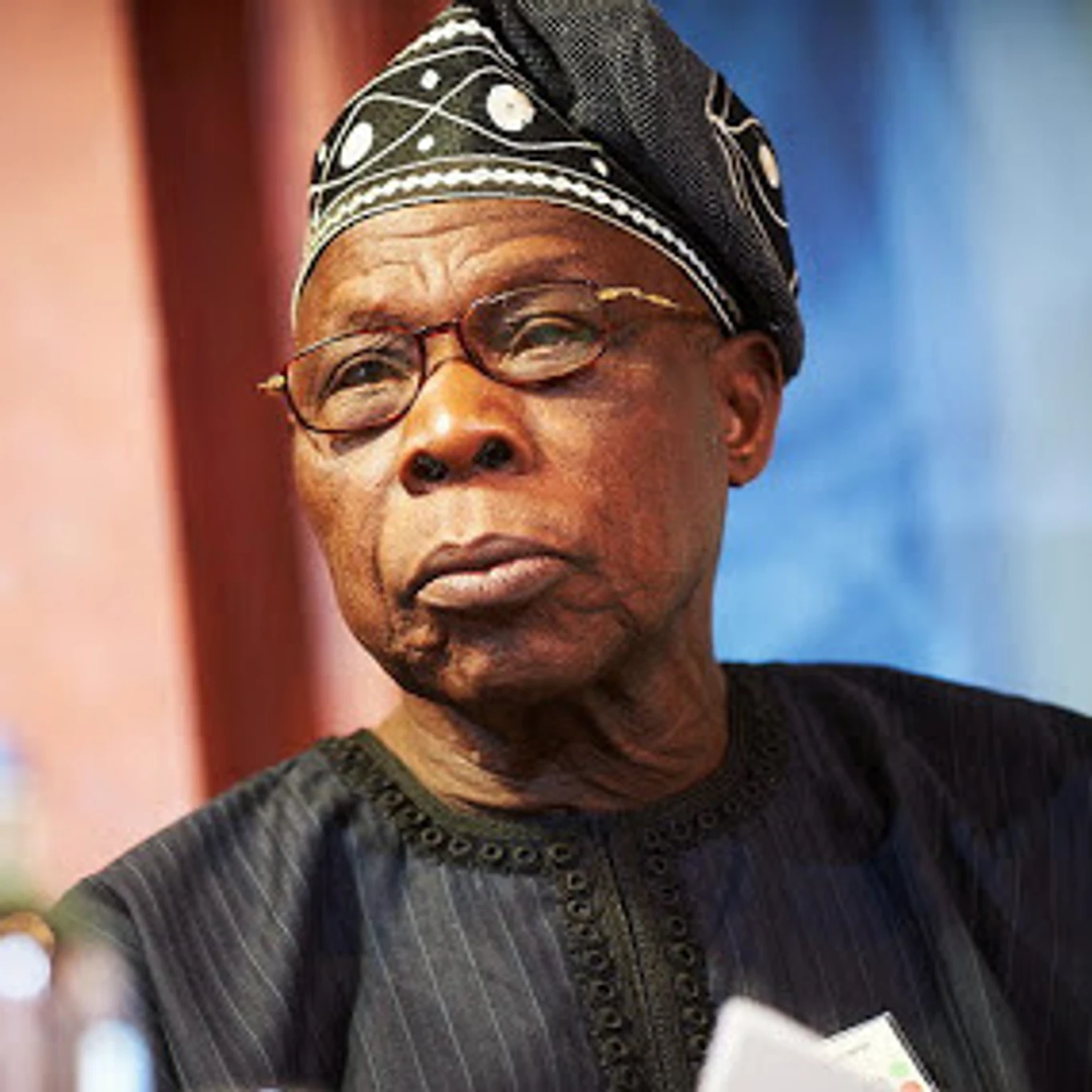
By Abdul Mahmud
Former President Olusegun Obasanjo has reopened the debate over Africa’s relationship with the Bretton Woods institutions, questioning the influence of the World Bank and the International Monetary Fund on the continent’s economic choices. Speaking on Friday, 30 October 2026, at a conference on leveraging artificial intelligence for grassroots development and national transformation, held at the Olusegun Obasanjo Presidential Library in Abeokuta, Ogun State, the former president argued that the two institutions were established before most African countries attained independence and were never designed with the continent’s interests at their centre. Recalling how former British Prime Minister James Callaghan received government subsidies for his sheep while African governments were discouraged from subsidising their farmers, Obasanjo challenged what he considered the double standards of international economic prescriptions and urged African leaders to question whose interests such policies ultimately serve.
There is something remarkably convenient about Obasanjo’s new discovery that the World Bank and the IMF were not designed for Africa. The institutions were established at Bretton Woods in 1944, when much of Africa remained under colonial rule. Their founding arrangements reflected the economic and political interests of the powerful countries that shaped the post-war international order. None of this is particularly new, and certainly none of it should have come as a revelation to a former Nigerian military ruler and president who occupied the highest political office in the country between 1976 and 1979; and 1999 and 2007 respectively.
The real problem with Obasanjo’s intervention is not his criticism of these institutions, which is entirely legitimate, but the extraordinary contradiction between his present position and the economic philosophy that defined his presidency.
Obasanjo was, by disposition and policy, an apostle of the market. His administration embraced privatisation, commercialisation, deregulation and trade liberalisation as the principal instruments for restructuring the Nigerian economy. The National Council on Privatisation, established in 1999 under the Public Enterprises (Privatisation and Commercialisation) Act, became the institutional vehicle for transferring public assets into private hands. The telecommunications sector was opened to competition, the power sector was restructured, ports were concessioned and public enterprises were prepared for sale. By the end of his presidency, more than 140 enterprises had reportedly been privatised or concessioned. The World Bank itself celebrated the administration’s commitment to accelerating this programme.
The intellectual foundations of this economic experiment were hardly distinguishable from the prescriptions associated with the Washington Consensus. The underlying proposition was that government had no business remaining deeply involved in commercial enterprise, that private capital would deliver efficiency where public ownership had failed, and that liberalised markets would release the productive energies of the economy. Obasanjo did not approach these propositions with the scepticism he now recommends to African governments. His administration actively pursued them, frequently presenting economic liberalisation as an unavoidable passage to modernity. The irony becomes more pronounced when the relationship between his administration and the international financial institutions is examined. In its economic programme, the Nigerian government expressly committed itself to seeking World Bank advice on privatisation and assistance from the International Finance Corporation in disposing of selected public enterprises. The administration’s economic managers cultivated the confidence of international financial institutions, while the president himself became an enthusiastic salesman for reforms that attracted their approval. His government subsequently secured the historic Paris Club debt relief agreement in 2005, an achievement that was rightly celebrated, although the conditions and economic philosophy surrounding Nigeria’s reintegration into the international financial order deserved more critical examination than they received.
Obasanjo’s example of former British Prime Minister James Callaghan receiving agricultural subsidies for his sheep is instructive, but it also exposes the selective character of his present conversion. The contradiction between agricultural subsidies in Europe and resistance to similar interventions in Africa is real. European governments have historically protected their farmers through extensive subsidy arrangements, while developing countries have frequently faced pressure to liberalise their agricultural sectors. The European Union’s Common Agricultural Policy has long demonstrated that wealthy economies understand the strategic importance of protecting domestic production. African governments have every right to question an international economic order that tolerates protectionism in wealthy countries while discouraging comparable policies elsewhere. However, Obasanjo cannot conveniently separate himself from the economic philosophy that helped legitimise this unequal arrangement. His presidency did not represent a serious departure from market orthodoxy. If anything, it gave that orthodoxy an enthusiastic African political advocate. A former president who helped turn privatisation into a governing creed cannot now occupy the moral high ground by suggesting that African governments should question the prescriptions of institutions whose economic philosophy his government embraced.
There is also a more fundamental problem with the former president’s argument. The World Bank and the IMF do not exercise power over African governments independently of the political choices made by those governments. Their influence derives partly from the financial dependence of countries facing fiscal crises, external debt obligations and balance-of-payments difficulties. African leaders who surrender policy autonomy in exchange for international financial approval cannot absolve themselves of responsibility by blaming Washington or Brussels. The failure of political leadership is often as consequential as the imbalance in international economic power; but the fundamental challenge is to construct an economic philosophy grounded in Africa’s productive capacities, historical circumstances and development priorities. Industrial policy, agricultural protection, public investment and strategic state ownership must be reclaimed as legitimate instruments of national development. Africa cannot continue to subject its development ambitions to economic orthodoxies designed around the historical experiences and strategic interests of other societies. Markets have their place, but they cannot substitute for the political imagination, institutional courage and deliberate economic choices required to build productive economies.
The former president is right to challenge the intellectual authority of the Bretton Woods institutions, but his criticism would carry considerably greater weight if it were accompanied by an honest reckoning with his own economic record. Africa needs leaders who can question the assumptions of international economic orthodoxy without disowning their own contributions to its entrenchment. Obasanjo’s latest intervention brings this contradiction into sharp relief. The irony is difficult to miss. A man who presided over one of the most enthusiastic experiments in economic liberalisation in Nigeria’s history, championed privatisation as an instrument of national development and cultivated an unusually close relationship with the Bretton Woods institutions has suddenly discovered that their economic prescriptions may not serve African interests. After eleven years of helping to entrench the very economic orthodoxy he now questions, Obasanjo must confront an uncomfortable question about his own legacy: when did the apostle of market fundamentalism become its critic?

For publication of your news content, articles, videos or any other news worthy materials, please send to newsleverage1@gmail.com. For more enquiry, please call +234-901-067-1763 or whatsapp +234-901-067-1763. To place an advert, please call 09010671763



Obasanjo and the Hypocrisy of Economic Conversion – Abdul Mahmud

Otti: Next Four And A Half Years Will Focus On Consolidating Gains, Entrenching Irreversible Reforms

Otti, Bourdex, Amobi Ogah Rally Massive Support in Umunneochi Ahead of 2027 Elections

Enough Is Enough: Stop the Harassment of Young Nigerians – Otunba Babatunde Olushola Senbanjo Writes IGP Disu

“I’m Cleaning the Mess They Created”: Tinubu Fires Back at Critics Over Hunger

2027: Atuma Pledges Overwhelming APC Victory in Abia, Thanks Tinubu, Benjamin Kalu for Campaign Council Appointment

2027: Chidi Nnamdi Urges Obioma-Ngwa Voters to Trust Him With Their Mandate, Promises Quality Representation

2027: Chinedum Orji Pledges Accountable Representation, Says “My Word Is My Bond”

Abia Unveils N110bn Creative Economy Investment Pipeline, Woos Foreign Investors to Power, Utilities Sectors

Breaking! Tinubu Approves Ibom Deep Seaport, Promises Development

Breaking! Court Sacks David Mark-Led ADC Leadership, Nullifies Atiku’s 2027 Presidential Candidacy

Cardinal Onaiyekan: Governor Alia Was Suspended for Defying Catholic Church Rules on Politics

Eze Eberechukwu Oji Receives New Book on Arochukwu’s Cultural Heritage, Eulogizes Author

Akpabio’s Cruel Ignorance: Punishing Suicide Survivors Is No Answer to Despair – Abdul Mahmud

SMMAGS Alumnae Unite to Advance Menstrual Dignity, Girls’ Education and Community Empowerment in Abia State

Mayor Lucky Igbokwe Celebrates Seyi Tinubu, Reaffirms CityBoy Movement’s Commitment to Youth Development

“We Have Tried Orji Kalu; Now Try Someone Else” – Bourdex Tells Bende Monarchs

A Coastal Highway Re-routed by Presidential Fiat – Abdul Mahmud

Comr. Amos Kalu, OHAFIATV Publisher Appointed Assistant Director Of Publicity Of OTTIMANIA Legacy Movement

Otunba Babatunde Olushola Senbanjo (BOS) Calls for Investigation Into Alleged Seizure of Tricycles Over APC Rally

The final 6 ‘Game of Thrones’ episodes might feel like a full season
New Season 8 Walking Dead trailer flashes forward in time
Mod turns ‘Counter-Strike’ into a ‘Tekken’ clone with fighting chickens
Meet Superman’s grandfather in new trailer for Krypton
Disney’s live-action Aladdin finally finds its stars
Who are the early favorites to win the NFL rushing title?
The old and New Edition cast comes together to perform
Boxing continues to knock itself out with bewildering, incorrect decisions
Steph Curry finally got the contract he deserves from the Warriors
Phillies’ Aaron Altherr makes mind-boggling barehanded play
-
POLITICS4 days ago
Breaking! Court Sacks David Mark-Led ADC Leadership, Nullifies Atiku’s 2027 Presidential Candidacy
-
 NATIONAL NEWS4 weeks ago
Cardinal Onaiyekan: Governor Alia Was Suspended for Defying Catholic Church Rules on Politics
-
 METRO4 weeks ago
Eze Eberechukwu Oji Receives New Book on Arochukwu’s Cultural Heritage, Eulogizes Author
-
Articles3 weeks ago
Akpabio’s Cruel Ignorance: Punishing Suicide Survivors Is No Answer to Despair – Abdul Mahmud
-
 Abia State News3 weeks ago
SMMAGS Alumnae Unite to Advance Menstrual Dignity, Girls’ Education and Community Empowerment in Abia State