
Articles
Who is Really Governing Nigeria: President Tinubu or Minister Wike? – Otunba Babatunde Olushola Senbanjo Asks

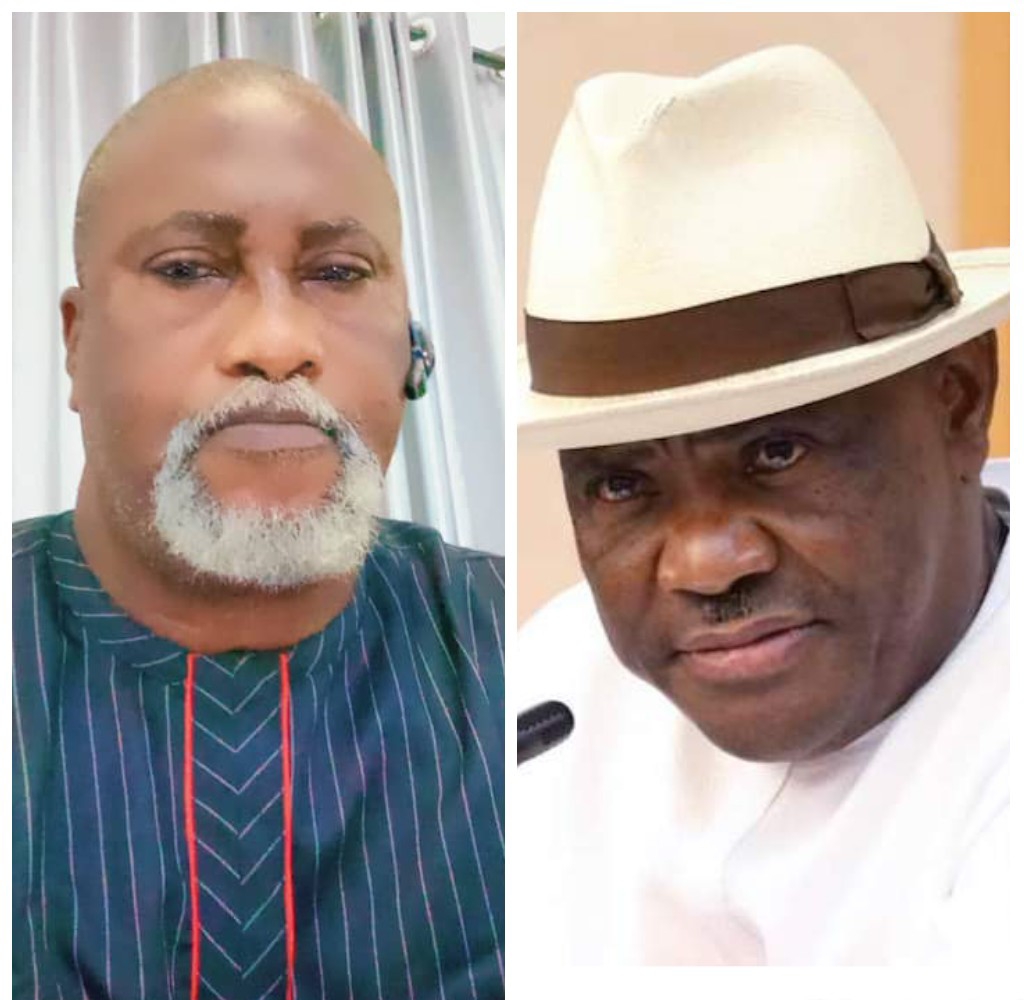
By Otunba Babatunde Olushola Senbanjo
Fellow Nigerians, let us ask ourselves a very important question that deserves serious national attention: WHO IS REALLY GOVERNING NIGERIA? IS IT PRESIDENT BOLA AHMED TINUBU, THE PRESIDENT AND COMMANDER-IN-CHIEF OF THE FEDERAL REPUBLIC OF NIGERIA, OR THE FCT MINISTER, NYESOM WIKE, WHOSE PUBLIC CONDUCT AND EXERCISE OF AUTHORITY HAVE BECOME SUBJECTS OF INTENSE DEBATE?
This question is not being raised because Nigerians do not understand the constitutional responsibilities of the President or the Minister of the Federal Capital Territory. It is being raised because many citizens are increasingly concerned about the manner in which power is exercised, the tone of public discourse, and the apparent difficulty of distinguishing firm leadership from conduct that people perceive as arrogant, confrontational, or disrespectful.
Nigeria is a country governed by a constitution, not by the personal preferences of any individual. No minister, governor, president, senator, or political appointee is above the law. Every public office is a position of responsibility, and every public official owes the Nigerian people a duty of accountability, restraint, respect, and service.
Yet, when Nigerians observe the repeated public confrontations involving the FCT Minister, Nyesom Wike, some are left wondering whether the country’s political leadership has established clear standards for how public officials should conduct themselves.
WHERE IS PRESIDENT TINUBU’S LEADERSHIP WHEN QUESTIONS ABOUT MINISTERIAL CONDUCT ARISE?
President Bola Ahmed Tinubu occupies the highest executive office in Nigeria. His responsibilities extend beyond appointing ministers and distributing portfolios. The President is expected to provide direction, establish standards of conduct within his administration, ensure that public officials respect the law, and demonstrate that government authority exists to serve the people.
The President has the constitutional authority to appoint ministers, subject to the required constitutional process, and to exercise executive leadership over the federal administration. Ministers, in turn, have specific responsibilities within their assigned portfolios.
The FCT Minister is not the President of Nigeria. He is not the Commander-in-Chief. He does not possess unlimited authority over the Nigerian people. His responsibilities are connected to the administration of the Federal Capital Territory, and those responsibilities must be exercised within the law.
Why, then, do so many Nigerians feel the need to ask questions about the tone and character of ministerial authority?
Why should citizens repeatedly debate whether a minister’s public statements reflect the standards expected of someone occupying such an important office?
Why must public disagreements involving a minister become occasions for national controversy rather than opportunities to demonstrate maturity, restraint, and respect for democratic institutions?
These questions deserve serious answers.
Leadership is not measured by how loudly a public official speaks, how aggressively that official responds to criticism, or how frequently that official appears ready for confrontation. Leadership is measured by results, integrity, respect for the law, institutional discipline, and the positive difference government makes in people’s lives.
If the President expects Nigerians to respect his administration, his government must also demonstrate that every public official is accountable for their words and actions.
NIGERIA IS A CONSTITUTIONAL DEMOCRACY, NOT A PERSONAL EMPIRE!
One of the greatest dangers in any democracy is the impression that political power gives an individual the freedom to speak to others without restraint, disregard legitimate criticism, or treat public institutions as personal possessions.
Public office is not a personal inheritance. It is not a private business. It is not a platform for intimidating opponents or humiliating people who disagree with the government.
It is a public trust.
The Nigerian people are the ultimate beneficiaries of democratic government, and every official must remember that the authority they exercise comes with legal boundaries and public obligations.
A minister may disagree with a journalist, a political opponent, a civil society organisation, or an ordinary citizen. However, disagreement should never become an excuse to abandon civility or disregard the principles of democratic accountability.
A government official must be able to answer difficult questions without treating every critic as an enemy.
A minister must be able to defend government policy without creating the impression that criticism of the government is an offence.
A public servant must understand that Nigerians have the right to question decisions that affect their lives.
That is the essence of democracy.
When citizens begin to fear asking questions because of the perceived influence of a political officeholder, democratic accountability becomes weaker. When political influence appears more important than public service, public confidence suffers.
POWER WITHOUT ACCOUNTABILITY CREATES DISTRUST.
This is why Nigerians deserve a government in which the President, ministers, governors, legislators, and every other public official understand that their authority is limited by law.
No individual should be so politically influential that legitimate questions about their conduct become impossible to raise.
No minister should be regarded as untouchable.
No president should be exempt from questions about the conduct of the administration he leads.
And no citizen should be made to feel that their voice does not matter simply because they lack political connections.
The strength of Nigeria’s democracy depends on the ability of its institutions to uphold these principles consistently.
WHAT EXACTLY IS THE PRESIDENT’S POSITION ON THE CONDUCT OF HIS MINISTERS?
President Tinubu’s administration should understand that Nigerians are watching not only government policies but also the behaviour of the individuals entrusted with implementing those policies.
People want to know whether there are clear standards for public communication, respect for citizens, responsible political engagement, and the use of official authority.
If a minister’s conduct attracts sustained public criticism, the appropriate response should be a fair assessment of the facts, not political hostility against those raising legitimate concerns.
If allegations of misconduct are made, they should be investigated through appropriate procedures where necessary.
If the minister has acted within the law, the facts should be made clear.
If any action has violated the law or established standards, the appropriate institutions should respond accordingly.
That is how a responsible administration operates.
The purpose of accountability is not to settle personal scores or humiliate political opponents. It is to ensure that public power is exercised responsibly and that the same rules apply to everyone.
President Tinubu has an important responsibility to demonstrate that the standards of his administration are not determined by an individual’s political influence, but by the law and the public interest.
Nigerians should not have to guess whether those standards exist.
THE RIVERS STATE QUESTION: WHAT WAS WIKE’S RECORD ON EDUCATION?
Before Nyesom Wike became FCT Minister, he served as Governor of Rivers State from 2015 to 2023.
His record as governor should be examined carefully, including his administration’s policies on education, school infrastructure, teachers’ welfare, healthcare, roads, and other public services.
Education deserves particular attention because no society can achieve lasting development without investing in its children and young people.
A responsible assessment of any former governor’s educational record must examine the number of schools built or renovated, the condition of existing facilities, the provision of classrooms and learning materials, teacher recruitment and training, budget allocations, and the actual outcomes for pupils and students.
Rather than relying on political slogans, Nigerians should demand verifiable records of what was promised, what was funded, what was delivered, and what remains unfinished.
If citizens believe that a former administration neglected particular aspects of education, they have every right to demand evidence-based answers.
If the administration points to projects or reforms it completed, those claims should also be independently examined.
Public officials should not be evaluated solely by the buildings they commission or the speeches they deliver. They should be assessed by whether their policies improve the lives and future prospects of ordinary people.
A school is not merely a structure. It is an investment in the future of a child.
A classroom without adequate learning materials cannot provide the same opportunities as a properly equipped school.
A teacher who is not adequately supported cannot be expected to deliver the best possible educational outcomes.
A government that truly values education must consider the entire learning environment.
Therefore, the relevant question about Wike’s tenure is not simply whether schools were built, but whether Rivers State’s educational needs were adequately addressed during his administration.
Nigerians deserve a transparent evaluation of that record.
THE FCT IS NOT A PERSONAL KINGDOM!
The Federal Capital Territory is the seat of Nigeria’s federal institutions. It belongs to the Nigerian constitutional system, and its administration must serve residents, workers, businesses, visitors, and the country as a whole.
The Minister’s position is important, but the office is not a licence to exercise unlimited power.
Residents of the FCT deserve effective urban planning, reliable public services, transparent land administration, functioninggggggg infrastructure, environmental management, and fair treatment under the law.
They also deserve to have their concerns heard without unnecessary hostility.
Government decisions can sometimes be difficult. Urban development requires planning, enforcement, and the application of regulations. Some decisions may be unpopular even when they are legally justified.
However, the legality of a decision and the manner in which it is communicated are separate questions.
Authorities can enforce legitimate rules while still respecting the dignity of affected citizens.
Officials can defend public policy without unnecessary insults.
Government can maintain order without treating every disagreement as an act of disloyalty.
That is the difference between the exercise of lawful authority and the public perception of power being exercised without sufficient restraint.
The FCT Minister should be judged by the quality of administration, the fairness of decisions, the transparency of processes, and the treatment of residents, alongside the development projects delivered under his supervision.
Nigerians should equally insist that complaints about government actions receive proper consideration rather than being dismissed simply because the person raising them lacks influence.
IS POLITICAL LOYALTY MORE IMPORTANT THAN NATIONAL RESPONSIBILITY?
Nigeria needs public officials who understand that political loyalty must never replace professional responsibility.
The President appoints ministers to help implement government policies and serve the country. Ministers are not appointed merely to display political influence or engage in endless political confrontations.
Their primary responsibility is to deliver results within their portfolios.
If a minister is performing well, the administration should be able to demonstrate that performance through measurable achievements.
If a minister’s public conduct raises legitimate concerns, those concerns should be addressed through appropriate institutional channels.
If a government policy is failing, citizens should be able to question it.
If a public official makes a decision that affects thousands of people, the official should be prepared to explain the reasoning behind that decision.
This is not disrespect for government.
It is democratic accountability.
The President should not be afraid of accountability, and ministers should not interpret every criticism as an attack on their authority.
A strong government is not one in which nobody dares to speak. A strong government is one that can withstand scrutiny, correct mistakes, and improve its performance.
Nigerians need institutions that work regardless of who occupies political office.
They need rules that apply equally to the powerful and the powerless.
They need a system in which public service is measured by results rather than political proximity.
WHAT HAS HAPPENED TO THE DIGNITY OF PUBLIC OFFICE?
Public office should demand humility.
The higher an individual rises in government, the greater the responsibility to demonstrate self-control, maturity, and respect for others.
This does not mean that public officials must remain silent when they are unfairly criticised. They have the right to defend themselves, correct misinformation, and explain their decisions.
However, there is a difference between defending one’s position and responding in a manner that citizens perceive as needlessly confrontational.
There is also a difference between being firm and being dismissive of legitimate concerns.
The public should not have to choose between a government that is too weak to enforce the law and a government that appears unwilling to listen.
Nigeria deserves effective administration combined with respect for democratic principles.
We need leaders who can speak with authority without belittling people.
We need officials who can disagree without turning every disagreement into a public battle.
We need a political culture in which competence, responsibility, and integrity receive more attention than personal feuds.
And we need a presidency that demonstrates, through its actions, that public institutions are bigger than any individual.
NIGERIANS ARE TIRED OF POLITICAL THEATRE WITHOUT ENOUGH ATTENTION TO THEIR DAILY STRUGGLES.
Across the country, ordinary people are concerned about the cost of living, employment, insecurity, access to quality healthcare, education, transport costs, housing, and the future of their children.
Families are trying to survive in difficult economic circumstances.
Young people are searching for opportunities to build meaningful lives.
Small businesses are struggling with operating costs.
Farmers need better access to financing, infrastructure, storage, and markets.
Parents want their children to receive an education that prepares them for employment and productive citizenship.
These are the issues that should dominate national attention.
When public officials become embroiled in repeated confrontations, Nigerians are entitled to ask whether the energy devoted to political disputes is producing corresponding improvements in public services.
Every public officeholder should be able to demonstrate the practical value of their position.
What has improved?
What measurable progress has been achieved?
Which public services have become more effective?
What safeguards exist to protect citizens from unfair treatment?
How are public funds being used?
These questions should be directed at the President, ministers, governors, legislators, and every other person entrusted with public resources.
Nigeria does not need a government in which personalities dominate the national conversation while ordinary people continue to demand solutions to persistent problems.
It needs a government in which results, transparency, and the welfare of citizens occupy the centre of public debate.
PRESIDENT TINUBU MUST RECOGNISE THAT LEADERSHIP INCLUDES SETTING STANDARDS.
The President’s responsibility does not end when ministers are appointed.
Leadership also involves establishing expectations, monitoring performance, promoting accountability, and ensuring that public institutions operate in accordance with the law.
If citizens raise concerns about the conduct of a minister, the government should not automatically treat those concerns as political opposition.
Some criticism may be partisan or unfair. Some allegations may lack evidence. Others may identify genuine problems that deserve attention.
The responsible approach is to distinguish among them.
The administration should answer legitimate questions with facts, examine credible allegations fairly, and communicate its decisions clearly.
That is how public trust can be strengthened.
The President should also make it clear that the authority of any minister derives from the Constitution, relevant laws, and the responsibilities of the office, not from personal influence or political connections.
Ministers must understand that their offices are temporary, but the institutions they serve must endure.
They must remember that their conduct can influence how citizens perceive the entire administration.
A minister’s public behaviour can become a reflection of the government’s broader standards, whether or not that reflection is fair in every instance.
That is why discipline, transparency, and responsible communication matter.
OUR DEMAND IS ACCOUNTABILITY, NOT PERSONAL PERSECUTION.
Let us be clear: demanding accountability does not mean that anyone should be subjected to threats, harassment, or unlawful treatment.
Nyesom Wike, like every Nigerian citizen, is entitled to the protection of the law.
President Tinubu is also entitled to have his administration’s policies examined fairly rather than judged solely by political hostility.
But the right to fair treatment does not exempt public officials from scrutiny.
The more authority an individual exercises, the greater the need for transparent and responsible conduct.
The Nigerian people should demand answers about public spending, administrative decisions, the delivery of services, and the use of government authority.
Where allegations are made, evidence should be examined.
Where wrongdoing is established, due process should apply.
Where decisions are lawful but unpopular, the government should explain them honestly.
Where mistakes occur, officials should be willing to correct them.
This is how a democracy grows stronger.
The objective should never be to replace one powerful individual with another equally unaccountable figure. The objective should be to build institutions that prevent public power from being used irresponsibly, regardless of who occupies office.
SO, WHO IS REALLY GOVERNING NIGERIA?
Constitutionally, President Bola Ahmed Tinubu is the President of the Federal Republic of Nigeria and the head of the federal executive. Nyesom Wike is the Minister of the Federal Capital Territory, with responsibilities defined by law and the authority delegated to that office.
They do not hold the same position, and the Minister’s office does not replace the presidency.
But the public question remains: are the standards of leadership, accountability, and responsible conduct being applied consistently throughout the administration?
That is the question the government must answer through its actions.
Nigerians should not be left wondering whether political influence matters more than institutional responsibility.
They should not have to question whether public officials can be challenged respectfully and lawfully when their actions attract criticism.
They should not have to depend on political connections to have their grievances heard.
The President must lead the federal administration in accordance with the Constitution, while every minister must exercise delegated authority within the limits of the law.
The public must also remain vigilant, informed, and prepared to demand explanations from those who govern.
OUR MESSAGE TO THE PRESIDENT AND THE FCT MINISTER IS SIMPLE: NIGERIA BELONGS TO NIGERIANS, NOT TO ANY INDIVIDUAL OR POLITICAL CIRCLE.
No office is permanent.
No political position is above the Constitution.
No amount of political influence should eliminate the need for accountability.
No public official should forget that the purpose of government is to serve the people.
The Nigerian people deserve leaders who understand that power is a responsibility, not a personal privilege.
They deserve ministers who can enforce legitimate rules while respecting the dignity of citizens.
They deserve a President who establishes clear standards for his administration and ensures that public officials are held accountable through lawful institutions.
They deserve a country where public debate focuses on development, security, education, healthcare, employment, and economic opportunities rather than being dominated by personal confrontations among political officeholders.
Above all, Nigerians deserve a government that listens, explains, corrects its mistakes, and recognises that every public office exists for the benefit of the people.
The time has come for a more responsible political culture, one in which authority is exercised with restraint, public resources are managed transparently, and public service is measured by tangible results.
NIGERIA IS BIGGER THAN WIKE. NIGERIA IS BIGGER THAN TINUBU. NIGERIA IS BIGGER THAN ANY POLITICAL PARTY OR INDIVIDUAL.
Our national interest must always come first.
Our Constitution must remain supreme.
Our institutions must be strengthened.
And our leaders must remember that the ultimate purpose of government is not to demonstrate who is more powerful, but to improve the lives of the people they were elected or appointed to serve.
GOD BLESS THE FEDERAL REPUBLIC OF NIGERIA.
GOD BLESS EVERY NIGERIAN WHO CONTINUES TO DEMAND ACCOUNTABILITY, JUSTICE, RESPONSIBLE LEADERSHIP, AND A BETTER FUTURE FOR OUR COUNTRY.

For publication of your news content, articles, videos or any other news worthy materials, please send to newsleverage1@gmail.com. For more enquiry, please call +234-901-067-1763 or whatsapp +234-901-067-1763. To place an advert, please call 09010671763


2027: Hon. Chidi Nnamdi Urges Obioma-Ngwa Voters to Collect PVCs

A Coastal Highway Re-routed by Presidential Fiat – Abdul Mahmud

Who is Really Governing Nigeria: President Tinubu or Minister Wike? – Otunba Babatunde Olushola Senbanjo Asks

“We Have Tried Orji Kalu; Now Try Someone Else” – Bourdex Tells Bende Monarchs

Facebook Dispute: Rt. Hon. Ochei Campaign Council Demands Immediate Release of Detained Aide

Fuel Discount: ‘We Are Not Dumb to Give Nigerians One-Month Discount for Votes’ – Oyedele

Cardinal Onaiyekan: Governor Alia Was Suspended for Defying Catholic Church Rules on Politics

Oshiomhole Clashes With Interviewer Who Questioned Why He Protested Fuel Price Under Obasanjo But Never Under Tinubu

30-Day Fuel Discount: Nigerians Deserve More Than Temporary Relief – Otunba Babatunde Olushola Senbanjo

FG Announces 30-Day Petrol Discount at NNPC Stations

Ikeji Aro 2026 on Avor Osu Day: Nkita Oku, Inum, Ekpe Erim, Other Ekpo Masquerades Pay Homage to Eze Eberechukwu Oji

97-Year-Old Dr Mrs. Shields Reconstructs, Reopens Mary Slessor Library in Arochukwu

Ikeji-Aro 2026: ‘We Are Repackaging Aro Traditional Healing Practices for the Younger Generation’ – Mazi Ernie Onwumere

2027: Hon. Ike Bishop Okoronkwo Mobilises Abia North Grassroots, Tasks ADC Coordinators on Polling Units

Eze Eberechukwu Oji Commissions Amuvi Community Self-Built Connectivity Hub

Nigeria Owes Tobi Amusan a Statue – Abdul Mahmud

Obioma-Ngwa 2027: Chidi Nnamdi Pushes Case for Responsive Representation – Comrade Abuchi Isaac

‘We Will, We Will, We Will’: Atiku Slams Tinubu Over Promises, Questions Achievements After Three Years

Leave Chidi Nnamdi Alone, Earn the People’s Trust – New Direction Agenda

NIGERIA at 66: What is the Way Forward? – Otunba Babatunde Olushola Senbanjo Calls for Rescue, Rebuild and Restore the Nation

The final 6 ‘Game of Thrones’ episodes might feel like a full season
New Season 8 Walking Dead trailer flashes forward in time
Mod turns ‘Counter-Strike’ into a ‘Tekken’ clone with fighting chickens
Meet Superman’s grandfather in new trailer for Krypton
Disney’s live-action Aladdin finally finds its stars
Who are the early favorites to win the NFL rushing title?
The old and New Edition cast comes together to perform
Boxing continues to knock itself out with bewildering, incorrect decisions
Steph Curry finally got the contract he deserves from the Warriors
Phillies’ Aaron Altherr makes mind-boggling barehanded play
-
 Abia State News3 weeks ago
Ikeji Aro 2026 on Avor Osu Day: Nkita Oku, Inum, Ekpe Erim, Other Ekpo Masquerades Pay Homage to Eze Eberechukwu Oji
-
 Abia State News2 weeks ago
97-Year-Old Dr Mrs. Shields Reconstructs, Reopens Mary Slessor Library in Arochukwu
-
 Abia State News4 weeks ago
Ikeji-Aro 2026: ‘We Are Repackaging Aro Traditional Healing Practices for the Younger Generation’ – Mazi Ernie Onwumere
-
 POLITICS2 weeks ago
2027: Hon. Ike Bishop Okoronkwo Mobilises Abia North Grassroots, Tasks ADC Coordinators on Polling Units
-
 Abia State News2 weeks ago
Eze Eberechukwu Oji Commissions Amuvi Community Self-Built Connectivity Hub