
Articles
2027: Nigerians Must Reject Propaganda, Demand Accountability – Otunba Babatunde Olushola Senbanjo

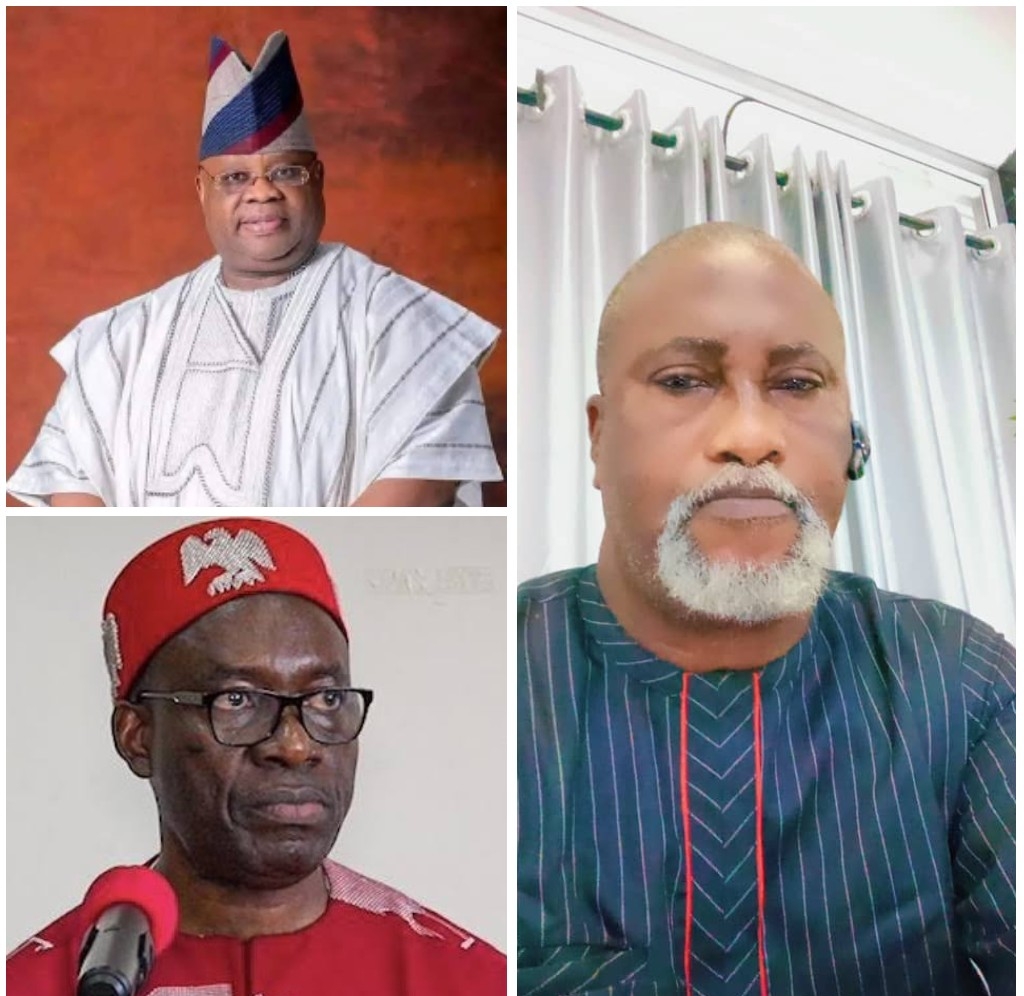
By Otunba Dr Babatunde Olushola Senbanjo (BOS)
I must express my deep disappointment with the direction of our country’s politics, particularly the growing efforts by prominent political figures to campaign for the re-election of President Bola Ahmed Tinubu and the APC-led Federal Government ahead of the 2027 general election, while millions of Nigerians continue to grapple with serious economic and social challenges.
One question every Nigerian should be asking is this: What exactly are we celebrating, and what tangible achievements are we presenting to the people as justification for another mandate?
Before any politician mounts a podium to campaign for re-election, Nigerians deserve an honest account of what has been achieved, what promises remain unfulfilled, what policies have cost ordinary citizens, and what practical measures are being taken to improve the lives of the people.
Politics should not be reduced to propaganda, political alliances, personal interests, or the desperate struggle to retain power. Leadership is a responsibility, and public office is a trust given by the people. Those who seek another mandate must be prepared to answer questions about their performance rather than expect citizens to applaud them simply because they belong to a ruling party.
MY DISAPPOINTMENT WITH GOVERNORS ADELEKE AND CHARLES SOLUDO
I am particularly concerned whenever prominent political leaders lend their voices and political influence to campaigns supporting the continuation of the current administration without sufficiently addressing the concerns of ordinary Nigerians.
Governor Ademola Adeleke of Osun State and Governor Charles Soludo of Anambra State are among the political figures whose public positions and support for national political arrangements deserve careful scrutiny. Nigerians have every right to ask what specific national achievements they are highlighting when they support President Tinubu’s re-election bid.
My disappointment is not based merely on political party differences. It is about accountability, consistency, and the responsibility of public officeholders to address the concerns of the people they represent.
When a political leader campaigns for a president seeking another term, the public should expect more than speeches, political endorsements, and declarations of support. Citizens deserve clear explanations of the administration’s record, measurable progress, and credible plans for addressing the problems that remain.
What has improved sufficiently to justify another four years? What has become more affordable for the average Nigerian family? What progress has been made in tackling insecurity, creating sustainable employment, strengthening public education, improving healthcare, and supporting small businesses?
These are not unreasonable questions. They are legitimate questions in any democracy.
No governor, minister, political party, or presidential candidate should be above public scrutiny. Political leaders must understand that Nigerians are not merely spectators in the democratic process. They are citizens whose lives are directly affected by government policies and decisions.
NYESOM WIKE AND THE POLITICS OF POWER
The political conduct and public statements of FCT Minister Nyesom Wike have also generated considerable debate about political influence, public accountability, and the appropriate use of power.
The office of a minister is not a personal kingdom, and political influence should never be confused with unlimited authority. Every public official operates within the law and has a responsibility to treat citizens, political opponents, and public institutions with respect.
The *FCT Minister’s* political activities and public confrontations deserve scrutiny on their merits. Nigerians should be able to question whether the exercise of political influence is serving the public interest or intensifying partisan conflicts.
A democracy cannot thrive when political disagreements are treated as personal battles or when the language of public debate discourages reasonable criticism. Public officials should demonstrate restraint, respect the institutions of government, and remember that their authority comes with obligations.
Political power is temporary. Public service is about what leaders do for the people, not how loudly they speak, how many political allies they gather, or how forcefully they assert their influence.
The same standards should apply to every politician, regardless of party affiliation or position in government.
WHERE ARE THE PROMISES MADE TO NIGERIANS?
Nigerians remember the expectations surrounding the 2023 general election. Citizens listened to campaign speeches, political manifestos, promises of economic improvement, and assurances that the country could overcome its challenges.
However, many households continue to face difficult questions about the cost of living, transportation, food prices, employment opportunities, business survival, and personal financial security.
For ordinary Nigerians, the economy is not an abstract political debate. It is the price of food in the market, the cost of transporting children to school, the money required to purchase medication, the rent due at the end of the month, and the ability to provide basic necessities for the family.
For small business owners, economic conditions determine whether a business can survive, whether workers can be paid, and whether expansion is possible.
For young people, the issues are unemployment, opportunities, affordable education, access to capital, and the possibility of building a meaningful future in their own country.
For farmers, the concerns include the cost of agricultural inputs, transportation, security, access to markets, and whether farming can remain profitable enough to feed the nation.
These are the realities that should dominate our political conversations.
Government supporters may point to reforms, infrastructure projects, economic indicators, or other achievements as evidence of progress. Those claims should be examined fairly and measured against their actual effects on citizens. Equally, government critics should be prepared to support their arguments with credible evidence.
But one thing must remain clear: A government should never be judged by its campaign promises alone. It must also be judged by its record in office and the real consequences of its policies.
Nigerians deserve honest answers about both the progress achieved and the difficulties that remain.
PROPAGANDA CANNOT REPLACE GOOD GOVERNANCE
One of the dangers of modern politics is the tendency to substitute political messaging for meaningful public accountability.
A government may have supporters who defend virtually every decision it makes. Political campaigners may travel across the country, deliver speeches, organise rallies, and promote the achievements they believe deserve recognition.
That is their democratic right.
However, citizens also have the right to question those claims, examine the evidence, and compare official statements with their daily experiences.
No amount of publicity can permanently eliminate the need for accountability. No political endorsement can automatically transform an unsuccessful policy into a successful one. And no party slogan can substitute for the practical responsibility of improving people’s lives.
If the APC-led administration believes it deserves another mandate, its supporters should be prepared to explain its record openly and honestly.
They should tell Nigerians what has worked, what has failed, what corrective measures have been introduced, and how the next four years would be different from the previous period.
The public deserves facts, not personal attacks. It deserves policy explanations, not insults against critics. It deserves transparent governance, not a political culture in which every difficult question is treated as an act of disloyalty.
Democracy becomes stronger when citizens are encouraged to ask questions rather than pressured to accept political narratives without examination.
NIGERIANS MUST REMEMBER THE PAST AND EXAMINE THE PRESENT
As we approach the 2027 general election, Nigerians should reflect carefully on the promises made during previous campaigns and compare them with the results delivered.
We must not allow political excitement, celebrity endorsements, ethnic considerations, religious sentiments, or party loyalty to prevent us from examining the records of those seeking our votes.
We should ask ourselves:
What were the promises made before the last election?
Which of those promises have been fulfilled?
Which remain outstanding, and why?
What has happened to the purchasing power of ordinary households?
What measurable progress has been made in tackling insecurity?
Are young people gaining meaningful employment and economic opportunities?
Are farmers receiving the support and security they need to increase food production?
Are public schools and hospitals receiving the attention they deserve?
Are public funds being managed transparently?
What concrete plans are candidates presenting to address the problems that remain?
These questions should be asked of every candidate, whether from the APC, PDP, Labour Party, ADC, Accord Party, or any other political platform.
The objective should not be to exchange one form of blind loyalty for another. It should be to build a political culture in which every candidate is examined according to character, competence, integrity, policy proposals, and a demonstrable commitment to public service.
Nigerians should not vote merely because a politician is popular. They should examine what that politician stands for, what the person has done, and what the person proposes to do.
2027 MUST BE ABOUT THE FUTURE OF NIGERIA
The 2027 general election should be an opportunity for citizens to assess the direction of the country and make informed decisions about its future.
Our democracy should not be treated as a permanent entitlement belonging to any political party. No party owns Nigeria, and no individual has an automatic right to remain in power.
Every administration must earn public confidence through its actions, policies, transparency, and responsiveness to citizens’ concerns.
Those campaigning for President Bola Ahmed Tinubu’s re-election should be willing to defend their position with specific achievements and credible plans. Those opposing his re-election should equally be prepared to explain their alternatives, demonstrate their capacity for responsible governance, and present practical solutions to the nation’s challenges.
Nigerians need more than criticism. They need credible options, realistic policies, and leaders who understand the seriousness of the country’s problems.
We need leaders who will prioritise security, economic opportunity, affordable food, quality education, accessible healthcare, agricultural development, industrial growth, and the creation of an environment where honest work can provide a decent living.
We need political leaders who understand that the dignity of a citizen should not depend on party affiliation, personal connections, or access to powerful individuals.
We need institutions that work, public officials who accept accountability, and a political system that places national interest above personal ambition.
Above all, we need a country where citizens can disagree politically without being treated as enemies and where public debate is guided by facts, reason, and respect.
MY MESSAGE TO POLITICAL LEADERS AND CAMPAIGNERS
To every governor, minister, political appointee, party spokesperson, campaigner, and public figure preparing to seek support for the continuation of the present administration, I ask one simple question:
Can you explain, with credible evidence, why Nigerians should support your preferred political direction, and are you prepared to answer honestly for the challenges that remain?
Do not expect citizens to forget their experiences because another campaign has started.
Do not assume that every endorsement will automatically translate into public approval.
Do not confuse the support of influential politicians with the informed consent of millions of ordinary citizens.
And do not underestimate the importance of accountability in a democratic society.
The same people who applaud a politician today may question that politician tomorrow if promises are not matched by results. Public confidence must be earned continuously; it cannot be demanded indefinitely.
The responsibility of political leaders is not merely to win elections. It is to govern responsibly, respect the people, protect public resources, and create conditions in which citizens can live with dignity.
MY FINAL MESSAGE TO NIGERIANS
Fellow Nigerians, our future must not be decided by propaganda, political intimidation, empty slogans, or the personal ambitions of those seeking to retain power.
We have a responsibility to ourselves, our children, and generations yet unborn to examine the choices before us carefully.
Let us demand accountability without spreading falsehoods. Let us challenge political leaders without resorting to personal abuse. Let us scrutinise government achievements and failures using credible information. Let us listen to competing political arguments and examine whether the alternatives being presented are realistic.
Most importantly, let us remember that our votes are a democratic right and a means of expressing our judgment about the direction of our country.
In 2027, every Nigerian should be encouraged to register, verify their voting details, participate peacefully, and make an informed choice based on the candidates’ records, character, policies, and capacity to serve.
No politician should be worshipped. No political party should be beyond criticism. No campaign promise should be accepted without scrutiny.
Nigeria belongs to all Nigerians, not to the APC, PDP, Labour Party, ADC, or any other political organisation.
Our loyalty should be to the country’s democratic institutions, the rule of law, the welfare of its people, and the principles of responsible government.
We deserve a political culture where promises are taken seriously, public officials are held accountable, and citizens are treated as the true owners of the democratic process.
The time has come for Nigerians to ask difficult questions, demand credible answers, and participate actively in shaping the nation’s future.
Let every candidate explain their vision. Let every political party present its plans. Let every public official account for their record.
And let every Nigerian make an informed decision without fear, intimidation, or manipulation.
ENOUGH OF POLITICS WITHOUT ACCOUNTABILITY. ENOUGH OF CAMPAIGNS WITHOUT CREDIBLE ANSWERS. NIGERIA DESERVES HONEST LEADERSHIP, RESPONSIBLE GOVERNANCE, AND A FUTURE BUILT ON FACTS, NOT PROPAGANDA.
NIGERIA FIRST. THE PEOPLE FIRST. ACCOUNTABILITY ALWAYS.

For publication of your news content, articles, videos or any other news worthy materials, please send to newsleverage1@gmail.com. For more enquiry, please call +234-901-067-1763 or whatsapp +234-901-067-1763. To place an advert, please call 09010671763






Hon. Chidi Nnamdi Attends NDA Meeting, Pledges Continued Support to the Association

2027: Nigerians Must Reject Propaganda, Demand Accountability – Otunba Babatunde Olushola Senbanjo

Comatose Representation Cannot Be Covered with Noise – Mandate 27 Challenges Aguocha

Bricklayers Arrested Over Alleged Attempt to Bury Little Girl

Atiku Launches ‘Ask AA’ Portal for Direct Engagement With Nigerians

NAFDAC Seizes Counterfeit Alcoholic Beverage Packaging Materials Worth Over ₦200m in Aba

From Promises to Progress: New Direction Agenda 2027 Backs Chidi Nnamdi for Accountable Leadership

Abia City Boy Movement Congratulates Mayor Lucky Igbokwe On Appointment To APC Presidential Campaign Council

Abia NUJ Summons Emergency Congress Thursday Over Crucial Union Matters

Cybersecurity Month 2026: Mandate 27 Group Highlights Ikuku’s ICT Empowerment Record, Backs Orji for 2027

Ikeji Aro 2026 on Avor Osu Day: Nkita Oku, Inum, Ekpe Erim, Other Ekpo Masquerades Pay Homage to Eze Eberechukwu Oji

97-Year-Old Dr Mrs. Shields Reconstructs, Reopens Mary Slessor Library in Arochukwu

Ikeji-Aro 2026: ‘We Are Repackaging Aro Traditional Healing Practices for the Younger Generation’ – Mazi Ernie Onwumere

2027: Hon. Ike Bishop Okoronkwo Mobilises Abia North Grassroots, Tasks ADC Coordinators on Polling Units

Eze Eberechukwu Oji Commissions Amuvi Community Self-Built Connectivity Hub

Cardinal Onaiyekan: Governor Alia Was Suspended for Defying Catholic Church Rules on Politics

Obioma-Ngwa 2027: Chidi Nnamdi Pushes Case for Responsive Representation – Comrade Abuchi Isaac

‘We Will, We Will, We Will’: Atiku Slams Tinubu Over Promises, Questions Achievements After Three Years

Leave Chidi Nnamdi Alone, Earn the People’s Trust – New Direction Agenda

NIGERIA at 66: What is the Way Forward? – Otunba Babatunde Olushola Senbanjo Calls for Rescue, Rebuild and Restore the Nation

The final 6 ‘Game of Thrones’ episodes might feel like a full season
New Season 8 Walking Dead trailer flashes forward in time
Mod turns ‘Counter-Strike’ into a ‘Tekken’ clone with fighting chickens
Meet Superman’s grandfather in new trailer for Krypton
Disney’s live-action Aladdin finally finds its stars
Who are the early favorites to win the NFL rushing title?
The old and New Edition cast comes together to perform
Boxing continues to knock itself out with bewildering, incorrect decisions
Steph Curry finally got the contract he deserves from the Warriors
Phillies’ Aaron Altherr makes mind-boggling barehanded play
-
 Abia State News3 weeks ago
Ikeji Aro 2026 on Avor Osu Day: Nkita Oku, Inum, Ekpe Erim, Other Ekpo Masquerades Pay Homage to Eze Eberechukwu Oji
-
 Abia State News3 weeks ago
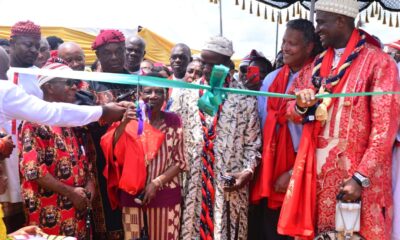
97-Year-Old Dr Mrs. Shields Reconstructs, Reopens Mary Slessor Library in Arochukwu
-
 Abia State News4 weeks ago
Ikeji-Aro 2026: ‘We Are Repackaging Aro Traditional Healing Practices for the Younger Generation’ – Mazi Ernie Onwumere
-
 POLITICS3 weeks ago
2027: Hon. Ike Bishop Okoronkwo Mobilises Abia North Grassroots, Tasks ADC Coordinators on Polling Units
-
 Abia State News3 weeks ago
Eze Eberechukwu Oji Commissions Amuvi Community Self-Built Connectivity Hub