
Abia State News
Exclusive Interview with Eze Aro IX on Reclaiming Africa’s Voice, Preserving Heritage, and Building a New Arochukwu

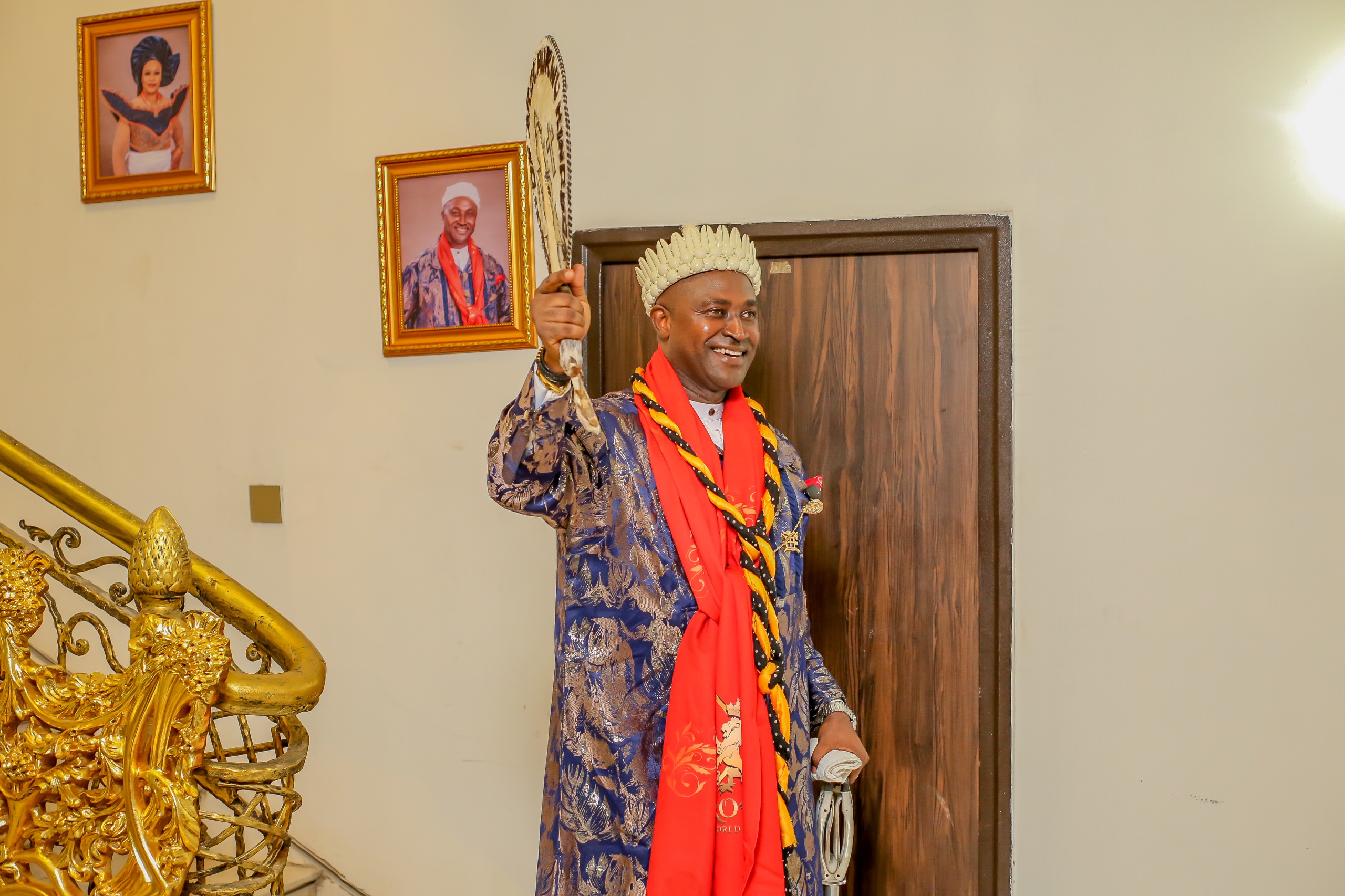
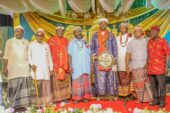
As His Eminence Eze Dr Eberechukwu Oji, Eze Aro IX, marked the second anniversary of his coronation, he said his reign has been defined not by titles or ceremonies, but by peace, unity, and a renewed sense of purpose for the Arochukwu Kingdom.
In this exclusive interview with Newsleverage, His Eminence reflects on two years on the throne, describing traditional leadership as “leadership by influence” rather than authority. He speaks candidly about his vision to restore Arochukwu’s historic preeminence while championing a broader mission to advance the interests of the Aro Kingdom, the Igbo nation, Africa, and Black people across the world.
The interview also explored his lecture at the University of California, Berkeley, titled “Reclaiming African Civilizational Voices: The Arochukwu Renaissance and the Future of Indigenous Knowledge in a Global Information Age.” Eze Aro argues that Africans must move from being consumers of knowledge to becoming creators of their own narratives, insisting that the continent should tell its own history through African voices and perspectives.
Interviewer: Congratulations on your second year on the throne. How do you feel?
His Eminence: I can only say glory be to God. I feel very fulfilled. I feel very elated. I feel very happy because what God has done these two years is beyond our wildest imagination. God has been gracious to us as a kingdom. God has given us unprecedented peace and security in the kingdom. The Almighty God has united Umo Aro worldwide behind our leadership and the vision that God has given us. Umu Aro have championed it aggressively. We have every reason to say thank You to our God.
Interviewer: For the past two years, you’ve been a leader within the kingdom. What would you say has shaped your leadership?
His Eminence: I think I came into this role with very well-established global leadership capabilities as a corporate executive running one of the largest indigenous oil companies in Nigeria. So I think my leadership skills were already developed and matured.
But this is a different arena. Corporate leadership is different. People respond to you because you are the one paying their salaries, and they respond to you accordingly. But traditional leadership is leadership by influence. You are really not paying anybody. People simply subscribe to the throne, and they give their time, energy, and resources. So it’s a different type of leadership. You have to find a way to continue to make the throne relevant to the lives of everyone who subscribes to it and then leads accordingly. So, for me, it’s a different leadership skill, a different leadership experience, and so far, I can only say, “Thank You, Jesus.”





Interviewer: What would you consider your most significant achievement so far in these two years?
His Eminence: For me personally, the most significant achievement is peace, unity, and the preservation of the lives of our people. Because if there is no peace in Arochukwu Kingdom, any other thing you want to talk about becomes completely irrelevant.
Secondly, if the kingdom is not united behind the king, then, of course, as they say, if you are leading and nobody is following you, you are just taking a walk.
So, for me, that’s our most significant achievement. Of course, there are many other achievements in the physical dimension, but for me, the eternal and spiritual dimensions are the most important. We have a kingdom that is a kingdom of light. It’s a kingdom where many of our people have subscribed to the leadership of God. We are enjoying the benefits of being a people who are called by God’s name, Arochukwu.
Interviewer: In May, you delivered a lecture at the University of California, Berkeley. What inspired this topic, and what message were you hoping people would grasp from the lecture?
His Eminence: You need to think about it. When you are given a global platform, you have to think very seriously about the message you want to pass. That message has to be relevant to the global conversations concerning Black people.
For way too long, we have been consumers of information. Books are written by explorers who come here. Books are written by missionaries. Books are written by foreign journalists. People simply consume.
The kernel of my message is that the time has come for us to tell our own story. Who has the right to produce knowledge? Who has the right to tell the story? I’m saying that nobody has more right than we do to tell our own story because ours is a different story. It has a different perspective.
We were able to forcefully advance the conversation that we should be the creators of knowledge about our history, our present circumstances, and the narrative of what our future should look like. Nobody should be telling that story other than ourselves.
That’s the kernel of the message.
We were also courageous enough to confront the issue of the slave trade and the role of the Aros in it. More than anything else, that has generated significant conversations. That is why UC Berkeley is now requesting an encore, saying that this conversation needs to be sustained.
I agree that it is not a one-off conversation after which you simply go to bed. No, it needs to be sustained. So we will do the encore.
If we maintain the sharp edge of expanding knowledge around this conversation, I believe there will be another one. It will not end with two conversations.
Interviewer: Talking about African voices, do you think this is achievable, considering the mindset that “white is good” and “black is evil”?
His Eminence: I think that is the whole point. A day comes when we say, “Enough.” A day comes when you realize who you are. A day comes when you reclaim what rightfully belongs to you.
So the question is: Who is in a better position to tell our story than ourselves? The answer is nobody.
Africa has to tell African stories, and we have to tell them in a compelling manner so that the global audience will listen.
When we were timid, intimidated, and burdened with a colonial mentality, we stayed away from the forefront because of the intellectual rigor required for these conversations. But that’s no longer where we are.
Now we are exposed. Now we have mastery of communication. Now we have the credibility to stand before the world and speak.
This is the time for us to tell our stories. I am giving all Africans permission to begin telling their stories without waiting for somebody in London, America, China, India, or anywhere else to give them permission.
Tell your story.
Who is authorizing us to tell that story? Our fathers are saying we should tell it.
As a royal father, I’m saying to our people: Tell our story.
Interviewer: What role do you think traditional institutions can play in preserving and documenting these stories?
His Eminence: That’s exactly the role I’m playing. I’m playing the role of advocacy. I’m giving our people the confidence they need because sometimes, when you do certain things, people ask, “Who gave you permission to do this?”
You can say our royal fathers have given us permission. Our fathers are saying we should do this. We should reclaim these voices and reclaim this position.
As we say in our local parlance, when your father sends you to do something, you do it with gusto and confidence.
That’s the role of royal fathers, and that’s the role I’m playing. I’m giving our people the authority, the confidence, and the backing to go and tell the story.
Go and reclaim it.
Wherever African stories are told, we want them to be told in African voices. If it is in academia, let it be African voices. If it is on social media, let it be African voices. If it is in literature, novels, or books, let it be African voices.
Right now, others are telling our stories. We are saying to our sons and daughters: You have our backing. You have our command. You have our instructions to go into those spaces, reclaim those stories, take charge, and tell our stories there.
That’s our job as royal fathers, and that’s what I’m doing.
Interviewer: Lastly, what vision do you have for the kingdom over the next decade? You’ve accomplished a great deal, and we’ve looked at your achievements so far. Through your own eyes, what vision do you have for Arochukwu in the next ten years?
His Eminence: I think our vision goes beyond ten years.
We have the vision of Arochukwu in perpetuity, and the vision is very simple. As a kingdom, we were once preeminent in this part of the world, but we lost that preeminence. Our task is to regain it.
That’s task number one.
Then we need to advance the cause of the Aro Kingdom, advance the cause of the Igbo nation, advance the cause of Africa, and advance the cause of Black people wherever they are found in the world.
That is the vision we carry, and that is the work we are doing.
Interviewer: Thank you so much, Your Eminence.
His Eminence: Thank you. I really appreciate it. Thank you.

For publication of your news content, articles, videos or any other news worthy materials, please send to newsleverage1@gmail.com. For more enquiry, please call +234-901-067-1763 or whatsapp +234-901-067-1763. To place an advert, please call 09010671763






NIGERIA at 66: What is the Way Forward? – Otunba Babatunde Olushola Senbanjo Calls for Rescue, Rebuild and Restore the Nation

Nwifuru: We Won’t Spend Money Paying TV Houses, Influencers to Cover Project Commissioning

Otunba Babatunde Olushola Senbanjo Celebrates Princess Odo Modester Ebere on Birthday

66th Independence Anniversary: Chinedum Orji Calls for Unity, Justice, Prosperity

‘We Will, We Will, We Will’: Atiku Slams Tinubu Over Promises, Questions Achievements After Three Years

Independence Day: Ogah Hails Nigerians, Calls for Unity, Patriotism and National Progress

66 Years of Independence: Otunba Babatunde Olushola Senbanjo Calls for Rejection of APC in 2027, Says Nigeria Must Reclaim Its Promise

Nigeria at 66: Hon. Chidi Nnamdi Calls for Responsible Representation, Stronger Institutions

Tinubu: Nigeria Has Passed Through Its Own Red Sea, Prosperity Is Next

2027: Ohafia Youths Reject Orji Kalu’s 3rd-Term Bid, Disown ‘IPOB Enclave’ Label

Tinubu: ‘Senator, We Are Not With You’ – Community Tells Senator Ohuabunwa

NDC Notified Benue Police Ahead of Peter Obi’s Visit, Document Shows

Ikeji Aro 2026 on Avor Osu Day: Nkita Oku, Inum, Ekpe Erim, Other Ekpo Masquerades Pay Homage to Eze Eberechukwu Oji

Tension in Benue as Peter Obi’s Blocked Convoy Leads to Protest

97-Year-Old Dr Mrs. Shields Reconstructs, Reopens Mary Slessor Library in Arochukwu

Ikeji-Aro 2026: ‘We Are Repackaging Aro Traditional Healing Practices for the Younger Generation’ – Mazi Ernie Onwumere

2027: Hon. Ike Bishop Okoronkwo Mobilises Abia North Grassroots, Tasks ADC Coordinators on Polling Units

Ikeji-Aro 2026: CPC Chairman Elekwa Explains ‘Aro Renaissance’ Theme, Reveals Plans to Preserve Cultural Heritage

APC Sanctuary: How the Ruling Party Became Nigeria’s Governance Virus – Otunba Babatunde Olushola Senbanjo

Obioma-Ngwa 2027: Chidi Nnamdi Pushes Case for Responsive Representation – Comrade Abuchi Isaac

The final 6 ‘Game of Thrones’ episodes might feel like a full season
New Season 8 Walking Dead trailer flashes forward in time
Mod turns ‘Counter-Strike’ into a ‘Tekken’ clone with fighting chickens
Meet Superman’s grandfather in new trailer for Krypton
Disney’s live-action Aladdin finally finds its stars
Who are the early favorites to win the NFL rushing title?
The old and New Edition cast comes together to perform
Boxing continues to knock itself out with bewildering, incorrect decisions
Steph Curry finally got the contract he deserves from the Warriors
Phillies’ Aaron Altherr makes mind-boggling barehanded play
-
 POLITICS3 weeks ago
Tinubu: ‘Senator, We Are Not With You’ – Community Tells Senator Ohuabunwa
-
 NATIONAL NEWS3 weeks ago
NDC Notified Benue Police Ahead of Peter Obi’s Visit, Document Shows
-
 Abia State News1 week ago
Ikeji Aro 2026 on Avor Osu Day: Nkita Oku, Inum, Ekpe Erim, Other Ekpo Masquerades Pay Homage to Eze Eberechukwu Oji
-
 NATIONAL NEWS3 weeks ago
Tension in Benue as Peter Obi’s Blocked Convoy Leads to Protest
-
 Abia State News5 days ago
97-Year-Old Dr Mrs. Shields Reconstructs, Reopens Mary Slessor Library in Arochukwu