
Articles
Otunba Babatunde Olushola Senbanjo Condemns Tenebe’s Alleged Violent Rhetoric, Warns Against Normalising Political Intimidation

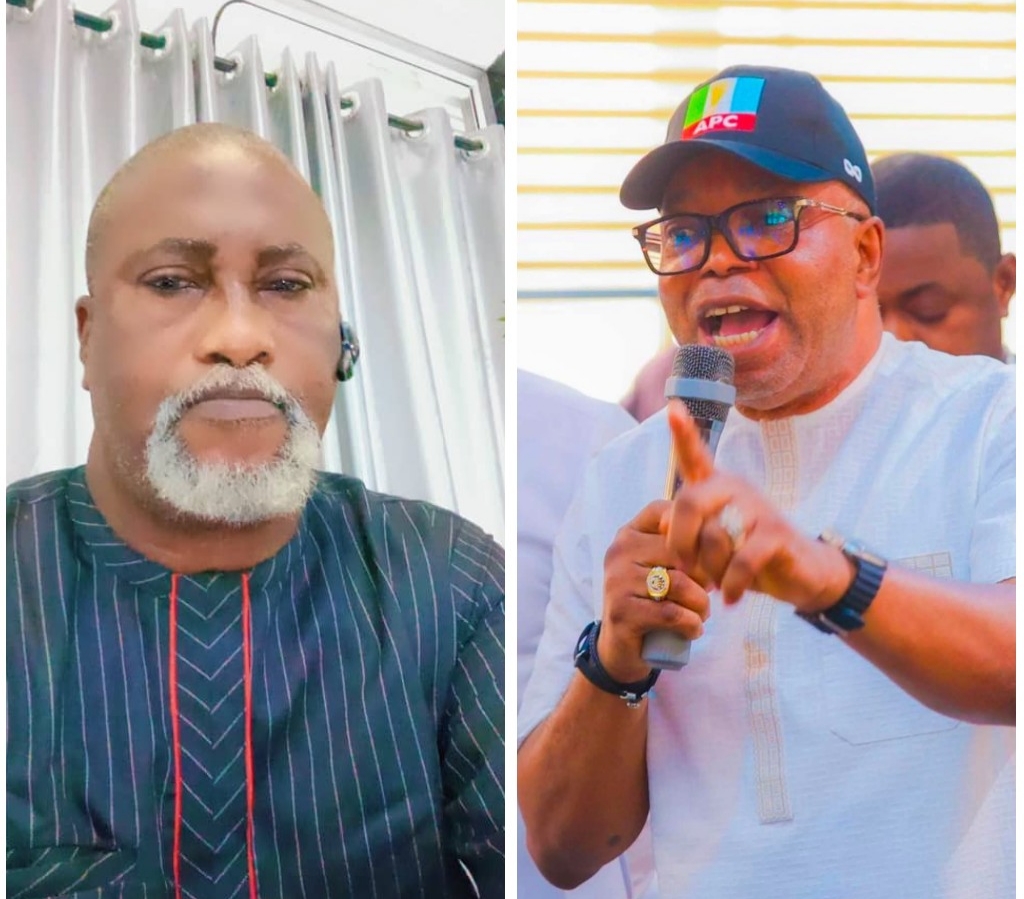
By Otunba Dr Babatunde Olushola Senbanjo (BOS)
Nigeria is gradually becoming a country where some politicians appear to believe that political power gives them the freedom to insult, threaten, intimidate, and demean anyone who disagrees with them. The disturbing question we must ask ourselves is this: when did political disagreement become an excuse for reckless statements, violent imagery, and personal attacks against fellow Nigerians?
The reported remarks attributed to Tenebe, including his defence of an AK-47-related statement and his alleged declaration that he would spit on former Vice President Atiku Abubakar and bite Peter Obi, deserve serious public scrutiny. No matter how deeply anyone disagrees with another politician, there must be limits to the language used in public discourse.
Politics should be about ideas, solutions, accountability, and the welfare of the people, not threats, insults, and the glorification of aggression.
What exactly is the message being communicated to ordinary Nigerians when prominent political figures speak in ways that suggest that their opponents deserve violence or public humiliation? What lesson are young people supposed to learn from leaders who appear more interested in attacking political opponents than explaining how they intend to improve the lives of the people?
Edo State deserves better. Nigeria deserves better. Our democracy deserves better.
THE QUESTION OF POLITICAL CONSISTENCY
One of the most troubling aspects of Nigerian politics is the apparent inconsistency displayed by some political actors over time. We have witnessed politicians who previously criticised a government or its leadership but later became supporters of the same political establishment or its successors.
Tenebe’s political journey and his reported positions on the APC-led administration therefore invite legitimate questions about consistency, accountability, and political conviction.
When some political figures strongly opposed former President Goodluck Jonathan, Nigerians listened to their arguments, assessed their criticisms, and formed opinions based on the issues they raised. Today, when some of those same political actors praise the APC-led administration under President Bola Ahmed Tinubu, citizens have every right to ask what has changed.
Have they resolved the problems they once criticised? Have Nigerians experienced the improvements they demanded? Have insecurity, unemployment, poverty, hunger, and the rising cost of living been sufficiently addressed?
Or have political interests, alliances, and calculations become more important than the principles these politicians once professed to defend?
These are legitimate questions in a democracy. Asking them is not hatred. It is a civic responsibility.
Nobody should be condemned merely for changing political parties or supporting a different administration. Democracy allows people to reconsider their positions. However, when political positions change, the public is entitled to demand a clear explanation, especially when the issues at stake affect millions of citizens.
Political loyalty must never become more important than the welfare of the people.
If a politician once believed that a particular administration was failing Nigerians, what evidence now justifies praising the current political establishment? If the circumstances have genuinely improved, let the achievements speak. If they have deteriorated, let the politician acknowledge the reality rather than dismissing every criticism as recklessness.
Nigerians are tired of political gymnastics. We want consistency, honesty, accountability, and leaders who can defend their positions with facts rather than hostility.
IS POLITICAL POWER NOW AN EXCUSE FOR RECKLESSNESS?
The reported statements concerning an AK-47, spitting on Atiku Abubakar, and biting Peter Obi raise a broader concern about the standard of public conduct expected from political figures.
An AK-47 is not an ordinary object or a harmless political slogan. It is a firearm associated with potentially lethal violence. Consequently, references to such weapons in political exchanges should never be treated casually, particularly in a country already struggling with insecurity, violent crime, and communal conflict.
Even if a speaker later insists that a statement was merely an expression of anger or a wish rather than a literal threat, the public still has a right to question the judgment behind such language.
Why should political discourse descend to a point where violence becomes part of the conversation?
Why should disagreements over political parties produce language that sounds more appropriate for a street confrontation than a democratic debate?
And why should Nigerians be expected to applaud behaviour that undermines the dignity of public office?
Leadership requires discipline. Political maturity requires restraint. Public influence comes with responsibility.
A politician who wants to convince Nigerians should demonstrate the strength of his arguments, not the intensity of his hostility.
If Tenebe believes that the APC-led administration is performing well, he should present the evidence. He should explain the policies he supports, identify the achievements he considers significant, and defend those positions before the Nigerian people.
If he disagrees with Atiku Abubakar or Peter Obi, he should challenge their policies, question their records, and explain why he believes their political alternatives are inferior.
That is how democracy works.
Insults do not create jobs. Threats do not reduce the price of food. Aggressive rhetoric does not secure our highways, improve our hospitals, strengthen our schools, or put money into the pockets of struggling families.
Nigerians need substance, not political theatre.
FROM GOODLUCK JONATHAN TO THE APC-LED ADMINISTRATION: WHERE ARE THE PRINCIPLES?
Let us address the broader political question directly.
During Goodluck Jonathan’s presidency, many political actors criticised the administration and argued that Nigeria needed a different direction. Some of those criticisms contributed to the political atmosphere that eventually produced the historic change of government in 2015.
Today, Nigerians are entitled to compare those past arguments with the realities of the present.
If a politician previously opposed a government because of insecurity, economic hardship, corruption, or poor governance, should those same concerns suddenly become irrelevant when a different political party occupies the seat of power?
Should the standards used to judge one administration disappear when political alliances change?
Should citizens be told to celebrate an administration simply because their preferred party controls the government?
Absolutely not!
The purpose of democracy is not to create permanent political enemies or unquestioning supporters. Its purpose is to give citizens the opportunity to choose leaders, demand results, challenge failures, and replace governments peacefully when they fall short of public expectations.
If the APC deserves praise for any achievement, let that achievement be acknowledged. But if the administration deserves criticism for its shortcomings, those shortcomings must also be discussed honestly.
The same standard must apply to every political party, whether APC, PDP, Labour Party, ADC, or any other political platform.
A responsible citizen does not surrender his conscience to a political party.
Political parties are vehicles for governance, not religious institutions whose every action must be defended. Their leaders and supporters must remain accountable to the people.
That is the standard Nigerians should demand from every politician.
ATIKU ABUBAKAR AND PETER OBI ARE POLITICAL OPPONENTS, NOT ENEMIES OF THE STATE
Atiku Abubakar and Peter Obi are prominent Nigerian political figures whose ideas, records, policies, and ambitions can legitimately be debated.
Nobody is above criticism. Neither Atiku nor Obi should be exempt from questions about their political records, policy proposals, leadership decisions, or vision for Nigeria.
However, disagreement must remain within the boundaries of responsible democratic engagement.
Political opponents are not enemies who must be humiliated or threatened. They are fellow citizens participating in the same democratic process.
Today, one politician may hold power. Tomorrow, another may win an election. Governments change, parties rise and fall, and political alliances evolve. But the country belongs to all Nigerians, not to one political party or its supporters.
What happens when political insults become normalised? What happens when younger generations begin to believe that the loudest, most aggressive, or most threatening person is the strongest leader?
We risk building a political culture in which intimidation replaces persuasion, personal attacks replace policy discussions, and loyalty to individuals becomes more important than loyalty to the nation.
That is a dangerous direction for any democracy.
Tenebe and every other political figure should understand that the ability to insult an opponent is not proof of political strength. The ability to disagree without dehumanising another person is a far greater demonstration of maturity.
EDO STATE DESERVES RESPONSIBLE POLITICAL LEADERSHIP
The people of Edo State are not interested in endless political drama. They want a government and political environment that prioritise development, security, education, healthcare, employment, infrastructure, and economic opportunities.
They want their children to have access to quality education. They want farmers to produce food without fear. They want traders to conduct business without being crushed by economic hardship. They want young people to find meaningful employment and build decent lives.
They also deserve political representatives who understand that public influence is a responsibility, not a licence for recklessness.
What practical benefit does an ordinary Edo citizen receive from political arguments centred on firearms, insults, and threats?
Does such rhetoric reduce unemployment? Does it improve the condition of our roads? Does it make healthcare more affordable? Does it help parents pay school fees?
Of course not.
The people deserve political discussions that address their real problems. They deserve leaders who can articulate a vision, present measurable objectives, and explain how their policies will improve living conditions.
Edo State must not become another arena where political loyalty is measured by the willingness to insult opponents or defend every statement made by party leaders.
Supporters of the APC, PDP, Labour Party, ADC, and other parties should be able to disagree peacefully, exchange ideas, and hold their leaders accountable.
No political affiliation should be more important than the peace and progress of Edo State.
PRESIDENT TINUBU AND THE APC MUST ALSO BE OPEN TO ACCOUNTABILITY
Supporting President Bola Ahmed Tinubu or the APC is a political choice. Opposing them is also a legitimate democratic choice.
But neither support nor opposition should prevent honest assessment of the administration’s performance.
Nigerians continue to debate the effects of economic reforms, the cost of living, food affordability, fuel prices, unemployment, insecurity, and the quality of public services. These issues require serious engagement, credible explanations, and measurable results.
A government that believes it is performing well should welcome questions and demonstrate its achievements. Its supporters should be prepared to defend its policies with evidence rather than treating every critic as an enemy.
Equally, opposition politicians must be prepared to explain their alternatives and demonstrate how they would address the nation’s problems.
That is the essence of democratic accountability.
If Tenebe believes the current administration is better than the previous government, he should tell Nigerians precisely why. If he believes the opposition has failed, he should identify the policies or decisions that justify his criticism.
But personal hostility cannot replace a reasoned political argument.
Nigeria needs a political culture where citizens can question the government without fear, opposition politicians can express their views peacefully, and supporters of different parties can coexist without being encouraged to hate one another.
NIGERIANS MUST REFUSE TO NORMALISE POLITICAL VIOLENCE
The future of our country cannot be built on intimidation, personal abuse, or the suggestion that political opponents deserve physical harm.
We must reject the idea that being a party loyalist means defending every utterance made by our preferred politicians. We must also reject the dangerous assumption that criticism of a political figure automatically makes someone an enemy.
A responsible political supporter should be able to tell a party leader when that leader is wrong.
A responsible public figure should be able to apologise when a statement crosses the line.
And a responsible government should be willing to listen when citizens express dissatisfaction.
Nobody loses dignity by choosing responsible language. Nobody becomes weak by treating political opponents with respect. And nobody demonstrates superior leadership by suggesting that disagreements should be settled through aggression.
The strength of democracy lies in the ability of people with differentttt political opinions to coexist peacefully.
We should judge politicians by their character, consistency, ideas, records, and contributions to society not by how aggressively they attack those who disagree with them.
MY FINAL MESSAGE TO TENEBE AND EVERY POLITICAL LOYALIST
Tenebe, if you believe in the APC-led administration, defend its achievements. If you believe President Bola Ahmed Tinubu is taking Nigeria in the right direction, explain the evidence behind your position. If you believe Atiku Abubakar and Peter Obi are unsuitable to lead Nigeria, challenge their records and policies with facts.
But Nigerians deserve better than political statements that appear to celebrate hostility.
Our country is facing serious economic and security challenges. Millions of citizens are struggling to meet their basic needs. Families are worried about their children’s future, businesses are fighting to survive, and young people are searching for opportunities.
At such a critical time, our political leaders and influential supporters should be encouraging peaceful participation, responsible debate, and constructive solutions.
We cannot continue to behave as though politics is a battle in which every opponent must be destroyed.
Nigeria is bigger than the APC. Nigeria is bigger than the PDP. Nigeria is bigger than the Labour Party. Nigeria is bigger than the ADC. And Nigeria is bigger than any individual politician, no matter how powerful or influential that person may be.
The country belongs to all of us, and no political ambition is worth sacrificing our peace, unity, and democratic values.
Let Tenebe and every other political actor understand that Nigerians are watching. Citizens have the right to ask questions, examine political records, challenge inconsistencies, and demand better standards of public conduct.
We must not allow political loyalty to silence our conscience or turn democratic disagreement into personal hostility.
Our demand is simple: responsible leadership, accountable governance, peaceful political engagement, and a better Nigeria for everyone.
ENOUGH OF POLITICAL ARROGANCE. ENOUGH OF RECKLESS RHETORIC. ENOUGH OF LEADERSHIP WITHOUT ACCOUNTABILITY.
Nigeria needs leaders who can build, not those who merely boast; leaders who can unite, not those who encourage division; and leaders who can offer solutions, not those who turn political disagreements into spectacles of hostility.
The time has come for Nigerians to look beyond party colours, political propaganda, and personal loyalty.
Let us judge every politician by the same standard and demand a country where competence, character, peace, and public service matter more than insults and threats.
GOD BLESS THE FEDERAL REPUBLIC OF NIGERIA.

For publication of your news content, articles, videos or any other news worthy materials, please send to newsleverage1@gmail.com. For more enquiry, please call +234-901-067-1763 or whatsapp +234-901-067-1763. To place an advert, please call 09010671763





NAFDAC Seizes Counterfeit Alcoholic Beverage Packaging Materials Worth Over ₦200m in Aba

From Promises to Progress: New Direction Agenda 2027 Backs Chidi Nnamdi for Accountable Leadership

Abia City Boy Movement Congratulates Mayor Lucky Igbokwe On Appointment To APC Presidential Campaign Council

Abia NUJ Summons Emergency Congress Thursday Over Crucial Union Matters

Cybersecurity Month 2026: Mandate 27 Group Highlights Ikuku’s ICT Empowerment Record, Backs Orji for 2027
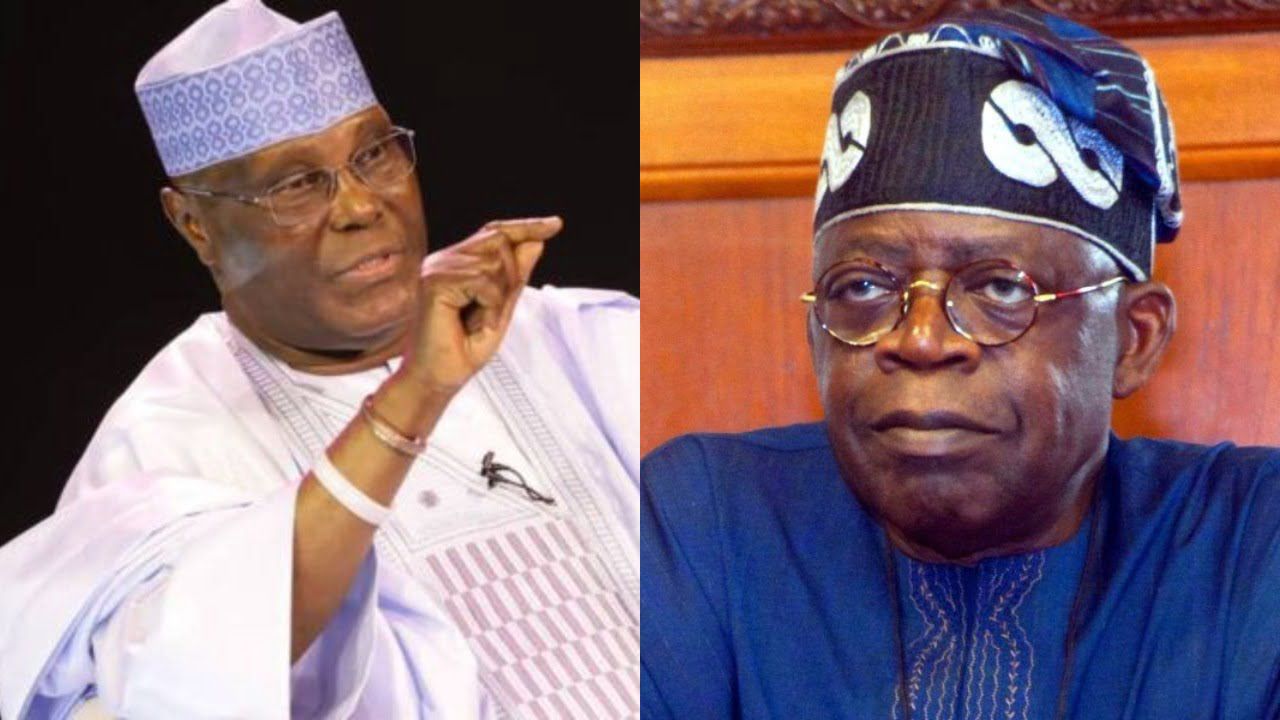
Atiku: Bola Made Life Expensive, I’ll Make Nigeria Affordable Again

Otunba Babatunde Olushola Senbanjo Condemns Tenebe’s Alleged Violent Rhetoric, Warns Against Normalising Political Intimidation

Otti Expands ThriveAbia Digital Programme, Approves Training 1,000 Youths

ORJI 2027: How Chinedum Orji Plans to Replace Political Deception With Development in Ikwuano/Umuahia – Mandate Group

Eze Eberechukwu Oji Receives New Book on Arochukwu’s Cultural Heritage, Eulogizes Author

Ikeji Aro 2026 on Avor Osu Day: Nkita Oku, Inum, Ekpe Erim, Other Ekpo Masquerades Pay Homage to Eze Eberechukwu Oji

97-Year-Old Dr Mrs. Shields Reconstructs, Reopens Mary Slessor Library in Arochukwu

Ikeji-Aro 2026: ‘We Are Repackaging Aro Traditional Healing Practices for the Younger Generation’ – Mazi Ernie Onwumere

2027: Hon. Ike Bishop Okoronkwo Mobilises Abia North Grassroots, Tasks ADC Coordinators on Polling Units

Eze Eberechukwu Oji Commissions Amuvi Community Self-Built Connectivity Hub

Cardinal Onaiyekan: Governor Alia Was Suspended for Defying Catholic Church Rules on Politics

Obioma-Ngwa 2027: Chidi Nnamdi Pushes Case for Responsive Representation – Comrade Abuchi Isaac

‘We Will, We Will, We Will’: Atiku Slams Tinubu Over Promises, Questions Achievements After Three Years

Leave Chidi Nnamdi Alone, Earn the People’s Trust – New Direction Agenda

NIGERIA at 66: What is the Way Forward? – Otunba Babatunde Olushola Senbanjo Calls for Rescue, Rebuild and Restore the Nation

The final 6 ‘Game of Thrones’ episodes might feel like a full season
New Season 8 Walking Dead trailer flashes forward in time
Mod turns ‘Counter-Strike’ into a ‘Tekken’ clone with fighting chickens
Meet Superman’s grandfather in new trailer for Krypton
Disney’s live-action Aladdin finally finds its stars
Who are the early favorites to win the NFL rushing title?
The old and New Edition cast comes together to perform
Boxing continues to knock itself out with bewildering, incorrect decisions
Steph Curry finally got the contract he deserves from the Warriors
Phillies’ Aaron Altherr makes mind-boggling barehanded play
-
 Abia State News3 weeks ago
Ikeji Aro 2026 on Avor Osu Day: Nkita Oku, Inum, Ekpe Erim, Other Ekpo Masquerades Pay Homage to Eze Eberechukwu Oji
-
 Abia State News3 weeks ago
97-Year-Old Dr Mrs. Shields Reconstructs, Reopens Mary Slessor Library in Arochukwu
-
 Abia State News4 weeks ago
Ikeji-Aro 2026: ‘We Are Repackaging Aro Traditional Healing Practices for the Younger Generation’ – Mazi Ernie Onwumere
-
 POLITICS3 weeks ago
2027: Hon. Ike Bishop Okoronkwo Mobilises Abia North Grassroots, Tasks ADC Coordinators on Polling Units
-
 Abia State News3 weeks ago
Eze Eberechukwu Oji Commissions Amuvi Community Self-Built Connectivity Hub