
Articles
2027: The Opposition’s Moment of Truth, Unite or Lose – Balogun

By Emmanuel Balogun, PhD

There is a dangerous illusion that Nigeria’s opposition must avoid: that because many Nigerians are dissatisfied with the present government, victory in 2027 is already within its grasp. It is not. Public dissatisfaction does not automatically become votes, and votes do not automatically become victory. Between frustration with government and political change lies the difficult work of unity, organisation, credibility, strategy and sacrifice.
The opposition may have an extraordinary opportunity before it, but it could lose that opportunity through the same weakness that has repeatedly frustrated attempts at political change in Nigeria: division. If the major opposition forces enter the 2027 presidential election separately, each defending its own candidate, party and political ambition, they may once again divide the electorate whose desire for change they claim to represent. The incumbent could then win not because every dissatisfied Nigerian supports him, but because his opponents failed to consolidate their strength.
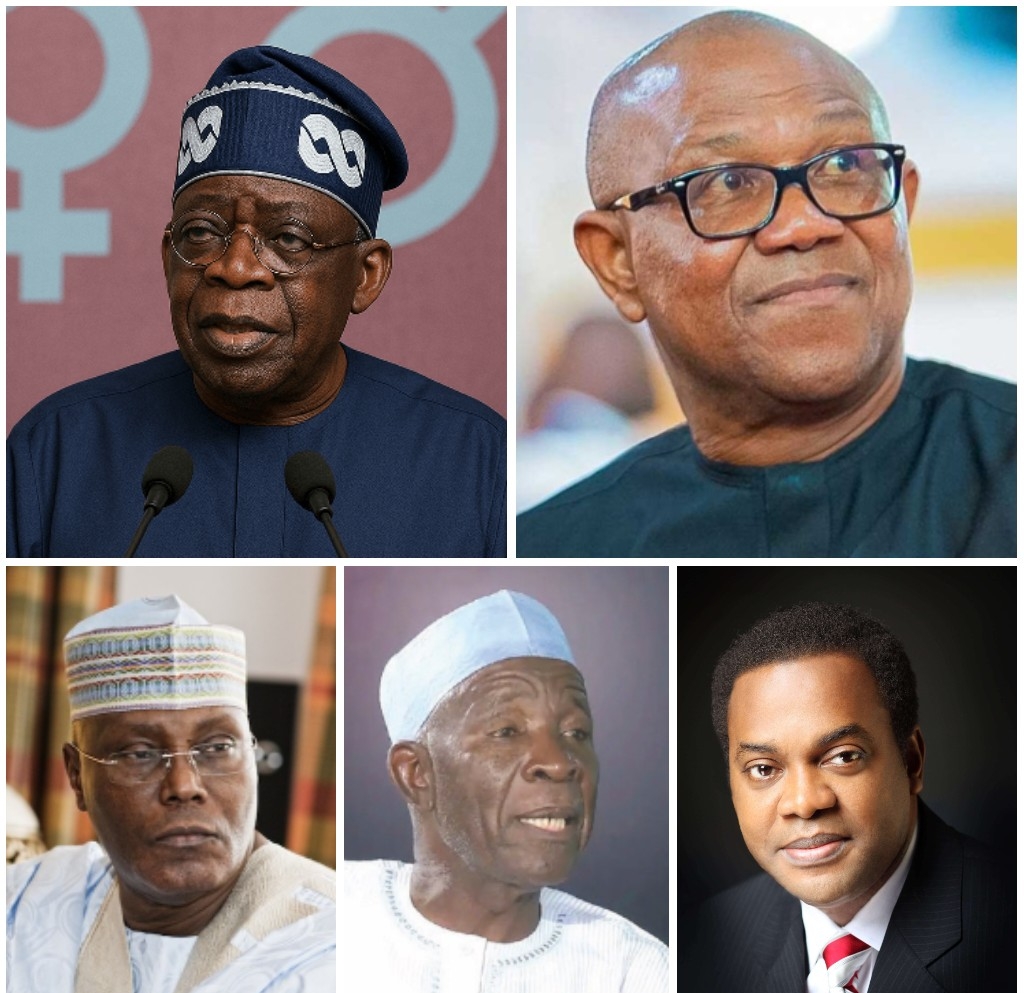
The experience of 2023 should remain a warning. Bola Tinubu received approximately 8.79 million votes, Atiku Abubakar about 6.98 million, and Peter Obi about 6.1 million. The combined votes of the two principal opposition candidates were considerably higher than the eventual winner’s total. That does not mean those votes could simply have been transferred from one candidate to another. Voters are not political arithmetic. The real lesson, however, is unmistakable: fragmented opposition strength cannot automatically produce electoral victory. A broad coalition needs a single candidate capable of attracting support across the country’s political, regional and demographic divides.
Nigeria has demonstrated before that such consolidation can defeat an incumbent. In 2015, opposition parties and political forces that had previously competed against one another came together under the newly formed All Progressives Congress (APC). Muhammadu Buhari emerged as the principal alternative to Goodluck Jonathan, and the Peoples Democratic Party (PDP) government was defeated after 16 years in power. The significance of 2015 was therefore not merely Buhari’s personal popularity. It was the ability of competing political interests to subordinate individual ambitions to a larger electoral objective.
That lesson remains relevant, but 2027 will not simply be a repetition of 2015. Bola Tinubu is neither Goodluck Jonathan nor Muhammadu Buhari. He is an experienced politician and strategist, a former governor and an incumbent president with an established political structure and the considerable advantages that accompany control of the federal government. His administration will also have an economic record to defend and, depending on developments before the election, a narrative of economic stabilisation to present to Nigerians.
Some macroeconomic indicators have shown improvement. Nigeria has recorded stronger economic growth, while international institutions have noted developments in areas such as foreign-exchange stability and external resilience. Moody’s revised Nigeria’s outlook from stable to positive while maintaining its B3 rating, although it also pointed to continuing fiscal weaknesses. The World Bank has projected Nigerian economic growth of about 4.2 per cent in 2026.
The opposition must therefore be intellectually honest. It cannot credibly campaign on the claim that everything under Tinubu has failed. Such a position would be politically convenient but economically indefensible. The more compelling question is this:
If the economy is stabilising, why are so many Nigerian households still struggling to feel the improvement?
That is where the opposition can build a powerful and credible argument.
Macroeconomic recovery and household economic recovery are not the same thing. Government may point to GDP growth, improved foreign-exchange conditions, increased revenues and stronger investor confidence. These are important indicators of economic health. But ordinary Nigerians experience the economy through the price of food, transportation, rent, school fees, electricity, healthcare and the availability of decent employment.
A family does not eat GDP growth. A trader does not pay school fees with a favourable sovereign outlook. A young graduate does not become employed because foreign reserves have improved.
The issue, therefore, is not whether macroeconomic stability matters. It does. The issue is whether economic reforms are translating into improved living conditions for citizens. The opposition should ask when the sacrifices Nigerians have been asked to make will begin producing visible and measurable benefits in their daily lives.
This brings the question of fuel subsidy into sharp focus.
It would be easy for the opposition to promise an immediate return to the old subsidy regime. But that would not necessarily constitute responsible economic policy. Nigeria’s previous subsidy system imposed a heavy fiscal burden and created opportunities for abuse, arbitrage and smuggling. The more intelligent position is not simply to demand a return to the past, but to ask whether Nigeria can design a more targeted mechanism that uses its crude-oil resources to lower domestic energy costs while strengthening local refining.
One possible approach is a refinery-based subsidy mechanism, under which Nigerian refineries receive crude oil at a substantially more affordable and predictable domestic price, enabling them to produce refined petroleum products more cheaply for the Nigerian market. The objective would be to move the subsidy away from an open-ended payment associated with imported petrol and instead attach the benefit to legitimate domestic refining and production.
Such an approach could have effects beyond the filling station. Lower-cost domestically refined petroleum products could reduce transportation and energy costs, with implications for food distribution, agricultural inputs, manufacturing, commerce and other areas of the economy. Properly designed, transparently administered and tied to actual domestic production, it could simultaneously support consumers, encourage domestic refining and reduce dependence on imported petroleum products.
The opposition should equally recognise that the cost of petroleum products cannot be addressed in isolation from the cost of transporting the products and the goods and people that depend on them. One other effective way to reduce this burden is to deliberately revitalise Nigeria’s rail system and make rail transportation a central component of the national economy. Petroleum products, agricultural produce, raw materials and manufactured goods should increasingly be moved by rail over long distances rather than relying almost entirely on road transportation. This would reduce pressure on the highways, lower vehicle operating and maintenance costs, reduce road deterioration and, importantly, reduce the quantity of diesel and petrol consumed in the movement of goods across the country. The savings would ultimately have a ripple effect on the prices of commodities.
The same railway network should be developed to provide affordable and efficient passenger transportation for the masses. A functional national rail system would give Nigerians a cheaper alternative for long-distance travel while reducing the enormous pressure placed on road transport and the consequent demand for petrol and diesel. The opposition should therefore present railway revitalisation not merely as an infrastructure project, but as an economic cost-reduction strategy. If cheaper crude enables domestic refineries to lower petroleum prices, and an efficient rail network simultaneously reduces the quantity of petroleum required to move goods and people, Nigeria would be attacking the cost-of-living crisis from both ends. This is the kind of integrated economic thinking Nigerians should expect from an opposition seeking to replace the incumbent: not simply promising to restore subsidy, but designing a system in which the cost of energy, transportation and production is structurally reduced.
There is, however, a legitimate concern about cross-border smuggling. If Nigerian petroleum products become significantly cheaper than those in neighbouring countries, the incentive to divert subsidised products across the borders could increase. But that challenge should be addressed through effective border management, modern surveillance, monitoring of fuel distribution, enforcement against organised smuggling networks and better coordination among security and regulatory agencies.
Nigeria should not be forced to keep the cost of its own petroleum products artificially high because it cannot adequately police its borders. Protecting the benefit of cheaper domestic energy is itself part of the responsibility of government.
The fundamental question surrounding subsidy reform therefore remains: what happened to the savings from its removal? How much has actually been saved? How much has been redirected into public transportation, healthcare, education, infrastructure and social protection? What measurable benefits have Nigerians received in return for the sacrifices they have been asked to make?
The opposition should consequently resist the temptation to promise the reversal of every reform. Its message should be more sophisticated: reform may be necessary, but reform must be fair, transparent, properly sequenced and designed to protect those who bear its greatest cost.
The same principle should guide its economic programme.
Food security must become a central political issue. Nigeria possesses enormous agricultural potential, yet millions of Nigerians continue to struggle with high food prices. The challenge is not simply inadequate production. It involves insecurity, poor storage, transportation, processing, financing, access to markets and infrastructure. A serious government must therefore develop the entire agricultural value chain rather than merely promise farmers financial assistance.
Employment requires similar seriousness. Nigerians have heard enough promises about creating millions of jobs without being told where those jobs will actually come from. Manufacturing, agro-processing, construction, housing, mining, digital services, renewable energy, transportation and small and medium-sized enterprises can generate employment if government creates the right economic environment.
Government does not have to employ every Nigerian. It must create the conditions under which Nigerians can employ themselves and others.
No credible economic programme can ignore electricity. The opposition should stop promising “constant power” as though electricity can be produced by political declarations. It should provide measurable targets: how much additional generation will be achieved? How will transmission capacity be expanded? How will distribution losses be reduced? How will metering improve? What roles will gas, hydro and renewable energy play? How will electricity costs for industries be addressed? And how will the financial sustainability of the power sector be secured?
A political movement that can answer these questions convincingly will demonstrate that it is preparing to govern rather than merely preparing to campaign.
Security must receive the same level of seriousness. Kidnapping, banditry, terrorism and communal violence continue to impose enormous human and economic costs. The fundamental question is whether the Nigerian state can adequately protect its citizens.
But criticism alone is not enough. The opposition must present a coherent national security doctrine encompassing intelligence gathering, policing, military coordination, border security, technology, community intelligence, prosecution and judicial reform.
Security is also an economic issue. A farmer who cannot safely reach his farm cannot produce. A transporter who fears kidnapping cannot operate normally. An investor who considers an area unsafe will take his capital elsewhere. A community that cannot sleep peacefully cannot develop. Insecurity is therefore not merely a security problem; it is a development and economic problem.
Moreover, after all these issues comes the greatest obstacle facing the opposition itself: the opposition’s inability to unite.
Nigeria has no shortage of politicians, political parties, grievances or policy ideas. What it lacks is sufficient political discipline to bring competing interests together around a common national objective.
If three or four major opposition figures each believe that only they can lead Nigeria, they may individually possess enough political strength to prevent one another from winning, while none possesses enough strength to defeat the incumbent.
That is the paradox: each may be individually strong, but together they could be formidable; separately, they could become instruments of one another’s defeat.
Unity, therefore, is not weakness. It is electoral strategy.
The crucial question should not be, “Who deserves to be president?” It should be, “Who gives the opposition the greatest realistic chance of winning and governing Nigeria effectively?”
That decision must be based on objective considerations: national acceptability, regional reach, voting strength, political structure, integrity, campaign capacity, organisational discipline and the ability to attract voters beyond a candidate’s traditional base.
If the strongest candidate is not oneself, genuine statesmanship requires accepting that reality. A politician who insists, “It must be me or nobody,” may be protecting personal ambition while sacrificing the national objective.
But genuine coalition-building goes beyond sharing a platform or appearing together at political gatherings. The opposition must agree on the presidential candidate, governing programme, campaign structure, financing, regional representation, election monitoring and mechanisms for resolving disputes. Most importantly, it must establish an understanding of how the coalition will govern after victory.
Nigerians are entitled to ask: If these politicians cannot agree before receiving power, why should anyone believe they will govern together after receiving it?
The opposition must therefore demonstrate before the election the discipline it is asking Nigerians to trust after the election.
But unity alone will not win 2027. The opposition must give Nigerians something to vote for, not merely someone to vote against.
It needs a compelling national programme covering the economy, security, electricity, food, employment, healthcare, education, taxation, infrastructure, institutional reform and responsible public spending. Nigerians should know what the proposed government intends to accomplish in its first 100 days, first year and first term.
That is how an opposition becomes a government-in-waiting.
It should also have the courage to acknowledge what the present administration has done well. This may appear politically counterintuitive, but it would strengthen its credibility. If certain reforms have improved macroeconomic stability, acknowledge it, then ask whether the cost was properly managed and whether the benefits are reaching ordinary Nigerians. If infrastructure projects are useful, acknowledge their value, then question their financing, execution, transparency and distribution. If government revenue has increased, recognise the improvement, then ask whether citizens are receiving commensurate value.
Truth is a more powerful political weapon than propaganda.
The opposition must also recognise the advantages of incumbency. The president has national visibility, governmental machinery and an established political network. He has time to present the benefits of his policies before Nigerians vote. If inflation continues to moderate, investment improves, foreign exchange becomes more stable and economic growth strengthens, the administration will have a narrative with which to campaign.
A serious opposition must therefore prepare for both possibilities. It must be ready if economic hardship persists, but it must also be ready if the economy improves. It should never build its political strategy around the hope that Nigerians remain miserable. It must win because it offers a better future, not merely because the present is difficult.
And that is why the 2027 election will, in many respects, be won long before election day.
Candidate selection, coalition building, grassroots organisation, polling-unit structures, voter mobilisation, credible party agents, election monitoring, fundraising, policy development and disciplined communication will be decisive. Social-media popularity is not a substitute for political organisation. A politician can trend every day on the internet and still lose at the polling unit.
The opposition must therefore move from online enthusiasm to physical organisation.
There is undoubtedly a political opportunity. Economic hardship remains a serious concern. Security remains a major national issue. Youth unemployment and underemployment remain pressing challenges. Nigerians continue to demand better public services, greater accountability and more effective government.
But these conditions do not automatically deliver victory.
Public dissatisfaction is not a political strategy. Anger is not organisation. Popularity is not necessarily electability. And multiple opposition candidates are not the same thing as one winning opposition.
The opposition must convert the mood of the country into a coherent, disciplined and credible political movement.
That will require courage, compromise and sacrifice. Above all, it will require leaders who are prepared to place Nigeria above personal political ambition.
The choice before the opposition is now remarkably clear. It can continue along the familiar path of separate parties, competing presidential ambitions, endless negotiations, mutual suspicion and fragmented votes. Or it can recognise the historical moment and construct a genuinely united national alternative.
The first path could hand the incumbent another victory without requiring him to win the support of every dissatisfied Nigerian. The second could produce one of the most consequential electoral contests in Nigeria’s democratic history.
Tinubu is not Jonathan. He is not Buhari. He will not be defeated simply because Nigerians are unhappy. He will have to be defeated by an opposition that is more united, more organised, more credible and more prepared to govern.
The opportunity is there. The issues are there. The electorate is watching.
But the opposition must now answer the most important question of all:
Does it genuinely want to win, or does every individual leader merely want to be the one who wins?
Those are not the same thing.
Nigeria needs the former.
If the opposition genuinely believes that Nigerians are ready for political change, then its leaders must be prepared to make the sacrifices that genuine change demands. They must unite before the election, agree before the campaign reaches its climax, organise before the votes are cast and put Nigeria above the ambition of any individual politician.
Because in 2027, the opposition may have its greatest opportunity in years.
It must not lose that opportunity to itself.
For publication of your news content, articles, videos or any other news worthy materials, please send to newsleverage1@gmail.com. For more enquiry, please call +234-901-067-1763 or whatsapp +234-901-067-1763. To place an advert, please call 09010671763

Iri Ji Festival: Ohokobe Mbaocha Community Endorses Rt Hon Chinedum Enyinnaya Orji for Rep.

Bourdex Unveils 5-Point Blueprint to Transform Abia North From Agriculture to Agribusiness

Bourdex Celebrates Ike Nwachukwu at 86, Hails Abia Icon’s Service to Nigeria

Nigeria, Spain Target Stronger Tourism, Trade, Investment Partnership

2027: Bourdex Challenges OUK, Says Abia North Senate Seat Belongs To The People

2027: The Opposition’s Moment of Truth, Unite or Lose – Balogun

2027: I’m Ready To Step Down For Stronger Opposition Candidate – Donald Duke

Opposition Must Unite To Unseat Incumbent, Says Nnenna Ukeje

September: Ikuku Assures Constituents of Renewed Commitment to Their Welfare

2027: Isuikwuato LP Leaders Mobilise for Bourdex, Declare ‘Operation Win Your Polling Unit’

35 Years After Kirikiri Release, Abdul Mahmud Remembers Bamidele Aturu, Says ‘The Struggle Remains Unfinished’

Tinubu’s Intervention on the Osun Accounts: A Welcome Commitment to Electoral Fairness Within Constitutional Limits – Afikuyomi, Esq.

#OsunDecides2026: Akpabio Stops Collation – Davido

Otunba Babatunde Olushola (BOS) at 69: Celebrating a Life of Mentorship, Leadership, Compassion and Service

Ibeku Traditional Rulers Endorse Chinedum Orji for Ikwuano/Umuahia Federal Constituency

Former IGP Mike Okiro Hoists CityBoy Movement Flag in Abia, Applauds Seyi Tinubu for Creating Movement

Abia Govt Explains Teacher Recruitment Process, Discloses Number of Candidates Who Scored Over Benchmark

Why Supporters Say Chinedum Orji Is the Right Choice for Ikwuano/Umuahia Federal Constituency in 2027 – Onukwuo

24A, 24B Aba/Owerri Road: Counsel Defends Ribiza Deal, Challenges Authority of Disputed 2014 Resolution

Otunba Senbanjo Celebrates Babangida at 85, Hails Former Head of State as Icon of Leadership and National Service

The final 6 ‘Game of Thrones’ episodes might feel like a full season
New Season 8 Walking Dead trailer flashes forward in time
Mod turns ‘Counter-Strike’ into a ‘Tekken’ clone with fighting chickens
Meet Superman’s grandfather in new trailer for Krypton
Disney’s live-action Aladdin finally finds its stars
Who are the early favorites to win the NFL rushing title?
The old and New Edition cast comes together to perform
Boxing continues to knock itself out with bewildering, incorrect decisions
Steph Curry finally got the contract he deserves from the Warriors
Phillies’ Aaron Altherr makes mind-boggling barehanded play
-
 Articles5 days ago
35 Years After Kirikiri Release, Abdul Mahmud Remembers Bamidele Aturu, Says ‘The Struggle Remains Unfinished’
-
 Articles4 weeks ago
Tinubu’s Intervention on the Osun Accounts: A Welcome Commitment to Electoral Fairness Within Constitutional Limits – Afikuyomi, Esq.
-
 POLITICS3 weeks ago
#OsunDecides2026: Akpabio Stops Collation – Davido
-
 METRO3 weeks ago
Otunba Babatunde Olushola (BOS) at 69: Celebrating a Life of Mentorship, Leadership, Compassion and Service
-
 POLITICS4 days ago
Ibeku Traditional Rulers Endorse Chinedum Orji for Ikwuano/Umuahia Federal Constituency