
Articles
Nigeria Needs Leadership, Not Politics of Personal Power – Otunba Babatunde Olushola Senbanjo

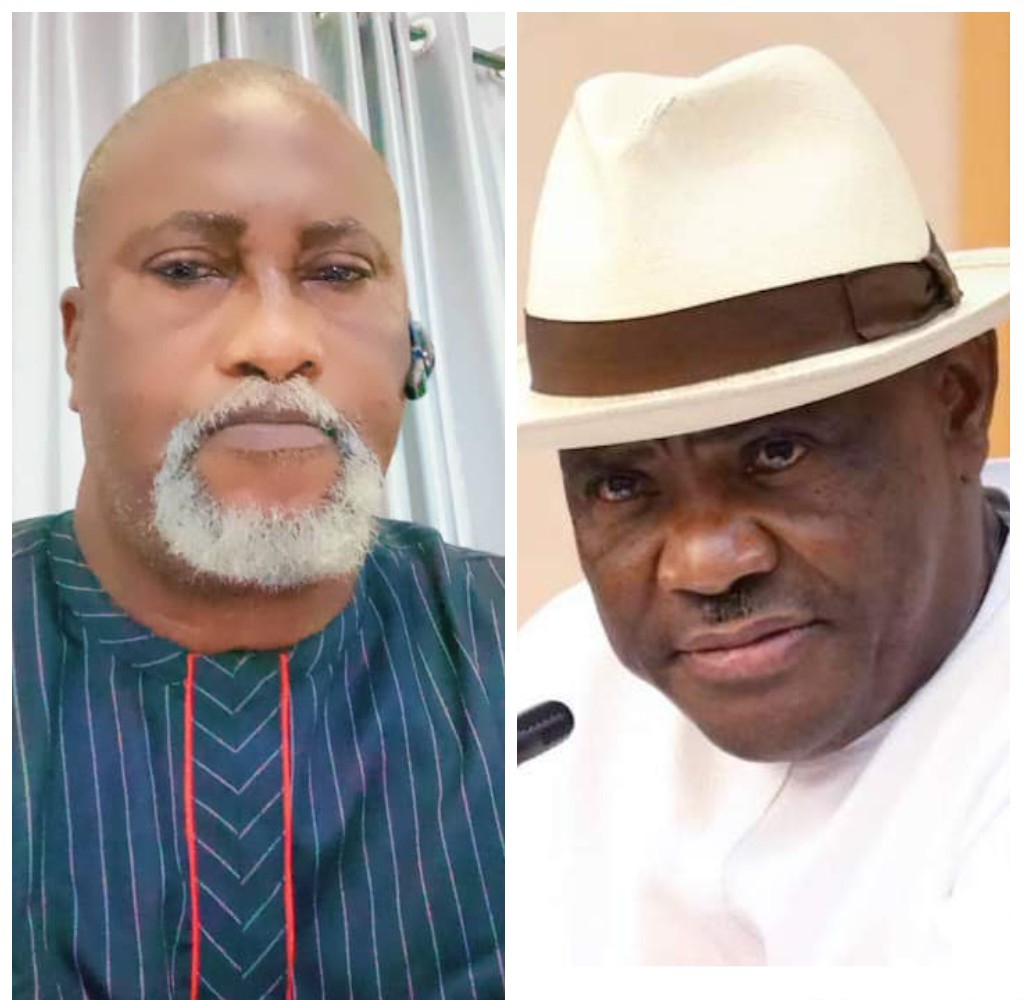
By Otunba Dr Babatunde Olushola Senbanjo (BOS)
There comes a time in the life of every nation when citizens must speak honestly about the conduct of those entrusted with public responsibility. Public office is not a personal throne, and political appointment is not a licence to treat citizens, institutions, colleagues or even other elected officials with contempt.
The ongoing public debate surrounding the conduct and political style of the FCT Minister, Nyesom Wike, deserves serious attention not because anyone is above criticism, but precisely because nobody occupying public office should be above scrutiny.
The office of the Minister of the Federal Capital Territory carries enormous responsibility. Abuja belongs to Nigerians. It is the nation’s capital, and the authority exercised there is ultimately derived from the Nigerian Constitution and the people. Therefore, the occupant of that office should be constantly reminded that power is temporary, accountability is permanent, and every public office holder remains a servant of the people.
What concerns many Nigerians is the perception that political power can sometimes produce an attitude of superiority, confrontation and unwillingness to listen. Whether such perceptions are justified in every particular case is a matter for Nigerians to judge from documented conduct and statements. But the broader principle is unquestionable: public officials must be accountable for how they exercise power and how they relate to citizens and institutions.
Nobody should be made to feel that questioning a government official is an act of disrespect.
Nobody should be made to believe that holding a powerful appointment places an individual beyond criticism.
Nobody should be expected to remain silent simply because the person involved has political influence.
And nobody, regardless of position, should confuse authority with ownership.
NIGERIA IS NOT THE PROPERTY OF ANY POLITICIAN.
The Federal Capital Territory is not a personal estate. Government offices are not family possessions. Political appointments are not permanent titles of nobility. Ministers, governors, senators, legislators and other officials are entrusted with responsibilities for a limited period and are expected to exercise those responsibilities within the law and in the public interest.
That is why the presidency itself must understand that defending institutions does not mean protecting individuals from legitimate criticism. If Nigerians perceive unacceptable conduct from an appointee, the appropriate response should not be political silence, excuses or partisan protection. The appropriate response should be institutional accountability.
WHO WATCHES THE POWERFUL?
That is the question Nigerians must continue asking.
A healthy democracy cannot depend on the personality of one individual. It must depend on institutions strong enough to ensure that every public officer, whether powerful or ordinary, is subject to the same constitutional standards.
If a minister makes a controversial statement, Nigerians have the right to question it.
If a minister takes a controversial decision, Nigerians have the right to demand an explanation.
If citizens believe an official’s conduct is inconsistent with the dignity expected of public office, they have the right to express that concern peacefully and lawfully.
That is not rebellion.
That is democracy.
We must also be careful not to turn legitimate criticism into personal abuse. Calling for accountability is stronger than exchanging insults. Nigerians should challenge policies, statements, decisions and documented conduct with facts, evidence and constitutional principles.
The real issue is not whether one politician is stronger than another.
The real issue is whether Nigeria’s institutions are strong enough to restrain every public official when necessary.
A minister should not have to be personally feared before citizens can speak. A governor should not be untouchable because of political connections. A president should not be expected to protect every member of his administration from legitimate scrutiny.
The presidency must understand that loyalty to government does not mean loyalty to individual personalities. The greatest loyalty any administration can demonstrate is loyalty to the Constitution, the Nigerian people and the principles of accountable government.
POWER IS TEMPORARY. NIGERIA IS PERMANENT.
Every politician who occupies a powerful office today should remember that political seasons change. Appointments change. Governments change. Alliances change. But the consequences of decisions taken in public office remain part of the nation’s history.
The question future generations will ask is not how powerful a minister appeared while in office.
They will ask:
What did he do with the power entrusted to him?
Did he strengthen institutions?
Did he respect the rule of law?
Did he listen to citizens?
Did he encourage accountability?
Did he use authority to serve the public interest?
Did his actions contribute to a stronger Nigeria?
These are the questions that matter.
Nigeria cannot continue building a political culture where aggression is mistaken for strength, confrontation is mistaken for leadership, and political influence is mistaken for personal authority.
Leadership requires courage, but it also requires restraint.
Leadership requires firmness, but it also requires respect.
Leadership requires authority, but it also requires accountability.
And above everything else, leadership requires humility.
This is therefore a call not merely against one individual, but against a political culture in which public office holders become too powerful to question.
ENOUGH OF PERSONALITY-DRIVEN POLITICS
Let us build a Nigeria where institutions are stronger than individuals.
A Nigeria where ministers answer questions.
A Nigeria where citizens can criticise government without fear.
A Nigeria where political appointments do not create untouchable personalities.
A Nigeria where the presidency understands that accountability is not an attack on government; it is one of the foundations of legitimate government.
A Nigeria where every public official remembers the words that should guide every person entrusted with public authority:
YOU ARE THERE TO SERVE, NOT TO RULE
Nyesom Wike, like every other public office holder, deserves the opportunity to explain and defend his actions where questions arise. But Nigerians equally deserve the right to ask those questions.
That is democracy.
That is accountability.
That is citizenship.
And that is the Nigeria we should continue demanding.
No minister is bigger than Nigeria.
No politician is bigger than the Constitution.
No appointment is bigger than the people.
No political power should be above accountability.
Nigeria belongs to all of us, not to politicians, not to parties, and not to individuals.
Let public office remain public service. Let power come with responsibility. Let authority come with humility. And let accountability apply to everyone.

For publication of your news content, articles, videos or any other news worthy materials, please send to newsleverage1@gmail.com. For more enquiry, please call +234-901-067-1763 or whatsapp +234-901-067-1763. To place an advert, please call 09010671763






2027: Chidi Nnamdi Pledges Jobs, Youth Empowerment, Community Development for Constituents

ALM Rejects Purported Sam Nworgu Adoption, Reaffirms Adinigwe Nwoke as Preferred 2027 Candidate

UNN Business School Director Visits ISDIS, Eyes Global Leadership in Professional Education

Asaba Massacre: Nigeria Must Share Our Pain, Learn From Tragedy – Nduka-Eze

Tinubu Departs Abuja for Makkah to Pray for Nigeria

TUC Rejects FG’s N70,000 Wage Allowance, Demands Salary Review

AfriCANDO 2026: Abia Woos Global Investors, Set to Showcase Economic Potential to World

2027: New Direction Agenda Backs Chidi Nnamdi, Says Constituency Deserves Competent, Purposeful Representation

Chinedum Enyinnaya Orji Celebrates Dr. Philip Nto, Hails Contributions To Education

Bourdex Unveils Masterplan to Transform Abia North Markets into Agro-Processing, Job Creation Hubs

Cardinal Onaiyekan: Governor Alia Was Suspended for Defying Catholic Church Rules on Politics

Eze Eberechukwu Oji Receives New Book on Arochukwu’s Cultural Heritage, Eulogizes Author

2027: INEC Warns Against Private Declaration of Election Results, Says Commission Has Exclusive Authority

NIGERIA at 66: What is the Way Forward? – Otunba Babatunde Olushola Senbanjo Calls for Rescue, Rebuild and Restore the Nation

‘We Will, We Will, We Will’: Atiku Slams Tinubu Over Promises, Questions Achievements After Three Years

How Customs ACG, Others Defrauded Man of ₦96m Over Fake Container Auction – Verydarkman

FG Announces 30-Day Petrol Discount at NNPC Stations

Akpabio’s Cruel Ignorance: Punishing Suicide Survivors Is No Answer to Despair – Abdul Mahmud

2026 Teachers’ Day: Otti Approves N1bn Appreciation Fund, Orders Payment of Outstanding Teachers’ Dues

66 Years of Independence: Otunba Babatunde Olushola Senbanjo Calls for Rejection of APC in 2027, Says Nigeria Must Reclaim Its Promise

The final 6 ‘Game of Thrones’ episodes might feel like a full season
New Season 8 Walking Dead trailer flashes forward in time
Mod turns ‘Counter-Strike’ into a ‘Tekken’ clone with fighting chickens
Meet Superman’s grandfather in new trailer for Krypton
Disney’s live-action Aladdin finally finds its stars
Who are the early favorites to win the NFL rushing title?
The old and New Edition cast comes together to perform
Boxing continues to knock itself out with bewildering, incorrect decisions
Steph Curry finally got the contract he deserves from the Warriors
Phillies’ Aaron Altherr makes mind-boggling barehanded play
-
 NATIONAL NEWS3 weeks ago
Cardinal Onaiyekan: Governor Alia Was Suspended for Defying Catholic Church Rules on Politics
-
 METRO2 weeks ago
Eze Eberechukwu Oji Receives New Book on Arochukwu’s Cultural Heritage, Eulogizes Author
-
 NATIONAL NEWS3 weeks ago
2027: INEC Warns Against Private Declaration of Election Results, Says Commission Has Exclusive Authority
-
Articles4 weeks ago
NIGERIA at 66: What is the Way Forward? – Otunba Babatunde Olushola Senbanjo Calls for Rescue, Rebuild and Restore the Nation
-
NATIONAL NEWS4 weeks ago
‘We Will, We Will, We Will’: Atiku Slams Tinubu Over Promises, Questions Achievements After Three Years