
Abia State News
Ikeji-Aro 2026: ‘We Are Repackaging Aro Traditional Healing Practices for the Younger Generation’ – Mazi Ernie Onwumere

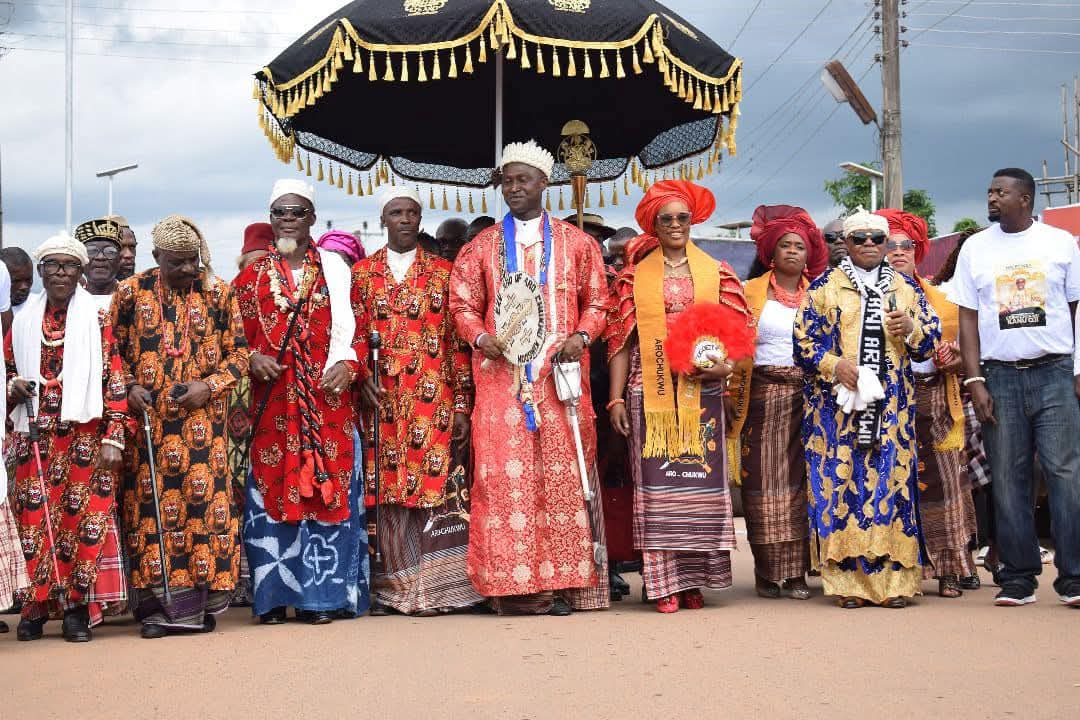
The Ikeji-Aro Festival 2026 has begun in Arochukwu Kingdom, but this year’s festival is focused on the theme ‘Aro Renaissance: Consolidating Gains Made in Aro Cultural Revival Through Entertainment and Preservation of Aro Traditional Healing Practices, Herbs and Roots’ with an emphasis on the preservation of herbs, roots, natural foods and indigenous knowledge.
In this interview with Newsleverage, an Aro stakeholder, Mazi Ernie Onwumere, the Chairman of the Contact/Protocol of the 2026 Ikeji-Aro Central Planning Committee, speaks on the progress of the festival, the participation of Aros and their allies, and efforts to document and repackage traditional healing knowledge for younger generations. He also discusses the role of cultural displays, the proposed documentary on indigenous herbs and foods, and the significance of Afor Osu, a traditional Aro practice centred on communal sharing, love and unity.
Question: Mazi, Ikeji-Aro 2026 has started already. How is the preparation going?
Mazi Ernie: The preparation is at top gear. We are mobilising all Aros, both at home and in the diaspora, as well as our allies, so that everyone can come to Ikeji Aro, especially those coming from outside the Aro homeland.
We are reaching out to people, and that is part of the mobilisation process. We are ready for the festival.
Question: You are one of the stakeholders of Arochukwu Kingdom, and you have been involved in the preparations. For someone coming from outside Arochukwu, what should they expect from Ikeji Aro 2026?
Mazi Ernie: What we should expect from Ikeji Aro 2026 is a celebration centred on Aro traditional medicine, healing practices and renaissance.
This year, we are looking at what our people were doing in the past in terms of treating illnesses. How did they use herbs? How were they able to survive using natural resources?
In this generation, people are going back to herbal medicine because there is growing interest in natural remedies. We also know that the Aro people have a history of involvement in herbal medicine production.
If you look at brands such as Ikam Power and Seven Keys, you will see products associated with Aro’s history in herbal medicine. Seven Keys, for instance, still exists and is used in the treatment of children.
So, what we are trying to do is to go back and rediscover what made Aro tick in the past in terms of herbal medicine, our cultural values and the use of natural resources.
Of course, there will also be cultural displays from different villages. We have invited Aros in the diaspora, and many of them will be coming with cultural dances. They represent some of the largest Aro communities outside the Aro homeland.
We also have allies, including people from Akwa Ibom and Cross River States. So, visitors to Arochukwu should expect a mixture of culture and entertainment.

 Question: Talking about the traditional healing practices that form part of this year’s theme, do you think the sons and daughters of Arochukwu Kingdom can actually embrace and own these practices? It is one thing to talk about them and another thing to preserve and use them.
Mazi Ernie: It is part of our commitment. It is our role now to repackage these practices and make them understandable and believable to our people.
Last year, we had Professor Joseph Nwankwo present a paper on Aro natural foods and their traditional healing values. He presented detailed information on different foods and leaves and their traditional uses.
What we are going to do now is repackage all that has been presented, create awareness and begin to imprint this knowledge in the minds of our people.
For instance, people should know that some of our traditional leaves and foods have long been associated with particular health benefits. We have a lot of materials that have already been generated. We need to assemble them and begin to communicate the values they can add to our people.
It has to be our responsibility. We can talk to the Nzuko Aros and use traditional institutions to become ambassadors, educating people about the importance of our herbs and local foods.
Question: Are you confident that the younger generation can take up this responsibility?
Mazi: They will.
We have to cultivate the younger generation to align with this thinking. We need to bring young people into the conversation.
We already have young people who can help us amplify the message. We have people like Praise Genesis, for instance. When they speak, you would think they are older people because of their understanding of Aro culture.
So, we need to create platforms for young people who are energetic and capable of communicating these ideas.
We have Aro young professionals, Aro youths and village youth groups. We need to take the message to all these levels and guide them so that they can follow the right path.
Question: During last year’s Ikeji Aro, particularly on Afor Osu Day, I saw exhibitions of foods that I didn’t even know existed. Will this year’s preparation also involve showing people these leaves, traditional healing methods and practices, including some that may have gone extinct?
Mazi: Yes. What we intend to do is produce a documentary.
We already have research materials from Professor Joseph Nwankwo. What we need to do now is work with people like Praise Genesis, for example, to bring all those materials together and produce a documentary.
People are not always together in one place, so the documentary will allow the information to be shared on YouTube, WhatsApp and other online platforms.
The documentary will showcase these leaves, their traditional uses and the knowledge surrounding them. Because we are using video, people will actually be able to see the leaves and, where appropriate, see how they are traditionally prepared.
Question: You mentioned Afor Osu. Can you explain what Afor Osu represents in Aro culture?
Mazi: Afor Osu is one of the special meals prepared on the 11th day of Ikeji Aro.
It is a period when Aro people share love. People prepare the meal from late evening into the night and the following morning.
There is food, meat and drinks, and people share them from compound to compound. It is a way of showing love and sharing with your neighbours.
You can compare it, in a way, to what is known as Boxing Day, where people move from one compound to another, sharing gifts and expressing love.
In the evening, people come out to watch cultural displays and visit the Eze Aro, where they are hosted. We also talk about community development and how love and unity can bind our people together.
Question: Thank you so much, Mazi, for speaking with Newsleverage.
Mazi Ernie: Thank you very much.

For publication of your news content, articles, videos or any other news worthy materials, please send to newsleverage1@gmail.com. For more enquiry, please call +234-901-067-1763 or whatsapp +234-901-067-1763. To place an advert, please call 09010671763





Ikeji-Aro 2026: ‘We Are Repackaging Aro Traditional Healing Practices for the Younger Generation’ – Mazi Ernie Onwumere

Jibrin: Tinubu Will Secure At Least 65% of Votes in 2027, Kano Will Be Delivered to APC

2027: Bourdex Unveils Plan to Transform Healthcare, Unlock Federal Opportunities in Abia North

Tinubu Mourns Veteran Nollywood Actor Olu Jacobs at 84

Obioma-Ngwa 2027: Chidi Nnamdi Pushes Case for Responsive Representation – Comrade Abuchi Isaac

Renewed Hope or Renewed Hardship? How Nigerians Groan Under Tinubu – Otunba (Dr) Babatunde Olushola Senbanjo Writes

Ikukuoma 2027: Bringing Fresh Hope, Projects and Representation to Ikwuano/Umuahia

Wike Fires Back at APC Governors, Defends Tinubu Alliance: “Only President Can Question Me”

RMAFC Chairman Hails Otti’s Prudent Governance, Receives C-of-O for Abia Office

Otunba (Dr) Babatunde Olushola Senbanjo to Wike: ‘Don’t Push the Masses to the Breaking Point’

Tinubu: ‘Senator, We Are Not With You’ – Community Tells Senator Ohuabunwa

NDC Notified Benue Police Ahead of Peter Obi’s Visit, Document Shows

35 Years After Kirikiri Release, Abdul Mahmud Remembers Bamidele Aturu, Says ‘The Struggle Remains Unfinished’

Ibeku Traditional Rulers Endorse Chinedum Orji for Ikwuano/Umuahia Federal Constituency

Tension in Benue as Peter Obi’s Blocked Convoy Leads to Protest

Abia Govt Explains Teacher Recruitment Process, Discloses Number of Candidates Who Scored Over Benchmark

Iwa Ji Festival: Ikuku’s Cultural Connection With Ibeku People Signals Strong Constituency Bond – Group

Otunba Senbanjo Celebrates Babangida at 85, Hails Former Head of State as Icon of Leadership and National Service

APC Sanctuary: How the Ruling Party Became Nigeria’s Governance Virus – Otunba Babatunde Olushola Senbanjo

Nigeria Must Remain Vigilant: 2027 is Too Important to Be Taken for Granted – Otunba Babatunde Olushola Senbanjo

The final 6 ‘Game of Thrones’ episodes might feel like a full season
New Season 8 Walking Dead trailer flashes forward in time
Mod turns ‘Counter-Strike’ into a ‘Tekken’ clone with fighting chickens
Meet Superman’s grandfather in new trailer for Krypton
Disney’s live-action Aladdin finally finds its stars
Who are the early favorites to win the NFL rushing title?
The old and New Edition cast comes together to perform
Boxing continues to knock itself out with bewildering, incorrect decisions
Steph Curry finally got the contract he deserves from the Warriors
Phillies’ Aaron Altherr makes mind-boggling barehanded play
-
 POLITICS1 week ago
Tinubu: ‘Senator, We Are Not With You’ – Community Tells Senator Ohuabunwa
-
 NATIONAL NEWS1 week ago
NDC Notified Benue Police Ahead of Peter Obi’s Visit, Document Shows
-
 Articles3 weeks ago
35 Years After Kirikiri Release, Abdul Mahmud Remembers Bamidele Aturu, Says ‘The Struggle Remains Unfinished’
-
 POLITICS3 weeks ago
Ibeku Traditional Rulers Endorse Chinedum Orji for Ikwuano/Umuahia Federal Constituency
-
 NATIONAL NEWS1 week ago
Tension in Benue as Peter Obi’s Blocked Convoy Leads to Protest