
Articles
Aso Rock and the Privatisation of Presidential Power- Abdul Mahmud

By Abdul Mahmud
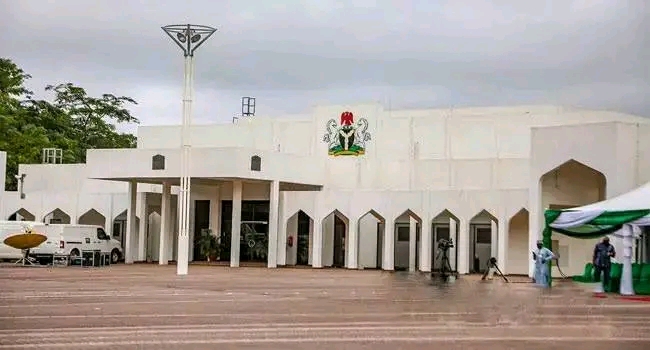
Omoyele Sowore’s demand that his political party be allowed to organise its political electioneering events within the precincts of Aso Rock, after the ruling party held its political programmes there, raises a question that goes far beyond the immediate controversy over access to the seat of presidential power. At stake is the constitutional character of the State House, the distinction between public institutions and partisan political interests, and an incumbent president’s obligation to preserve the appearance and substance of institutional neutrality as Nigeria approaches another consequential presidential election. Sowore’s intervention exposes a contradiction at the heart of our democratic practice: a presidency sustained by public resources can become so closely identified with the interests of a political party that the boundary between the authority of the state and the privileges of incumbency begins to disappear. The question primarily concerns the ownership and character of Aso Rock.
The State House is not the private residence of a president in the sense that a privately owned property belongs to its proprietor, nor is it a clubhouse reserved for the exclusive use of the political party that produced the incumbent; it is a public institution occupied by virtue of an electoral mandate and entrusted with responsibilities that extend beyond the partisan interests of the president and maintained through public expenditure. Though its physical location may place it at the centre of executive power, its very constitutional significance derives from the public authority exercised there, not from the political identity of the person occupying the office. A president does not acquire proprietary rights over the Nigerian state by winning an election. The mandate to govern confers temporary authority, subject to constitutional limitations, over institutions that belong to the Republic and must remain available for the discharge of the President’s constitutional functions. Aso Rock can’t be turned into a venue for party political hustling. The distinction is fundamental because democracy rests on the understanding that public office is held in trust, rather than acquired as a reward that permits the successful party to appropriate the institutions, resources and symbols of government for its exclusive advantage. The use of the State House for the ruling party’s political events raises legitimate questions about the boundaries between public office and partisan activity, particularly where public facilities and expenditure are deployed to advance party political objectives. The events were openly presented as party political engagements, and their circumstances were known. Conclusions about the propriety of holding them within the precincts of Aso Rock are, therefore, neither speculative nor premature. The issue is whether the exercise of presidential power has blurred the line between the obligations of public office and the interests of the ruling party.
That line is fundamental to democratic governance.
Occupancy of the presidency does not confer ownership of the State House or convert public resources into instruments of partisan advantage. The president’s official responsibilities must remain distinct from his political interests, and the use of public facilities must be justified by the former rather than the latter.
This is where the controversy becomes more serious than a dispute over access to a particular venue. The presidency possesses advantages that opposition parties cannot reasonably replicate, including the visibility of official functions, access to public institutions and the authority attached to the office itself. Those advantages are inherent in incumbency, but democratic government requires that they should not be converted into unrestricted partisan privileges. When the facilities of the state are used for activities whose principal purpose is political mobilisation, the question is whether the incumbent is exercising public authority in the public interest or deploying the advantages of office to strengthen the political party to which he owes his electoral allegiance. Sowore’s demand brings this problem into sharp relief. If the ruling party can organise its political programmes within the precincts of the State House, on what principle should an opposition party be denied the same privilege? The question is compelling as a challenge to unequal treatment, although it does not follow that every political party must be granted access to every public institution used by the ruling party. The more fundamental issue is whether the original decision to accommodate partisan activity at the seat of government was appropriate in the first place. Equality cannot always be achieved by extending a questionable privilege to others; sometimes the more principled response is to reconsider the privilege itself.
Aso Rock should not become the venue through which political parties demonstrate their proximity to the machinery of state. Its symbolic importance derives partly from the fact that it represents the presidency as a constitutional institution, an office whose authority survives the departure of individual occupants and the defeat of the political parties that brought them to power. To permit its identity to become indistinguishable from that of the ruling party risks diminishing the institutional character of the presidency and encouraging the belief that government access belongs to those who possess the political power to dispense it.
The second question concerns the politicisation of the spaces and symbols of governance at a time when the country is moving towards another presidential election. Elections are periods in which public confidence in the impartiality of state institutions becomes especially important, because political parties are competing for the authority to exercise those institutions after the votes have been counted. The incumbent has a particular responsibility in this regard, not because the president must withdraw from political life, but because the powers and resources of the office create obligations that do not apply in the same measure to other political actors. President Bola Tinubu remains entitled to participate in the affairs of his political party and to express support for its legitimate political objectives. The constitutional character of the presidency does not require an elected president to abandon his political affiliations or pretend that he has no political convictions. The difficulty arises when the distinction between the president acting as a party leader and the president acting as the custodian of public institutions becomes blurred. Political meetings can be held at party offices, campaign grounds and other appropriate venues without transforming the seat of executive authority into a symbol of partisan ownership.
The presidency should be able to demonstrate that distinction in practice. Where an official venue is made available for a political activity, the government should be prepared to explain the legal and administrative basis for the decision, the source of funding and the safeguards against the improper use of public resources. Transparency would help establish whether the arrangement served a legitimate governmental purpose or conferred a partisan advantage. It would also prevent a controversy over political symbolism from becoming a larger dispute about the management of public property. There is a further democratic concern here. The use of the State House for the ruling party’s events communicates a message, intended or otherwise, that the party in government enjoys a privileged relationship with the Nigerian state. And that the culture of abuse of presidential privileges, shaped by the advantages of incumbency, deepens public suspicion that the institutions responsible for administering public affairs are not sufficiently separated from the interests of those who control them.
Nigeria’s democratic institutions cannot acquire the necessary independence if the people who occupy public office treat institutional boundaries as obstacles to be circumvented through political power. The State House belongs to the Republic, and the president’s authority to occupy it is temporary, constitutional and inseparable from the responsibilities of public service. Its doors should not become instruments for measuring political privilege, nor should its grounds be transformed into a partisan statement about who owns the Nigerian state. Sowore’s demand has consequently opened a debate that deserves to be engaged beyond the immediate question of whether his party should be allowed to hold events at Aso Rock. The more important question is whether the presidency recognises that the institutions entrusted to its care must remain distinct from the political party to which the incumbent belongs. The strength of the Republic lies in the understanding that winning an election confers the right to govern Nigeria for a constitutionally defined period, not the right to make Nigeria the property of the winning party.

For publication of your news content, articles, videos or any other news worthy materials, please send to newsleverage1@gmail.com. For more enquiry, please call +234-901-067-1763 or whatsapp +234-901-067-1763. To place an advert, please call 09010671763




Tabitha: A Royal Vision, a Historic Destiny

Otti to Clifford University Graduates: Be Resilient, Avoid Indiscriminate Borrowing

Aso Rock and the Privatisation of Presidential Power- Abdul Mahmud

Shettima: What We Have Done Is Fight for the Survival of Nigeria
Tinubu Accuses Opposition of Creating Hunger and Poverty in Nigeria

YIAGA Africa: INEC Must Explain Delay in Publishing Voters’ Register Online

Kasarachi Enyinna Meets Peter Obi, Reaffirms Commitment to a Better Nigeria

Umahi: Peter Obi Started the Confrontation, I Didn’t Criticise Him

NAFDAC Uncovers Illegal Herbal Products Factory in Lagos, Seizes Fake-Labelled Products

Hon. Chidi Nnamdi Unveils Four-Year Development Blueprint for Obingwa, Osisioma, Ugwunagbo

97-Year-Old Dr Mrs. Shields Reconstructs, Reopens Mary Slessor Library in Arochukwu

Cardinal Onaiyekan: Governor Alia Was Suspended for Defying Catholic Church Rules on Politics

Eze Eberechukwu Oji Commissions Amuvi Community Self-Built Connectivity Hub

Eze Eberechukwu Oji Receives New Book on Arochukwu’s Cultural Heritage, Eulogizes Author

‘We Will, We Will, We Will’: Atiku Slams Tinubu Over Promises, Questions Achievements After Three Years

NIGERIA at 66: What is the Way Forward? – Otunba Babatunde Olushola Senbanjo Calls for Rescue, Rebuild and Restore the Nation

2027: INEC Warns Against Private Declaration of Election Results, Says Commission Has Exclusive Authority

Ikeji-Aro 2026: Elekwa Applauds Umu-Aro, Says Unity Made Festival A Success

How Customs ACG, Others Defrauded Man of ₦96m Over Fake Container Auction – Verydarkman

FG Announces 30-Day Petrol Discount at NNPC Stations

The final 6 ‘Game of Thrones’ episodes might feel like a full season
New Season 8 Walking Dead trailer flashes forward in time
Mod turns ‘Counter-Strike’ into a ‘Tekken’ clone with fighting chickens
Meet Superman’s grandfather in new trailer for Krypton
Disney’s live-action Aladdin finally finds its stars
Who are the early favorites to win the NFL rushing title?
The old and New Edition cast comes together to perform
Boxing continues to knock itself out with bewildering, incorrect decisions
Steph Curry finally got the contract he deserves from the Warriors
Phillies’ Aaron Altherr makes mind-boggling barehanded play
-
 Abia State News4 weeks ago
97-Year-Old Dr Mrs. Shields Reconstructs, Reopens Mary Slessor Library in Arochukwu
-
 NATIONAL NEWS2 weeks ago
Cardinal Onaiyekan: Governor Alia Was Suspended for Defying Catholic Church Rules on Politics
-
 Abia State News4 weeks ago
Eze Eberechukwu Oji Commissions Amuvi Community Self-Built Connectivity Hub
-
 METRO2 weeks ago
Eze Eberechukwu Oji Receives New Book on Arochukwu’s Cultural Heritage, Eulogizes Author
-
NATIONAL NEWS4 weeks ago
‘We Will, We Will, We Will’: Atiku Slams Tinubu Over Promises, Questions Achievements After Three Years