
Articles
President Tinubu and the Antiquity of Hunger – Abdul Mahmud

By Abdul Mahmud
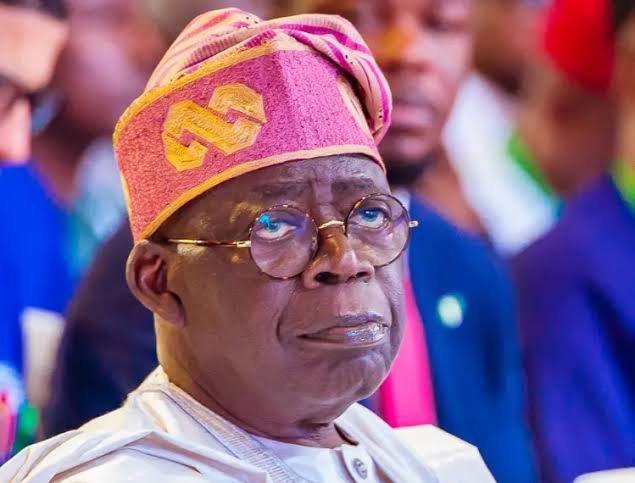
“There was hunger before I was born,” President Bola Tinubu told the Catholic Bishops. He is right, only to the extent that hunger did not begin with him. Neither did it begin with Muhammadu Buhari, Goodluck Jonathan, Umaru Musa Yar’Adua, Olusegun Obasanjo, Abdulsalami Abubakar, Sani Abacha, Ibrahim Babangida, nor any single occupant of Aso Rock. Hunger has stalked Nigeria through military rule and civilian governments alike, surviving constitutions, economic reforms, structural adjustment programmes, oil booms and democratic transitions. The more important question, however, is not whether hunger existed before he was born, but why it still exists after more than six decades of independence and why every generation of political leaders has found explanations more readily than solutions.
This is the question he must answer.
History may explain the origins of a problem, but it cannot excuse its persistence. Every President inherits unfinished business from its predecessor; none inherits the right to treat inherited suffering as an adequate defence of present performance. The legitimacy of political power lies in its capacity to interrupt history’s cruelties rather than recount them. When citizens complain of hunger, they are not asking for a lecture on its antiquity; they are asking what the President is doing to ensure that their children do not inherit the same empty stomachs that haunted their parents and grandparents. In this respect, the President’s remark carries an unintended irony: an admission that the Nigerian state has repeatedly failed to discharge one of its most elementary obligations by creating the economic conditions that force citizens to go to bed hungry daily.
This, however, is only one way of reading the President’s words. There is another, and perhaps more troubling, interpretation. The statement suggests a President whose understanding of the country is increasingly mediated by the protective layers that invariably surround political power. It is difficult to listen to a remark that treats hunger as a historical inheritance without wondering whether those who stand between the President and the people have succeeded in insulating him from the immediacy of the suffering outside the gates of government. Hunger may have existed before he was born, but the hunger confronting Nigerians today is not an historical abstraction; it is today’s reality, demanding today’s response. Power has always had a peculiar tendency to create its own reality. Every presidential palace in history has always developed mechanisms for protecting presidents from uncomfortable truths. Courtiers once performed that function. Today, it is discharged by image-makers and gatekeepers who often mistake loyalty for the suppression of truths. Their instincts, which rarely convey the voices of the people into the seat of power, convey the preferences of the president’s men back to the people. Between instincts and preferences, truth is frequently the casualty. The separation begins when official briefings are treated as more reliable than the the lived experiences of ordinary citizens.
There is, of course, no honest argument that Nigeria’s present economic difficulties were created solely by the present administration. The structural weaknesses of the economy accumulated over decades. Dependence on oil revenues, weak industrial capacity, chronic fiscal indiscipline, insecurity in agricultural communities, persistent currency instability and the failure to build resilient social protection systems long predate President Tinubu. Yet that acknowledgement strengthens rather than weakens the obligation resting upon the present government. Democratic elections do not transfer only power; they transfer responsibility. Every President inherits yesterday’s failures together with the duty to prevent them from becoming tomorrow’s inheritance. The greatest leaders have always understood that the first duty of political power is not merely to govern but to remain teachable. Governments that lose the capacity to hear unpleasant truths soon lose the capacity to correct their mistakes. Democracies survive because citizens possess the freedom to tell those who govern that their experience differs from official optimism. Whenever that conversation becomes obstructed by gatekeepers who regard criticism as disloyalty or by advisers who fear delivering unwelcome news, the President begins governing an imaginary country while citizens continue living in the real one.
President Tinubu’s statement should therefore be heard as more than an observation about history. It should serve as an invitation to examine the distance between political power and public reality. Hunger existed before he was born. It also existed before he became President. Those are historical facts. The question that history will ask, however, is not whether he correctly identified the antiquity of hunger. It is whether, having acknowledged its long history, he succeeded in shortening it. That is the measure by which every democratic leader is remembered. History explains where suffering begins. Leadership is judged by whether it allows suffering to continue. No President earns distinction by reminding the hungry that hunger is old. Distinction belongs to the leader who ensures that future generations can no longer truthfully say, “There was hunger before I was born.”

For publication of your news content, articles, videos or any other news worthy materials, please send to newsleverage1@gmail.com. For more enquiry, please call +234-901-067-1763 or whatsapp +234-901-067-1763. To place an advert, please call 09010671763





Comr. Amos Kalu, OHAFIATV Publisher Appointed Assistant Director Of Publicity Of OTTIMANIA Legacy Movement

Uche Ogah Delivers Global Keynote at Innovate Africa Conference in Rwanda

Chinedum Orji Vows to Take Dividends of Democracy to Every Village in Ikwuano/Umuahia

2027: Tinubu or Adebayo? Nigeria’s Choice Between Political Continuity and National Redemption

2027: Chidi Nnamdi Offers New Direction for Obingwa/Osisioma/Ugwunagbo – New Direction Agenda 2027

Otti Urges Presco to Begin Agro-Industrial Investment at Ulonna Farm Settlement

Hon. Chidi Nnamdi Attends NDA Meeting, Pledges Continued Support to the Association

2027: Nigerians Must Reject Propaganda, Demand Accountability – Otunba Babatunde Olushola Senbanjo

Comatose Representation Cannot Be Covered with Noise – Mandate 27 Challenges Aguocha

Bricklayers Arrested Over Alleged Attempt to Bury Little Girl

Ikeji Aro 2026 on Avor Osu Day: Nkita Oku, Inum, Ekpe Erim, Other Ekpo Masquerades Pay Homage to Eze Eberechukwu Oji

97-Year-Old Dr Mrs. Shields Reconstructs, Reopens Mary Slessor Library in Arochukwu

2027: Hon. Ike Bishop Okoronkwo Mobilises Abia North Grassroots, Tasks ADC Coordinators on Polling Units

Cardinal Onaiyekan: Governor Alia Was Suspended for Defying Catholic Church Rules on Politics

Eze Eberechukwu Oji Commissions Amuvi Community Self-Built Connectivity Hub

Eze Eberechukwu Oji Receives New Book on Arochukwu’s Cultural Heritage, Eulogizes Author

‘We Will, We Will, We Will’: Atiku Slams Tinubu Over Promises, Questions Achievements After Three Years

Leave Chidi Nnamdi Alone, Earn the People’s Trust – New Direction Agenda

NIGERIA at 66: What is the Way Forward? – Otunba Babatunde Olushola Senbanjo Calls for Rescue, Rebuild and Restore the Nation

“Tinubu Must Go”: Otunba Babatunde Olushola Senbanjo Accuses President of Constitutional Breach Over 21-Day Absence

The final 6 ‘Game of Thrones’ episodes might feel like a full season
New Season 8 Walking Dead trailer flashes forward in time
Mod turns ‘Counter-Strike’ into a ‘Tekken’ clone with fighting chickens
Meet Superman’s grandfather in new trailer for Krypton
Disney’s live-action Aladdin finally finds its stars
Who are the early favorites to win the NFL rushing title?
The old and New Edition cast comes together to perform
Boxing continues to knock itself out with bewildering, incorrect decisions
Steph Curry finally got the contract he deserves from the Warriors
Phillies’ Aaron Altherr makes mind-boggling barehanded play
-
 Abia State News3 weeks ago
Ikeji Aro 2026 on Avor Osu Day: Nkita Oku, Inum, Ekpe Erim, Other Ekpo Masquerades Pay Homage to Eze Eberechukwu Oji
-
 Abia State News3 weeks ago
97-Year-Old Dr Mrs. Shields Reconstructs, Reopens Mary Slessor Library in Arochukwu
-
 POLITICS3 weeks ago
2027: Hon. Ike Bishop Okoronkwo Mobilises Abia North Grassroots, Tasks ADC Coordinators on Polling Units
-
 NATIONAL NEWS7 days ago
Cardinal Onaiyekan: Governor Alia Was Suspended for Defying Catholic Church Rules on Politics
-
 Abia State News3 weeks ago
Eze Eberechukwu Oji Commissions Amuvi Community Self-Built Connectivity Hub