
NATIONAL NEWS
Exclusive: Why Dangote Refinery Hasn’t Made Petrol Cheaper – Aiteo GMD Okoronkwo Explains

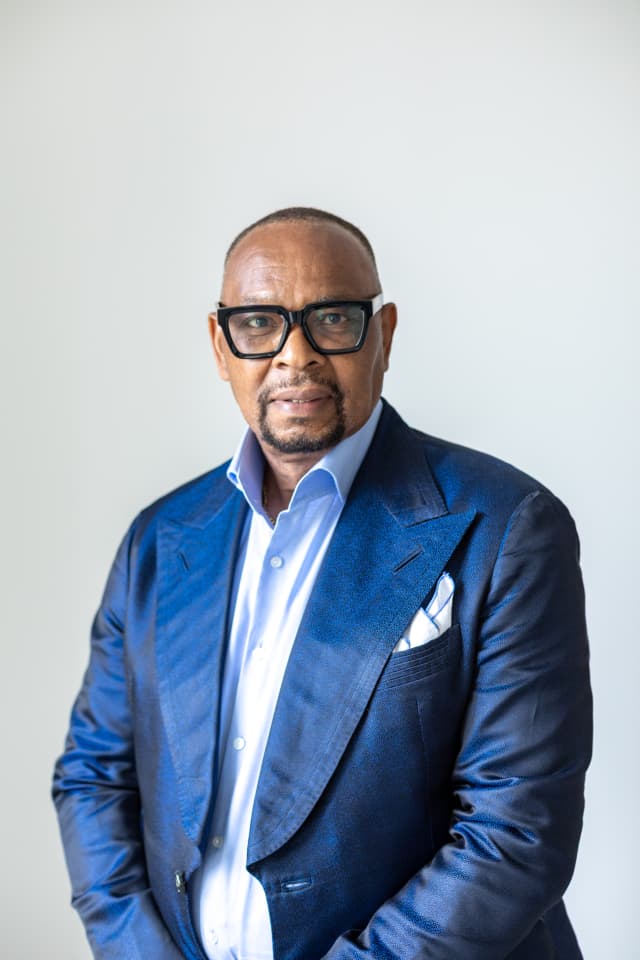
The Group Managing Director of Aiteo Eastern Exploration and Production Company Ltd., Mazi Ike Okoronkwo, explained why the commissioning of the Dangote Refinery has not automatically led to cheaper petrol for Nigerian consumers, saying global oil market dynamics, crude prices, foreign exchange, and production costs remain key factors.
Okoronkwo, speaking in an interview with Newsleverage, said crude oil is a global commodity whose price is largely determined by international market forces and geopolitics, even though Nigeria is an oil-producing country.
He also explained that not all crude produced in Nigeria belongs entirely to the government, noting that joint ventures and production-sharing arrangements give other investors contractual shares in the country’s crude production.
On alternative energy, the Aiteo chief said solar, wind, geothermal and battery technologies could gradually reduce pressure on oil and gas demand, although he maintained that renewable energy is still some distance from completely replacing fossil fuels.
Okoronkwo also addressed the debate over fuel subsidy and offered his assessment of reforms in Nigeria’s petroleum sector, including the Petroleum Industry Act (PIA), saying the industry is gradually moving towards the benefits of the reforms.
Question: Many Nigerians expected the Dangote Refinery to make petrol cheaper. Why hasn’t that happened?
Mazi Ike Okoronkwo: Having been in the oil and gas industry myself, several people have asked me this question.
First, let us establish one thing: crude oil, which is the feedstock for Dangote’s refinery, is a global commodity. Therefore, its price is not determined by Nigeria. The price is determined by movements in the global market.
Secondly, although the source of the crude is in Nigeria, the equipment and technology required to extract, process and market that crude are largely financed through foreign exchange.
When you put these two factors together, you see that the only way Nigeria can obtain crude at a price different from the prevailing global price is through some form of government intervention or subsidy.
Subsidies are no longer fashionable because some economists argue that they impede development, while others argue that they can enable development. Depending on where you stand on that divide, you can make your choice.
But the fundamental point is that crude oil prices are determined by global markets and global geopolitics.
Right now, for instance, what is happening around Iran and the Strait of Hormuz has implications for global crude prices because the waterway handles a significant proportion of global oil shipments. Any disruption can affect crude prices, and when crude prices move, the effect is felt across the market.
People also ask: “But we produce the crude, so why don’t we simply give it to Dangote?”
The dynamics of the oil and gas industry are more complicated than that. Nigeria operates a mixture of joint ventures and production-sharing arrangements. Therefore, not all the crude produced in Nigeria is owned entirely by the government.
The government owns a proportion based on its investment, while the independent or private investors with whom it has contractual arrangements-whether through joint ventures or production-sharing agreements also have their own shares.
Each party is at liberty to sell its share in the appropriate market.
Ultimately, the price consumers pay at the pump is determined by several factors: the price of the product, the cost of delivering the product, the processing cost, which is where the Dangote Refinery comes in and, ultimately, the markup applied by the downstream company.
Question: The President of PETROAN, Dr Billy Gillis-Harry, recently said alternative energy could help reduce pressure on oil prices. How realistic is this?
Mazi Ike Okoronkwo: It is realistic because, again, the price of any commodity is a function of demand and supply.
When demand significantly exceeds supply, prices go up. When supply exceeds demand, prices can come down. When supply is constrained, prices also rise.
Now, let’s consider alternative energy.
If you look at my roof, you will see solar panels. If I am able to utilise solar power by making that additional investment, my dependence on diesel will reduce. It may not be eliminated, but it will reduce.
I believe that is what he meant.
There are now alternative sources of energy being introduced into the market, and they are improving by the day. There are solar, wind, geothermal and various battery technologies that can generate and store energy.
The challenge is that oil and gas remain among the few energy sources capable of providing energy at scale and with the flexibility to switch on and off when required.
Some renewable sources are intermittent. The cost of generating enough renewable energy to supply a country like Nigeria at the required scale can also be high.
However, technology is gradually improving and helping to bring down those costs.
Another alternative energy source is nuclear power, but nuclear energy has serious international political and security dimensions.
So, yes, alternative energy will help reduce pressure on oil and gas, but I believe it is still a long way from completely replacing oil and gas.
Question: What is your position on fuel subsidy? Does Nigeria need subsidised petrol?
Mazi Ike Okoronkwo: I would rather not deal directly and strictly with the political argument over fuel subsidy.
The reality is that governments, at various points in time, protect their economies, and they can do so through different mechanisms. Subsidies can be one of them.
But the other important thing is to ensure that there are sufficient governance and control mechanisms to reduce or eliminate abuse.
So, I wouldn’t delve into the political argument between parties. I am looking at it purely from a realistic economic perspective.
Does the Nigerian economy need some measure of government intervention in certain areas? Yes.
It does not necessarily have to be petroleum or fuel subsidy. There are other mechanisms through which government can protect the economy.
So, to some extent, the arguments we are hearing on both sides have some validity. Both sides have their issues.
The reality is that the managers of the economy at any given time have access to information and economic indicators that should guide them on what is appropriate.
It is not just about subsidies. There are also currency-protection mechanisms and other economic policy tools that the government can deploy.
Question: If you had the opportunity to advise President Bola Tinubu on the oil and gas industry, what would you tell him?
Mazi Ike Okoronkwo: I must tell you that a lot of great strides have been made in the industry with the introduction of the Petroleum Industry Act (PIA) and the reorganisation of the governance structure of the industry.
Right now, the NNPCL is being managed by professionals, and the regulatory arms have also been restructured.
We are all on the path to embedding the benefits of these reforms.
It may not be easy at the beginning, but as they say, there is light at the end of the tunnel.

For publication of your news content, articles, videos or any other news worthy materials, please send to newsleverage1@gmail.com. For more enquiry, please call +234-901-067-1763 or whatsapp +234-901-067-1763. To place an advert, please call 09010671763





Again, Shettima Accuses Obi of Clout-Chasing Over Flamingos’ Airport Reception

Delta Police Bust ‘Hustlers Kingdom’ Syndicate, Rescue Victims Forced Into Internet Fraud

2027: ‘Do Not Sell Your Votes, Vote for Credible Leaders’ – Ibiyeomie Urges Nigerians

2027: Atuma’s Loyalty, Track Record Make Him Stand Out in Abia Central Senate Race

‘If We Have a Problem with Cameron, He Can Abandon Nigeria’ – Wike Mocks Obi

Abia North: How Regional Cooperation Can Turn Abia North’s Five LGAs into an Economic Powerhouse – Bourdex

2027: Ikwuano/Umuahia Federal Constituency Race: Show Your Scorecard – Orji Challenges Aguocha

Amaechi Describes Tinubu Government as ‘Alibaba And 40 Thieves’, Unveils ADC’s Fuel Subsidy Plan

Abia OMPAN to Celebrate 10th Anniversary with Three-day Event, AGM

Abia North: ADC Senatorial Candidate Ike Bishop Okoronkwo Meets Atiku and Others

Breaking! Court Sacks David Mark-Led ADC Leadership, Nullifies Atiku’s 2027 Presidential Candidacy

Eze Eberechukwu Oji Receives New Book on Arochukwu’s Cultural Heritage, Eulogizes Author

Akpabio’s Cruel Ignorance: Punishing Suicide Survivors Is No Answer to Despair – Abdul Mahmud

SMMAGS Alumnae Unite to Advance Menstrual Dignity, Girls’ Education and Community Empowerment in Abia State

Mayor Lucky Igbokwe Celebrates Seyi Tinubu, Reaffirms CityBoy Movement’s Commitment to Youth Development

Comr. Amos Kalu, OHAFIATV Publisher Appointed Assistant Director Of Publicity Of OTTIMANIA Legacy Movement

Otunba Babatunde Olushola Senbanjo (BOS) Calls for Investigation Into Alleged Seizure of Tricycles Over APC Rally

JAMB Registrar Clarifies Minimum Entry Score, Announces New Candidate-Friendly Measures

Tinubu’s Skills Programme Trains 250,000 Nigerians, Places Nearly 50% of First Graduates in Jobs – Alausa

Otunba Babatunde Olushola Senbanjo To Tinubu: Nigeria Is A Democracy, Not A Military Regime; Demands Fair Political Space Ahead Of 2027 Elections

The final 6 ‘Game of Thrones’ episodes might feel like a full season
New Season 8 Walking Dead trailer flashes forward in time
Mod turns ‘Counter-Strike’ into a ‘Tekken’ clone with fighting chickens
Meet Superman’s grandfather in new trailer for Krypton
Disney’s live-action Aladdin finally finds its stars
Who are the early favorites to win the NFL rushing title?
The old and New Edition cast comes together to perform
Boxing continues to knock itself out with bewildering, incorrect decisions
Steph Curry finally got the contract he deserves from the Warriors
Phillies’ Aaron Altherr makes mind-boggling barehanded play
-
POLITICS6 days ago
Breaking! Court Sacks David Mark-Led ADC Leadership, Nullifies Atiku’s 2027 Presidential Candidacy
-
 METRO4 weeks ago
Eze Eberechukwu Oji Receives New Book on Arochukwu’s Cultural Heritage, Eulogizes Author
-
Articles3 weeks ago
Akpabio’s Cruel Ignorance: Punishing Suicide Survivors Is No Answer to Despair – Abdul Mahmud
-
 Abia State News3 weeks ago
SMMAGS Alumnae Unite to Advance Menstrual Dignity, Girls’ Education and Community Empowerment in Abia State
-
 METRO4 weeks ago
Mayor Lucky Igbokwe Celebrates Seyi Tinubu, Reaffirms CityBoy Movement’s Commitment to Youth Development