
NATIONAL NEWS
Opinion: Nigeria’s Water Music – Abdul Mahmud

By Abdul Mahmud
There are moments when nature appears to speak in a destructive language that governments understand only after the damage has been done. Nigeria is living through such a moment again.
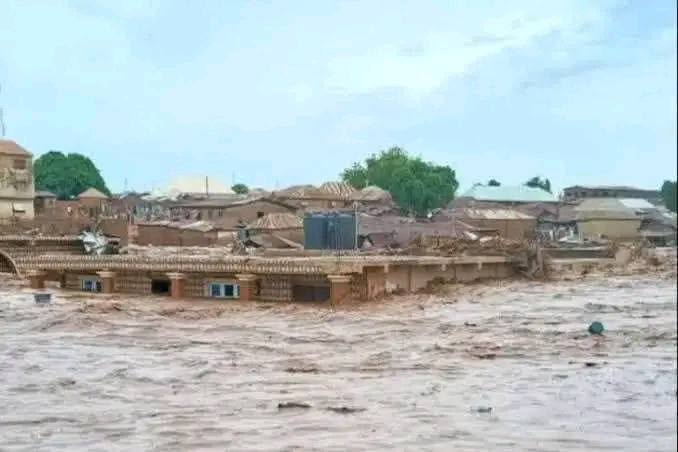
Across the country, water has moved beyond the banks assigned to it by maps and engineering drawings, entering homes, swallowing roads, disrupting schools and businesses, isolating communities and turning familiar streets into waterways. From communities along the River Benue basin to the low-lying coastal and littoral states of the South, the country is being reminded, with considerable force, that flooding is no longer an occasional occurrence to be endured at the height of the rainy season; it has become one of the defining environmental emergencies of contemporary Nigeria. The warnings were there. The Nigerian Meteorological Agency had issued a probable flash-flood risk alert for the third dekad of September, covering 21 to 30 September, specifically to provide stakeholders with information for proactive intervention in areas where rapid surface runoff and flash flooding were considered possible. Earlier advisories had also identified Rivers, Benue, Bayelsa, Delta, Cross River, Akwa Ibom and other states among areas requiring attention. The problem, once again, is not simply whether Nigeria possesses the scientific capacity to foresee danger.
The harder question is what happens between receiving a warning and acting upon it.
In Edo State, the situation around the Ojirami dam should command particular attention. Heavy rainfall has caused the dam to overflow into the Enwan community in Akoko-Edo, destroying an oil mill and causing severe losses to a poultry farmer who reportedly lost 1,400 birds. Floodwater has entered homes, damaged businesses, disrupted schooling and made access to farms difficult. Residents have expressed fears about what might happen if the dam itself fails, given the consequences for communities downstream. A dam does not need to collapse before it becomes a public emergency. Once water begins to overwhelm its capacity, the question of structural integrity ceases to belong exclusively to engineers and becomes a matter of public safety.
Port Harcourt has provided the most dramatic images of the present crisis. After days of persistent rainfall, large parts of the Rivers State capital have been submerged. Reports from the city describe flooding around New GRA, Eneka, Eliozu, Rukpokwu, Peter Odili Road, Ozuoba and other areas, with water entering houses and swallowing vehicles and roads. In some places, residents have had to move their belongings to higher ground while others have found themselves stranded inside their homes. The Rivers State Government had already begun distributing relief materials earlier in September, while urging residents not to block drains and waterways and calling on developers to stop constructing over drainage channels. Relief is necessary, but the recurrence of the same crisis should force a harder conversation about why relief so often arrives after the water.
The spectacle becomes stranger still when the floodwater becomes a habitat for creatures that normally belong somewhere else. Reports and videos circulating from flooded communities have shown snakes and other reptiles such as crocodiles appearing in places where people ordinarily walk, drive and live. The arrival of such reptilian wildlife is not a curiosity to be consumed as a social-media entertainment. Flooding displaces animals just as it displaces people, forcing them towards higher ground and into spaces occupied by human beings. In a city already struggling with contaminated water, overflowing sewage and floating refuse, the appearance of reptiles should be treated as another warning about the ecological consequences of allowing urban environments to deteriorate.
Perhaps, the most unsettling images are those of children swimming and dancing in the floodwaters. There is something almost beautiful in the sight of children discovering music in water that has brought misery to their communities. They dance as though the flood were a celebration, turning catastrophe into play because childhood has a remarkable capacity to transform whatever surrounds it into an occasion for joy. But the beauty of those images should not blind adults to the danger contained in them. Floodwater can conceal open drains, broken infrastructure, sewage, sharp objects, electrical hazards and disease-causing organisms.
What looks like innocence may become a tragedy with very little warning.
Nigeria must also resist the temptation to explain every flood as the consequence of climate change and leave the matter there. Climate change is altering rainfall patterns and increasing the likelihood of extreme weather events, but rainfall becomes disaster through the choices countries make about land use, drainage, urban planning, waste disposal and the maintenance of infrastructure. Port Harcourt’s flooding has been linked by reports to blocked waterways, poor planning, indiscriminate dumping and construction on areas that once served as natural pathways for stormwater. Climate change may increase the water. Human decisions often determine where the water goes. The present floods should consequently be treated as a test of the Nigerian state’s capacity to convert knowledge into prevention. Meteorological warnings are valuable only when they reach communities in time and are translated into practical action. A warning that does not trigger inspection of vulnerable dams, evacuation plans, drainage clearance, emergency shelters and local communication becomes little more than information sitting safely inside an official document.
The children dancing in Port Harcourt’s floodwaters have unknowingly supplied the country with images that should stay with us. There is music in water, certainly, but water also remembers gravity, geography and neglect; it will find the blocked channel, the neglected drainage, the low-lying house and the weakened embankment and enter wherever human beings have failed to prepare for its arrival. Preparation begins long before the rain arrives. Drainage channels must be cleared and waterways kept open. Embankments need regular inspection, while dams require proper maintenance.
Communities must also receive warnings early enough for people to act on them. Flood forecasts should be treated as matters of public safety, not seasonal announcements that attract attention only when the water has already begun to rise. Construction on floodplains, blocked drainage, and the absence of credible evacuation plans turn heavy rainfall into a disaster waiting to happen. Water merely reveals the consequences of decisions made long before the first drop falls.
Nigeria should listen before the music becomes a dirge.

For publication of your news content, articles, videos or any other news worthy materials, please send to newsleverage1@gmail.com. For more enquiry, please call +234-901-067-1763 or whatsapp +234-901-067-1763. To place an advert, please call 09010671763




2027: Chinedum Orji Champions Common Good, Promises Return of True Representation to Ikwuano/Umuahia

Opinion: Nigeria’s Water Music – Abdul Mahmud

TABITHA: The Woman With the Midas Touch, Bringing Every Part of Arochukwu Together

World Fights Costly Petrol. Tinubu Defends It – Kperogi

Beyond Promises: Why Obioma–Ngwa Deserves a New Direction in Representation

Otti Assures New AIG Zone 9 of Continued Support, Promises Friendlier Operating Environment

“Why are Igbos Represented by Minorities” – Uzodinma Questions

NIGERIA at 66: What is the Way Forward? – Otunba Babatunde Olushola Senbanjo Calls for Rescue, Rebuild and Restore the Nation

Nwifuru: We Won’t Spend Money Paying TV Houses, Influencers to Cover Project Commissioning

Otunba Babatunde Olushola Senbanjo Celebrates Princess Odo Modester Ebere on Birthday

Tinubu: ‘Senator, We Are Not With You’ – Community Tells Senator Ohuabunwa

NDC Notified Benue Police Ahead of Peter Obi’s Visit, Document Shows

Ikeji Aro 2026 on Avor Osu Day: Nkita Oku, Inum, Ekpe Erim, Other Ekpo Masquerades Pay Homage to Eze Eberechukwu Oji

Tension in Benue as Peter Obi’s Blocked Convoy Leads to Protest

97-Year-Old Dr Mrs. Shields Reconstructs, Reopens Mary Slessor Library in Arochukwu

Ikeji-Aro 2026: ‘We Are Repackaging Aro Traditional Healing Practices for the Younger Generation’ – Mazi Ernie Onwumere

2027: Hon. Ike Bishop Okoronkwo Mobilises Abia North Grassroots, Tasks ADC Coordinators on Polling Units

Ikeji-Aro 2026: CPC Chairman Elekwa Explains ‘Aro Renaissance’ Theme, Reveals Plans to Preserve Cultural Heritage

APC Sanctuary: How the Ruling Party Became Nigeria’s Governance Virus – Otunba Babatunde Olushola Senbanjo

Obioma-Ngwa 2027: Chidi Nnamdi Pushes Case for Responsive Representation – Comrade Abuchi Isaac

The final 6 ‘Game of Thrones’ episodes might feel like a full season
New Season 8 Walking Dead trailer flashes forward in time
Mod turns ‘Counter-Strike’ into a ‘Tekken’ clone with fighting chickens
Meet Superman’s grandfather in new trailer for Krypton
Disney’s live-action Aladdin finally finds its stars
Who are the early favorites to win the NFL rushing title?
The old and New Edition cast comes together to perform
Boxing continues to knock itself out with bewildering, incorrect decisions
Steph Curry finally got the contract he deserves from the Warriors
Phillies’ Aaron Altherr makes mind-boggling barehanded play
-
 POLITICS4 weeks ago
Tinubu: ‘Senator, We Are Not With You’ – Community Tells Senator Ohuabunwa
-
 NATIONAL NEWS4 weeks ago
NDC Notified Benue Police Ahead of Peter Obi’s Visit, Document Shows
-
 Abia State News2 weeks ago
Ikeji Aro 2026 on Avor Osu Day: Nkita Oku, Inum, Ekpe Erim, Other Ekpo Masquerades Pay Homage to Eze Eberechukwu Oji
-
 NATIONAL NEWS4 weeks ago
Tension in Benue as Peter Obi’s Blocked Convoy Leads to Protest
-
 Abia State News1 week ago
97-Year-Old Dr Mrs. Shields Reconstructs, Reopens Mary Slessor Library in Arochukwu