
Articles
Opinion: Nigeria’s CODESA Moment – Abdul Mahmud

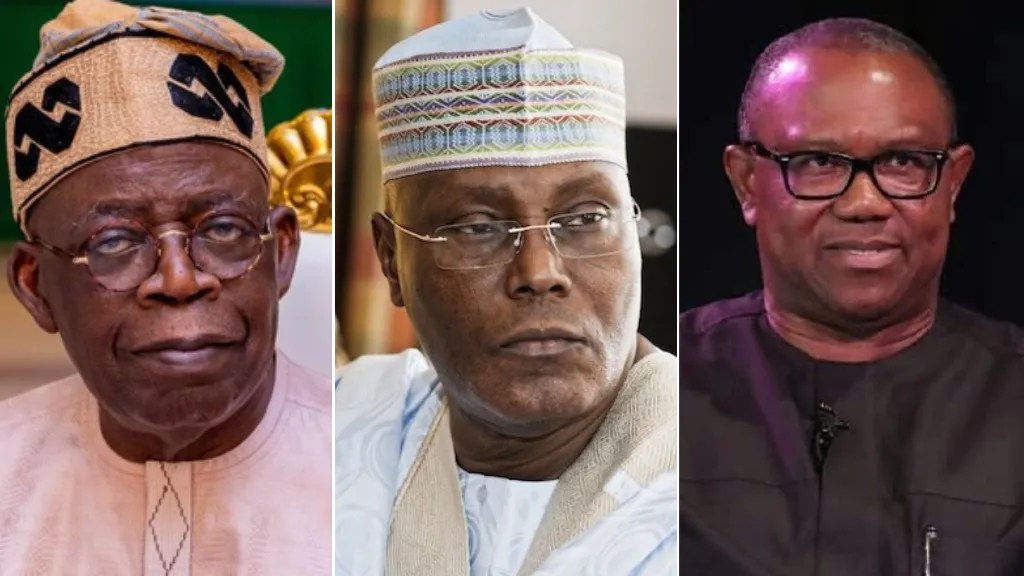
By Abdul Mahmud
The proposal by the G-100, a coalition of 100 Nigerians advocating that the opposition parties should unite behind a single presidential candidate for the 2027 election, deserves to be taken more seriously than the familiar reactions that greet every attempt at opposition consolidation in Nigeria. The group’s intervention comes at a particularly important moment because, unlike the opposition movements of countries where the governing party has already entered a period of unmistakable electoral decline, Nigeria’s APC has not yet reached that point. The G-100 is therefore attempting to solve the problem before the ruling party becomes vulnerable enough for opposition victory to appear inevitable.
There is a useful historical lesson in this for Nigeria, and it can be found in South Africa’s transition from apartheid; though, it is convenient nowadays, especially among younger South Africans who have grown impatient with the economic limitations of the post-apartheid order, to remember 1994 simply as the moment when the African National Congress (ANC) came to power. That interpretation misses the extraordinary complexity of the period that preceded the election. The negotiations were not conducted after the apartheid state had been militarily defeated, nor did the ANC enter them with an unlimited revolutionary mandate. The international environment had changed fundamentally. The Cold War had ended, the Soviet Union was collapsing, the strategic circumstances that had sustained armed liberation movements were disappearing, and liberal democracy and market capitalism had become the dominant global order. South Africa itself remained a formidable state with its bureaucracy, security establishment and economic elite intact. The genius of the South African transition was therefore not that the ANC obtained everything it wanted; it was that the liberation movement recognised the limits of what could be obtained at that particular historical juncture and concentrated on securing political power. The Convention for a Democratic South Africa (CODESA), which began formally in December 1991, brought together nineteen political parties and political formations, including the ANC, the National Party and Inkatha Freedom Party, while the subsequent negotiating process widened the field further. The participants were not united by ideology. They were simply united by the recognition that their country had to find a political mechanism for transferring power without descending into civil war.
The South African experience offers a useful lens through which to examine Nigeria’s present opposition politics.
The opposition today appears to be approaching the 2027 election as though its principal challenge is to discover which individual politician is personally capable of defeating President Bola Tinubu. That is too narrow a conception of the problem. The question is whether the opposition can construct a political alignment capable of converting dispersed dissatisfaction into a coherent electoral majority. The G-100’s call for a coalition president therefore deserves to be understood not only as an appeal for politicians to surrender their ambitions but as an attempt to solve the structural problem created by a fragmented opposition confronting an incumbent political establishment that has not yet demonstrated serious electoral exhaustion, regardless of the outcome of the Osun governorship election over the weekend.
The experience of CODESA suggests that political consolidation does not require agreement on everything. South Africa’s negotiators came from organisations with sharply different ideological positions and competing conceptions of the future state. The National Party wanted institutional protections for minorities and a constitutional arrangement that would prevent the ANC from exercising unrestricted power of the majority. The ANC resisted arrangements that it believed could preserve minority domination through constitutional mechanisms. Inkatha had its own conception of federalism and regional autonomy. But, the negotiations proceeded because the principal actors eventually understood that agreement on the fundamental rules of political transition was more important than agreement on every substantive question.
Nigeria’s opposition needs precisely this kind of political realism. Peter Obi does not have to become Atiku Abubakar. Neither does Atiku have to become Rotimi Amaechi, nor does Kwankwaso have to abandon the political constituency he has built in the North. The parties do not need to dissolve their identities into some artificial ideological uniformity. What they need is an agreement on the minimum political objective that can bring their constituencies into one electoral arrangement. That is where the G-100 proposal becomes important. A coalition president should not be selected merely by determining which aspirant has the largest following on social media or which politician commands the loudest applause at political gatherings. The choice must be based on the candidate’s capacity to aggregate the geographically and politically diverse constituencies required to win a Nigerian presidential election. The candidate must be the product of a negotiated electoral calculation, not the prize awarded to whoever is first to declare himself the natural leader of the opposition.
There is another lesson from South Africa that Nigeria’s opposition must not miss. Negotiations work when they are connected to organised political power outside the negotiating room. CODESA was not simply an elite conversation in Johannesburg. The parties represented mass constituencies, political organisations and movements with the capacity to mobilise. When the process broke down, the ANC did not cease to exist as a political force. When violence and deadlock threatened the transition, negotiations were repeatedly restructured until a workable settlement became possible. The September 1992 Record of Understanding between the government and the ANC helped reopen the process, while the subsequent Multi-Party Negotiating Forum produced the framework that eventually led to the Interim Constitution and the 1994 election. For Nigeria, this means that a coalition agreement signed by political leaders in Abuja will achieve little if it is not translated into organisation at the polling-unit level. The opposition must be capable of protecting the votes it intends to win. It must know where its strength lies, where the APC is vulnerable and where the coalition can realistically add votes. It must build the organisational capacity to ensure that the result announced at the polling unit reflects the votes cast there. The negotiation among political leaders is only one part of the exercise; the electorate must eventually ratify that agreement with actual votes.
There is also a lesson about timing. South Africa’s political actors did not wait until the National Party had become electorally irrelevant before beginning to negotiate the transition. They negotiated while the old order still possessed substantial power. That is perhaps the most important lesson for Nigeria. An opposition movement that waits for the APC to collapse before constructing its coalition may discover that the collapse never comes, or that when it finally begins the opposition is too divided to take advantage of it. The Nigerian opposition should therefore think of 2027 not simply as an election but as a contest over the configuration of political power. If the APC has not shown significant electoral decline, the opposition must create the conditions under which its own disparate constituencies become greater than the sum of their separate parts. This requires compromise, and compromise requires political actors who understand that losing personal control of the presidential ticket may be the price of obtaining collective access to political power.
The final lesson from South Africa is perhaps the most difficult. The ANC understood that political power had to come before the larger struggle over the economic and institutional transformation of the country. The 1994 settlement did not resolve every historical injustice. It established a democratic state within which those questions could subsequently be contested. Whether the ANC made the best use of that power afterwards is a legitimate subject for historical criticism, but that later question should not obscure the strategic achievement of securing political power under extraordinarily constrained circumstances. Nigeria’s opposition faces a different historical problem, but the principle is comparable. It cannot approach the future as though history has already chosen its winner. The opposition must confront the balance of forces as it exists and organise accordingly.
The continued strength of the APC is not an argument for opposition despair; it is an argument for opposition seriousness.
The G-100’s call for a coalition president should therefore be treated as the beginning of a political negotiation rather than the conclusion of one. What Nigeria needs is not merely a coalition of politicians who agree that President Tinubu should be defeated; it needs a coalition capable of persuading Nigerians that the political differences among its component parts can be subjected to a credible national alternative. South Africa’s experience demonstrates that political transitions are rarely delivered by one party possessing all the advantages. They are produced when politicians recognise that the balance of forces requires them to negotiate, compromise and construct an arrangement capable of winning the moment that history has opened before them.
For the Nigerian opposition, that moment has not yet arrived. The wiser course is to prepare for it before it does.

For publication of your news content, articles, videos or any other news worthy materials, please send to newsleverage1@gmail.com. For more enquiry, please call +234-901-067-1763 or whatsapp +234-901-067-1763. To place an advert, please call 09010671763




Otunba Babatunde Olushola Senbanjo (BOS) Celebrates Grandson, Prince Brian Ode, on 8th Birthday

Otunba Babatunde Olushola Senbanjo Knocks Yahaya Bello: Nigerians Deserve Accountability not Political Boasting

SMMAGS Alumnae Unite to Advance Menstrual Dignity, Girls’ Education and Community Empowerment in Abia State

Obioma-Ngwa 2027: Chidi Nnamdi Champions a New Era of Legislative Representation

Otunba Babatunde Olushola Senbanjo (BOS) Calls for Investigation Into Alleged Seizure of Tricycles Over APC Rally

2027: Ex-Isuikwuato Chairman Chris Ajah Endorses Bourdex, Declares Acha Solidly Labour Party

“If God Does Not Approve It, We Will Not Do It” – Governor Otti

21 Reasons Citizen Adewole Adebayo Is The Best Choice For President 2027 – Movement for Adebayo

Vision Ten for Ten Organization Endorses Chidi Nnamdi for 2027 Obingwa/Osisioma/Ugwunagbo Federal Constituency Election

“Tomorrow Is Being Murdered in Ubaha”: Mandate 27 Tackles Aguocha Over Abandoned Primary School

Ikeji Aro 2026 on Avor Osu Day: Nkita Oku, Inum, Ekpe Erim, Other Ekpo Masquerades Pay Homage to Eze Eberechukwu Oji

97-Year-Old Dr Mrs. Shields Reconstructs, Reopens Mary Slessor Library in Arochukwu

2027: Hon. Ike Bishop Okoronkwo Mobilises Abia North Grassroots, Tasks ADC Coordinators on Polling Units

Cardinal Onaiyekan: Governor Alia Was Suspended for Defying Catholic Church Rules on Politics

Eze Eberechukwu Oji Commissions Amuvi Community Self-Built Connectivity Hub

Eze Eberechukwu Oji Receives New Book on Arochukwu’s Cultural Heritage, Eulogizes Author

‘We Will, We Will, We Will’: Atiku Slams Tinubu Over Promises, Questions Achievements After Three Years

Leave Chidi Nnamdi Alone, Earn the People’s Trust – New Direction Agenda

NIGERIA at 66: What is the Way Forward? – Otunba Babatunde Olushola Senbanjo Calls for Rescue, Rebuild and Restore the Nation

“Tinubu Must Go”: Otunba Babatunde Olushola Senbanjo Accuses President of Constitutional Breach Over 21-Day Absence

The final 6 ‘Game of Thrones’ episodes might feel like a full season
New Season 8 Walking Dead trailer flashes forward in time
Mod turns ‘Counter-Strike’ into a ‘Tekken’ clone with fighting chickens
Meet Superman’s grandfather in new trailer for Krypton
Disney’s live-action Aladdin finally finds its stars
Who are the early favorites to win the NFL rushing title?
The old and New Edition cast comes together to perform
Boxing continues to knock itself out with bewildering, incorrect decisions
Steph Curry finally got the contract he deserves from the Warriors
Phillies’ Aaron Altherr makes mind-boggling barehanded play
-
 Abia State News4 weeks ago
Ikeji Aro 2026 on Avor Osu Day: Nkita Oku, Inum, Ekpe Erim, Other Ekpo Masquerades Pay Homage to Eze Eberechukwu Oji
-
 Abia State News3 weeks ago
97-Year-Old Dr Mrs. Shields Reconstructs, Reopens Mary Slessor Library in Arochukwu
-
 POLITICS4 weeks ago
2027: Hon. Ike Bishop Okoronkwo Mobilises Abia North Grassroots, Tasks ADC Coordinators on Polling Units
-
 NATIONAL NEWS2 weeks ago
Cardinal Onaiyekan: Governor Alia Was Suspended for Defying Catholic Church Rules on Politics
-
 Abia State News3 weeks ago
Eze Eberechukwu Oji Commissions Amuvi Community Self-Built Connectivity Hub