
Articles
Adeleke Watch it: Who Really Won the Osun Election? – Balogun

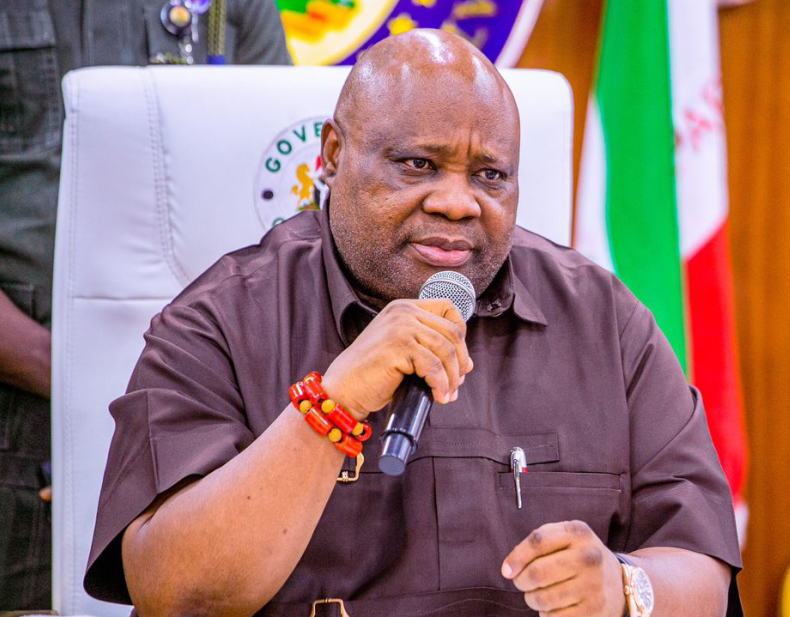
By Emmanuel Balogun, PhD
August 2026
I write this not merely as a political commentator, but as someone who has a personal and enduring connection with Osun State. My late mother hailed from Oshogbo, and some of my earliest years were spent there. Those early experiences gave me a deep affection for Oshogbo and, by extension, for Osun and its people. I have always known the ancient city and the state as places of warmth, friendliness and, by and large, peaceful coexistence. The people have a remarkable capacity for community, relationship and resilience.
It is partly for this reason that I have followed the political development of Osun with more than ordinary interest. What happens to Osun matters to me, not simply because of family roots, but because I would like to see this historically significant state grow politically beyond the bitterness, violence and recurring antagonisms that sometimes accompany its political contests.
My concern, therefore, is not about whether Ademola Adeleke should have won or whether his opponent should have won. The people have spoken, and their decision must be respected. My concern is about what happens after victory, what the victor remembers, whom he regards as the source of his mandate, and whether the political struggle ultimately produces a government that belongs to the people or merely another chapter in the competition among political elites.
That is why I ask, perhaps provocatively:
ADELEKE, WATCH IT: WHO REALLY WON THE OSUN ELECTION?
The answer, in a democracy, should be obvious.
The people won.
Governor Ademola Adeleke has won a second term as Governor of Osun State. In the August 15, 2026 governorship election, the Independent National Electoral Commission (INEC) declared him winner with 511,067 votes, against 444,815 votes for the APC candidate, Bola Oyebamiji, a margin of 66,252 votes. Adeleke won 19 of the state’s 30 local government areas, while Oyebamiji won 11.
Those are the official figures.
But numbers alone do not tell the whole story.
Behind those numbers were hundreds of thousands of ordinary Osun men and women who went to the polling units and cast their ballots in an atmosphere that had, for months, been darkened by political tension and violence. Before the election, Kimpact Development Initiative documented 73 election-related violent incidents resulting in 29 deaths across the state. Amnesty International independently raised alarm over the same disturbing pattern and called for accountability.
And the violence did not end with the declaration of the result. KDI subsequently reported 17 election-day violence incidents across 10 local government areas, involving more than 44 victims.
So, this was not merely Adeleke versus Oyebamiji.
It was not simply Accord versus APC.
It was not merely another contest among politicians.
There was a larger struggle beneath it all, the struggle of the ordinary Osun voter to have his or her political choice respected.
And that is where Governor Adeleke must pause and ask himself a fundamental question:
After everything that happened, who really gave me this victory?
Political parties undoubtedly played their part. Campaign organisations mobilised. Political strategists planned. Supporters sacrificed. Friends and associates contributed. Lawyers stood ready for possible legal battles. Security agencies provided protection. INEC conducted the election.
But ultimately, in a democracy, the mandate belongs to the people.
The governor is not the owner of the mandate.
He is its trustee.
That distinction is fundamental to representative government.
The people of Osun were the ones who stood in the queues. They were the ones who endured the tension. They were the ones who made their choices. They were the ones who rejected one candidate and renewed the mandate of another.
Some citizens were injured. Property was destroyed. Lives were lost in the wider cycle of electoral violence surrounding the contest. The precise responsibility for individual deaths must, of course, be established through credible investigation rather than partisan accusation. But the human cost of the political contest is undeniable.
Every casualty was somebody’s child.
Somebody’s husband.
Somebody’s wife.
Somebody’s father.
Somebody’s mother.
Somebody’s brother.
Somebody’s friend.
Behind every statistic was a human story that a political victory must never erase.
This is why the political history surrounding Adeleke’s victory matters.
His first election in 2022 was itself a defining moment in Osun politics. INEC declared him winner with 403,371 votes against the then incumbent Gboyega Oyetola’s 375,027 votes. The result was fiercely contested and eventually travelled through the judicial system. The Election Petition Tribunal initially overturned Adeleke’s victory, but the Court of Appeal restored it, and on May 9, 2023, the Supreme Court unanimously dismissed Oyetola’s appeal and affirmed Adeleke’s election.
The 2026 election was therefore not an isolated political event. It was another chapter in a prolonged political contest in which the people of Osun have repeatedly been called upon to choose between competing political forces.
That history makes the question of gratitude even more important.
When a politician tells the people that their mandate is under threat, that their votes must be protected and that they must stand firm against political intimidation, he creates a moral obligation to remember those same people after victory.
If the people are important enough to be mobilised during the battle, they must remain important enough to be embraced after the battle.
That is why political symbolism matters.
After an election victory, the victorious politician naturally meets political leaders. There is nothing inherently wrong with that. Indeed, it is good for democracy when political opponents can speak to one another. A governor should be able to meet the President irrespective of party affiliation. The President is the President of the Federal Republic, not merely of the party that produced him.
President Bola Tinubu also deserves recognition for accepting Adeleke’s victory and congratulating him, describing the result as reflecting the confidence of Osun voters.
That is how democracy ought to work.
But politics is not only about what one does.
It is also about what one’s actions communicate.
Adeleke’s visit to President Tinubu at the Presidential Villa after receiving his Certificate of Return attracted attention because of the history of political rivalry surrounding Osun and because Adeleke has publicly endorsed Tinubu for a second presidential term in 2027. Adeleke has explained that his support is based on Tinubu’s being a Yoruba man from the South-West and his desire to see the President continue his projects and reforms in the region.
There is nothing inherently illegitimate about such a political choice.
Adeleke is entitled to support whomever he chooses.
He is entitled to work with the President.
He is entitled to seek federal cooperation.
He is entitled to build bridges with political opponents.
Indeed, those may all be signs of political maturity.
But there is a delicate line between reconciliation and political indebtedness.
There is a difference between saying:
“Mr President, I appreciate your respect for the democratic process.”
and allowing one’s political conduct to create the impression:
“Mr President, thank you for giving me my victory.”
The first is democratic courtesy.
The second would raise a much deeper question:
Who does the governor believe actually gave him the mandate?
The President did not cast 511,067 votes.
The Federal Government did not queue at the polling units.
Abuja did not produce the 66,252-vote margin.
Osun people did.
And therefore, whatever gratitude the governor expresses elsewhere, his deepest political gratitude must ultimately return to Osun.
The Certificate of Return itself belongs to the people before it belongs to the politician.
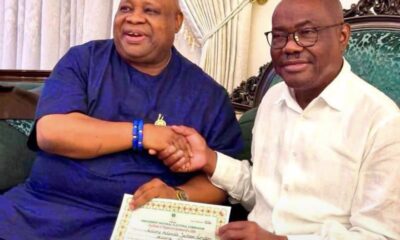
Interestingly, Adeleke himself has now acknowledged this principle. While receiving his Certificate of Return, he said the certificate belongs to the people of Osun State, and he dedicated his victory to those who stood by him throughout the electoral process.
That is precisely the message I would encourage him to live out, not merely to proclaim.
Because leadership is not only about words.
Leadership is about consistency between what a leader says and what he does.
If the people are the source of the mandate, they must remain at the centre of the governor’s political consciousness.
Go to Ede.
Go to Osogbo.
Go to Ilesa.
Go to Ile-Ife.
Go to Iwo.
Go into the communities where people stood under the sun and exercised their franchise.
Visit the families that lost loved ones.
Visit those who were injured.
Listen to the ordinary citizens who endured the fear.
Tell them:
“This victory belongs to you.”
That would be one of the most powerful political statements a governor could make.
To Adeleke’s credit, he has already taken some meaningful steps in this direction. He announced a ₦500 million Election Violence Victims Endowment Fund to support verified victims and affected families, with assurances that assistance would not discriminate on the basis of political affiliation, religion, ethnicity, gender or social status. He also announced scholarships for children and dependants of those who lost their lives.
These are commendable steps.
But compensation alone is not enough.
There must also be justice.
There must be credible investigation.
There must be accountability.
There must be remembrance.
There must be a deliberate effort to ensure that political disagreement in Osun never again becomes a justification for bloodshed.
Adeleke now has an opportunity to make his second term larger than his personal victory.
He could establish a permanent memorial or annual remembrance for victims of electoral violence.
He could ensure that the families of victims are properly identified and supported.
He could insist on transparent investigations into political killings irrespective of the political affiliation of the victims.
He could make Osun a model state where political competition is fierce but peaceful; where opponents can disagree without becoming enemies, where elections are contests of ideas rather than contests of violence.
That would be a legacy greater than winning an election.
It would be building a political culture.
And that brings us back to the question with which we began:
Who really won the Osun election?
If Adeleke believes that he alone won, then he has misunderstood democracy.
If Accord Party believes that it alone won, it has misunderstood democracy.
If the political class believes that victory belongs to those who control the machinery of government, it has misunderstood democracy.
The people won.
Adeleke merely received the privilege of representing them.
And that privilege certainly carries responsibilities.
He must govern those who voted for him and those who voted against him.
He must listen to his supporters without becoming captive to them.
He must respect his opponents without surrendering his convictions.
He must work with Abuja without forgetting Osogbo.
He must build relationships with the powerful without becoming disconnected from the powerless.
He must cooperate with President Tinubu without allowing political friendship to compromise his primary responsibility to Osun.
He must be able to tell Abuja:
“I respect you, but my first responsibility is to Osun.”
That is not rebellion.
That is statesmanship.
He must be able to cooperate without becoming captive.
He must be able to disagree without becoming an enemy.
He must be able to receive federal assistance without surrendering the voice of his people.
And he must always remember that when he walks into the Presidential Villa as Governor of Osun, he does not walk in there as a private individual.
He walks in carrying the mandate of the people of Osun.
There is, however, another side of this matter that the people themselves must understand.
Citizens must stop treating politicians as personal heroes who have done them a favour by winning elections.
The politician is the servant.
The electorate is the principal.
The governor does not own Osun.
The governor temporarily occupies an office entrusted to him by the people.
Therefore, the people must continue to watch.
They must applaud good governance.
They must criticise failure.
They must demand accountability.
They must reject political thuggery.
They must refuse to become instruments of violence for any politician.
And they must never allow themselves to be remembered only when their votes are needed.
This is especially important in Osun, a state with a proud historical and cultural identity. Its politics should be capable of reflecting the civility, wisdom and communal spirit for which its people are known.
As someone whose personal roots connect to Oshogbo, I do not want to see Osun permanently defined by political bitterness. I want to see a state where political contests may be passionate but not murderous; where opposition is respected; where victory does not produce arrogance; where defeat does not produce desperation; and where political reconciliation does not mean forgetting the people.
Adeleke has won.
But the real test begins now.
Can he remember the people after the campaign posters have disappeared? Can he protect the dignity of those who stood with him when political temperatures were high?
Can he honour those whose lives were lost?
Can he govern those who voted against him with the same sense of responsibility as those who voted for him?
Can he cooperate with Abuja without forgetting Osogbo?
Can he maintain a cordial relationship with President Tinubu without allowing that relationship to obscure the fact that his mandate came from Osun voters?
Can he demonstrate that when he says “the people have spoken,” he truly means it?
These are the questions that will ultimately define his second term, not the number of handshakes he has in Abuja, not the number of political allies he accumulates, and not even the size of his electoral margin.
His enduring legacy will be determined by what he does with the trust the people have placed in him.
The Certificate of Return is only a document.
The real certificate is the confidence of the people.
And that confidence must be continually earned.
So, Adeleke! Watch it.
Do not let the warmth of Abuja make you forget the heat of the Osun sun under which your people stood to vote.
Do not let political handshakes make you forget the hands that held your campaign banners.
Do not let access to the powerful make you forget the ordinary people whose votes made that access possible.
Go to Abuja when duty requires it.
Meet the President.
Respect the Federal Government.
Build bridges.
Work with everybody.
Forgive your adversaries.
But whenever you return to Osun, remember where the mandate came from.
The President may receive you as a governor, but it was the people of Osun who made you one.
And perhaps that is the most important lesson from the 2026 Osun election:
Adeleke did not win Osun merely because he was Adeleke. He won because, at a critical moment, enough Osun people decided that his mandate was worth defending.
The greatest gratitude he can therefore offer them is not another political handshake in Abuja, but a government in Osun that makes their sacrifice worth the trouble, their courage worth the risk, their losses worth remembering, and their votes worth the trust they placed in him.
That is the victory that truly matters.
And that is the victory Osun now deserves.

For publication of your news content, articles, videos or any other news worthy materials, please send to newsleverage1@gmail.com. For more enquiry, please call +234-901-067-1763 or whatsapp +234-901-067-1763. To place an advert, please call 09010671763




Sowore as Best President Nigeria Refuses to Have – Kperogi

NHRC Investigates Deaths of 37 Suspected Miners in NSCDC Custody

Hon. Chidi Nnamdi Pledges People-Centred Development for Obioma-Ngwa Constituency

‘We Won’t Allow Wike to Use APC To Build His Party’ – Farouk Aliyu

Dangote Refinery IPO Success Linked To Deregulation, Subsidy Removal – Lokpobiri

Sanusi: Nigeria’s 200m Population Is a Huge Market, Dangote Chose to Produce for It

Ikeji-Aro 2026: ‘We Are Repackaging Aro Traditional Healing Practices for the Younger Generation’ – Mazi Ernie Onwumere

Jibrin: Tinubu Will Secure At Least 65% of Votes in 2027, Kano Will Be Delivered to APC

2027: Bourdex Unveils Plan to Transform Healthcare, Unlock Federal Opportunities in Abia North

Tinubu Mourns Veteran Nollywood Actor Olu Jacobs at 84

Tinubu: ‘Senator, We Are Not With You’ – Community Tells Senator Ohuabunwa

NDC Notified Benue Police Ahead of Peter Obi’s Visit, Document Shows

35 Years After Kirikiri Release, Abdul Mahmud Remembers Bamidele Aturu, Says ‘The Struggle Remains Unfinished’

Ibeku Traditional Rulers Endorse Chinedum Orji for Ikwuano/Umuahia Federal Constituency

Tension in Benue as Peter Obi’s Blocked Convoy Leads to Protest

Abia Govt Explains Teacher Recruitment Process, Discloses Number of Candidates Who Scored Over Benchmark

Iwa Ji Festival: Ikuku’s Cultural Connection With Ibeku People Signals Strong Constituency Bond – Group

APC Sanctuary: How the Ruling Party Became Nigeria’s Governance Virus – Otunba Babatunde Olushola Senbanjo

Ikeji-Aro 2026: CPC Chairman Elekwa Explains ‘Aro Renaissance’ Theme, Reveals Plans to Preserve Cultural Heritage

Nigeria Must Remain Vigilant: 2027 is Too Important to Be Taken for Granted – Otunba Babatunde Olushola Senbanjo

The final 6 ‘Game of Thrones’ episodes might feel like a full season
New Season 8 Walking Dead trailer flashes forward in time
Mod turns ‘Counter-Strike’ into a ‘Tekken’ clone with fighting chickens
Meet Superman’s grandfather in new trailer for Krypton
Disney’s live-action Aladdin finally finds its stars
Who are the early favorites to win the NFL rushing title?
The old and New Edition cast comes together to perform
Boxing continues to knock itself out with bewildering, incorrect decisions
Steph Curry finally got the contract he deserves from the Warriors
Phillies’ Aaron Altherr makes mind-boggling barehanded play
-
 POLITICS1 week ago
Tinubu: ‘Senator, We Are Not With You’ – Community Tells Senator Ohuabunwa
-
 NATIONAL NEWS1 week ago
NDC Notified Benue Police Ahead of Peter Obi’s Visit, Document Shows
-
 Articles3 weeks ago
35 Years After Kirikiri Release, Abdul Mahmud Remembers Bamidele Aturu, Says ‘The Struggle Remains Unfinished’
-
 POLITICS3 weeks ago
Ibeku Traditional Rulers Endorse Chinedum Orji for Ikwuano/Umuahia Federal Constituency
-
 NATIONAL NEWS2 weeks ago
Tension in Benue as Peter Obi’s Blocked Convoy Leads to Protest