
Articles
Now That Tinubu and Atiku Agree on Cheap Petrol – Kperogi

By Farooq A. Kperogi
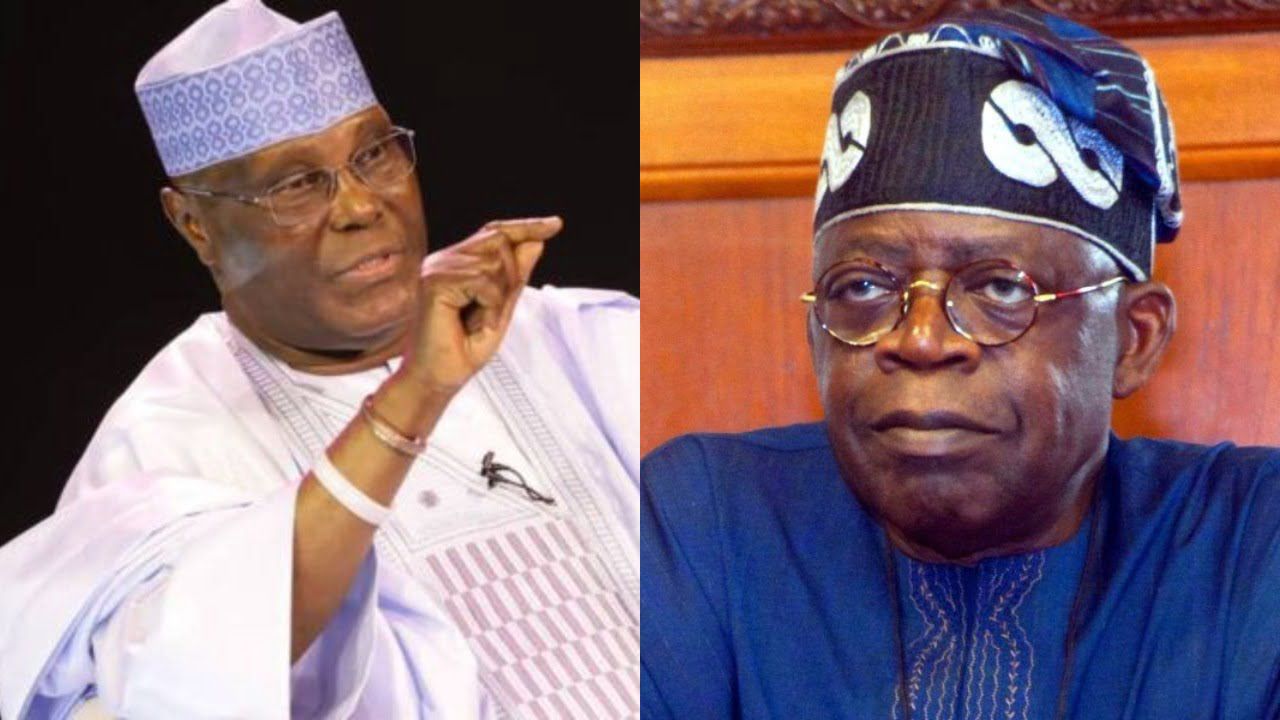
Last week, I argued that Atiku Abubakar’s promise to restore petrol subsidy had rattled President Bola Ahmed Tinubu because it finally opened a policy flank on which the president is acutely vulnerable. Events since then have strengthened my conviction. Tinubu has gone from deriding Atiku’s proposal as evidence of “serious ignorance” of governance and economics to suddenly talking about the imperative to lower transportation costs and make Nigerians benefit from cheaper fuel.
After meeting governors this week, Tinubu announced an accelerated rollout of CNG infrastructure and said, “We have agreed that cheaper fuel should result in cheaper fares!” His government wants lower transport fares from October 1.
Atiku wants to achieve affordability through petrol subsidy. Tinubu wants to achieve it through CNG and state intervention in transport fares. Beneath the differences in method lies an unexpected convergence: both men now concede that Nigerians need affordable energy and transportation. That’s some progress!
Tinubu once knew this without the benefit of Atiku’s prompting. At his January 25, 2023, presidential campaign rally in Abeokuta, he said, “I will reduce the price of fuel. Be rest assured that I will solve the fuel crisis.” He later repeated the promise more tersely: “We shall bring the fuel price down.” Those are useful quotations to recall now that the government treats cheap petrol as an economic abomination.
The difference between candidate Tinubu and President Tinubu is that the latter became captive to the narrative hegemony of subsidy-removal fundamentalists. Because Atiku and Peter Obi had also promised to eliminate petrol subsidy in 2023, there was no formidable political voice challenging the ideological consensus. The victims of the policy complained, but the political elite and their neoliberal cheerleaders told them that their suffering was necessary, temporary and ultimately redemptive.
Tinubu came to understand “reform” almost exclusively as the infliction of pain on everyday people. So, upon being sworn in, he lit a fire under Nigerians, has been roasting them slowly in it while government officials who luxuriate in sybaritic lavishness tell Nigerians that being cooked alive is an investment in a glorious future. When Atiku promised to rescue Nigerians from the fire, Tinubu and his overfed supporters warn that extinguishing the fire would reverse the gains they have recorded from being roasted.
This mentality is peculiar because governments everywhere recognize that the cost of energy and mobility cannot simply be abandoned to the tender mercies of the market. In much of Europe, governments heavily subsidize mass public transportation, which reduces the necessity for private car ownership. Canada does much the same. Brazilian cities spend public money to keep bus fares below their full economic cost.
The United States has a more automobile-centered model, so the political system is extraordinarily sensitive to petrol prices.
Years ago, I cited an instructive example from Iowa. A citizen panel recommended that the state raise its petrol tax by eight to ten cents a gallon because it desperately needed money for roads and bridges. Governor Terry Branstad rejected the recommendation and instructed his Department of Transportation to search for savings.
His spokesman explained that the legislature did not want to impose an additional burden on taxpayers. Imagine that. Government needed money for infrastructure and decided that its citizens should not be squeezed harder to provide it.
Nigerian governments routinely invert that order. For Nigerian political elites and their enablers, citizens must first be impoverished so that government can become richer in order to build infrastructure for impoverished citizens. Yet only the living use infrastructure. You do not starve people to death today because you hope to give their ghosts world-class highways tomorrow.
There is also much semantic trickery in discussions of energy subsidies. Call them subsidies, oil tax breaks, petrol tax holidays, public transportation subsidies or something else. What matters to ordinary people is the outcome.
A widely cited estimate from the Center for Investigative Reporting once calculated the “true cost” of gasoline in the United States at around $15 a gallon when pollution, public expenditure and other socialized costs were included, although motorists paid a fraction of that at the pump. The point is that societies make political choices about who bears the full cost of energy and mobility.
Nigeria made an especially cruel choice. It is an oil-producing country with an appallingly inadequate mass public transportation system, unreliable electricity that forces households and businesses to generate their own power, and an economy in which almost everything moves by road. Removing the petrol subsidy in one fell swoop under such conditions was bound to transmit price shocks into food, transportation, manufacturing and nearly every recess of economic life.
The government nevertheless brags that governors are richer as a consequence. That is one of the most revealing advertisements for Tinubu’s reverse Robin Hoodism. Robin Hood, according to the legend, robbed the rich to help the poor. Tinubu’s economic philosophy drains resources from the poor to fatten governments and people who were already insulated from hardship. State governments now receive historically large allocations, and this is offered as proof that subsidy removal is working.
Well, according to a recent report, 33 states spent more than ₦500 billion in the first six months of this year on Government Houses, governors’ offices, related executive administration, travel and transportation. Of course, every naira in those categories is not spent on gubernatorial self-indulgence. Still, there is something perversely revealing about celebrating the swollen liquidity of state treasuries while the household economies that financed this liquidity through dramatically higher petrol prices are bleeding.
Tinubu recently reinforced this argument with a jibe about the days when some governors could not pay salaries. He recalled the “Half Salary” governor in Osun, an unmistakable reference to Rauf Aregbesola. Aregbesola’s modulated salary regime was indefensible and caused genuine hardship. But Tinubu was being clever by half because nominal salaries are meaningless unless we ask what they can buy.
Nigeria’s general price level has increased so steeply since the Aregbesola years that ₦50,000 in 2017 had approximately the purchasing power of about ₦237,000 today. So, if a senior civil servant whose full salary was ₦100,000 received ₦50,000 then, that miserable half salary could buy roughly what ₦237,000 buys today. Unless the worker’s current salary has risen above that threshold, his celebrated “full salary” leaves him poorer in real terms.
Petrol makes Tinubu’s boast even more ridiculous. The national average price of petrol was about ₦144 per liter in 2017. In May this year it averaged nearly ₦1,600. A ₦50,000 half salary in 2017 bought about 346 liters of petrol. A ₦100,000 full salary today buys only about 63 liters. The half salary bought more than five times as much petrol as the nominally full salary.
In other words, “we now pay full salaries” is empty propaganda without reference to purchasing power. A full calabash of worthless pebbles does not become more valuable than half a calabash of gold merely because it is full.
If time travel were possible, millions of Nigerians would speed back to the comparatively halcyon years when less money took them farther than more money takes them now. After all the economic gobbledygook has dissipated, people judge governments by the quality of their lives. Can they afford food? Can they get to work? Can their wages pay rent? Can businesses survive? Can parents meet the basic needs of their children?
For years, I have asked the wide-eyed neoliberal jesters in and out of government who demonize subsidies and worship cruelty as economic reform to show me one country that developed by ruthlessly depressing the living standards of ordinary people, destroying their purchasing power and making basic energy prohibitively expensive while government officials wallowed in comfort. I am still waiting because such a country does not exist.
The business of a government worth the name is to make life a little less difficult for the weakest members of society. Tinubu calls the deliberate transfer of pain from government to the poor “courage.” I have always called it reverse Robin Hoodism.
Atiku’s subsidy promise has at least forced Tinubu to rediscover a truth he knew when he wanted Nigerians’ votes in 2023: prohibitively expensive energy is bad for people and bad for an economy. They disagree about how to lower the cost, but the argument has already moved. Nigerians are no longer being told merely to rejoice that governors have more money and endure their own misery for an endlessly deferred tomorrow.
The debate is finally about how to make life affordable again. That is progress of a sort, although it has taken three years of disastrous “economic reform” and an opposition politician’s campaign promise to get Tinubu back to something he himself once promised: “We shall bring the fuel price down.”

For publication of your news content, articles, videos or any other news worthy materials, please send to newsleverage1@gmail.com. For more enquiry, please call +234-901-067-1763 or whatsapp +234-901-067-1763. To place an advert, please call 09010671763


Facebook Dispute: Rt. Hon. Ochei Campaign Council Demands Immediate Release of Detained Aide

Fuel Discount: ‘We Are Not Dumb to Give Nigerians One-Month Discount for Votes’ – Oyedele

Cardinal Onaiyekan: Governor Alia Was Suspended for Defying Catholic Church Rules on Politics

Oshiomhole Clashes With Interviewer Who Questioned Why He Protested Fuel Price Under Obasanjo But Never Under Tinubu

30-Day Fuel Discount: Nigerians Deserve More Than Temporary Relief – Otunba Babatunde Olushola Senbanjo

FG Announces 30-Day Petrol Discount at NNPC Stations

Orji Mourns Squadron Leader Man-Ugwueje, Describes Fallen Air Force Officer as Servant of Fatherland

“Let Us Unite for Progress” – Onukwuo Says, Mobilises Support for Chinedum Enyinnaya Orji

Odumeje Blasts FG Over Celebration of Existing Onitsha Head Bridge, Says “Holy Ghost Will Kpai You”

Nigeria Needs Leadership, Not Politics of Personal Power – Otunba Babatunde Olushola Senbanjo

Ikeji Aro 2026 on Avor Osu Day: Nkita Oku, Inum, Ekpe Erim, Other Ekpo Masquerades Pay Homage to Eze Eberechukwu Oji

97-Year-Old Dr Mrs. Shields Reconstructs, Reopens Mary Slessor Library in Arochukwu

Ikeji-Aro 2026: ‘We Are Repackaging Aro Traditional Healing Practices for the Younger Generation’ – Mazi Ernie Onwumere

2027: Hon. Ike Bishop Okoronkwo Mobilises Abia North Grassroots, Tasks ADC Coordinators on Polling Units

APC Sanctuary: How the Ruling Party Became Nigeria’s Governance Virus – Otunba Babatunde Olushola Senbanjo

Eze Eberechukwu Oji Commissions Amuvi Community Self-Built Connectivity Hub

Nigeria Owes Tobi Amusan a Statue – Abdul Mahmud

Obioma-Ngwa 2027: Chidi Nnamdi Pushes Case for Responsive Representation – Comrade Abuchi Isaac

‘We Will, We Will, We Will’: Atiku Slams Tinubu Over Promises, Questions Achievements After Three Years

Ikeji Aro 2026: ‘Aro Is Prepared for a Bumper Festival’ – Adaukwu Eucharia Oti

The final 6 ‘Game of Thrones’ episodes might feel like a full season
New Season 8 Walking Dead trailer flashes forward in time
Mod turns ‘Counter-Strike’ into a ‘Tekken’ clone with fighting chickens
Meet Superman’s grandfather in new trailer for Krypton
Disney’s live-action Aladdin finally finds its stars
Who are the early favorites to win the NFL rushing title?
The old and New Edition cast comes together to perform
Boxing continues to knock itself out with bewildering, incorrect decisions
Steph Curry finally got the contract he deserves from the Warriors
Phillies’ Aaron Altherr makes mind-boggling barehanded play
-
 Abia State News2 weeks ago
Ikeji Aro 2026 on Avor Osu Day: Nkita Oku, Inum, Ekpe Erim, Other Ekpo Masquerades Pay Homage to Eze Eberechukwu Oji
-
 Abia State News2 weeks ago
97-Year-Old Dr Mrs. Shields Reconstructs, Reopens Mary Slessor Library in Arochukwu
-
 Abia State News3 weeks ago
Ikeji-Aro 2026: ‘We Are Repackaging Aro Traditional Healing Practices for the Younger Generation’ – Mazi Ernie Onwumere
-
 POLITICS2 weeks ago
2027: Hon. Ike Bishop Okoronkwo Mobilises Abia North Grassroots, Tasks ADC Coordinators on Polling Units
-
 Articles4 weeks ago
APC Sanctuary: How the Ruling Party Became Nigeria’s Governance Virus – Otunba Babatunde Olushola Senbanjo