
Articles
NIGERIA at 66: What is the Way Forward? – Otunba Babatunde Olushola Senbanjo Calls for Rescue, Rebuild and Restore the Nation


As Nigeria marks 66 years of independence, we must pause not merely to celebrate with music, ceremonies, green-and-white decorations and patriotic speeches, but to ask ourselves one of the most important questions of our generation:
WHAT HAS NIGERIA REALLY BECOME SINCE 1960, AND WHERE ARE WE GOING FROM HERE?
On October 1, 1960, our founding generation inherited a country filled with enormous promise. Nigeria possessed vast human resources, fertile land, natural resources, intellectual capacity, cultural diversity and a population capable of producing great minds. We had every reason to beleve that, with responsible leadership, strong institutions and national unity, Nigeria could become one of the world’s most prosperous and respected nations.
Yet 66 years later, many Nigerians are still asking the same painful questions.
Why are we still struggling with poverty?
Why does insecurity continue to threaten ordinary citizens?
Why is electricity still such a major challenge?
Why do many young Nigerians struggle to find meaningful employment despite being educated and talented?
Why does corruption continue to weaken public institutions?
Why do we continue to depend heavily on crude oil despite possessing enormous agricultural, mineral, technological and human potential?
Why are millions of Nigerians still struggling to afford food, housing, healthcare and quality education?
These are not questions that belong to one political party, one region, one ethnic group or one generation.
They belong to all of us.
Nigeria’s story is not completely a story of failure. Since independence, Nigerians have achieved remarkable things in education, science, business, entertainment, sports, technology, agriculture, banking, telecommunications and entrepreneurship. Nigerian professionals and businesses have made their mark across Africa and around the world.
Our people have demonstrated repeatedly that the Nigerian spirit is extraordinarily resilient.
From the market woman to the farmer, from the artisan to the engineer, from the teacher to the doctor, from the entrepreneur to the civil servant, from the student to the technology developer, millions of Nigerians wake up every day and continue to build their lives despite enormous difficulties.
Our problem, therefore, is not that Nigerians lack talent.
Our problem is that our national systems have too often failed to convert the enormous talent, resources and energy of our people into broad-based prosperity.
Recent economic assessments illustrate the seriousness of the challenge. The IMF reported in 2026 that poverty remained very high and estimated that about 27 million Nigerians faced food insecurity in late 2025. It also identified governance, security, electricity, agriculture, infrastructure and human capital as major areas requiring sustained attention.
The World Bank similarly notes that poverty remains widespread, while insecurity, inadequate infrastructure, weak job creation and electricity challenges continue to constrain economic opportunity.
These figures should not merely be statistics to politicians, economists or international organisations.
Behind every statistic is a Nigerian family.
A mother who cannot afford enough food.
A father struggling to pay school fees.
A graduate searching for work.
A farmer afraid to travel to his farm.
A small business owner spending too much on diesel because electricity is unreliable.
A young person considering leaving the country because he or she no longer sees a future here.
A pensioner who worked for decades but struggles to live with dignity.
That is why Nigeria’s 66th Independence anniversary should be more than a celebration.
It should be a national moment of reflection.
WHERE DID WE GO WRONG?
Perhaps one of our greatest mistakes has been the inability to build institutions that are stronger than individuals.
We have often placed too much emphasis on personalities and too little emphasis on systems.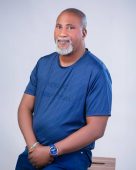
We celebrate political personalities, but we must build institutions.
We celebrate appointments, but we must demand performance.
We celebrate projects, but we must demand sustainability.
We celebrate political promises, but we must demand measurable results.
We celebrate our leaders, but we must never forget that leadership is a responsibility—not a royal inheritance.
Nigeria does not need leaders who merely know how to win elections.
Nigeria needs leaders who understand how to build a nation.
We need leaders who understand that public money is not personal money.
We need leaders who understand that government exists to serve citizens.
We need leaders who understand that security is not a luxury.
We need leaders who understand that education is not an expense but an investment.
We need leaders who understand that electricity is fundamental to industrial development.
We need leaders who understand that agriculture is not merely about food but about employment, exports, wealth creation and national security.
And above all, we need leaders who understand that Nigeria belongs to all Nigerians.
CORRUPTION MUST NO LONGER BE NORMAL
For decades, corruption has remained one of the greaIndustrialisation development.
But we must also look beyond political speeches.
Corruption is not only the money allegedly stolen by a powerful official.
It also exists when someone demands money to perform a public duty.
It exists when contracts are inflated.
It exists when public employment is sold.
It exists when people manipulate government processes for personal gain.
It exists when emphasisedffer bribes to obtain services they should receive lawfully.
It exists when we defend wrongdoing simply because the person involved belongs to our political party, ethnic group, religion, community or family.
We cannot build a new Nigeria while protecting corruption whenever it benefits our side.
The fight ,against corruption must therefore be institutional, transparent and impartial.
Government finances should be easier for citizens to track.
Public procurement should be transparent.
Audits should have consequences.
Anti-corruption institutions should be professionally independent and properly resourced.
And those entrusted with public resources must understand that public office is a position of stewardship.
SECURITY MUST BECOME A NATIONAL PRIORITY
No nation can develop where its citizens are afraid.
A farmer who cannot safely access his farm cannot produce enough food.
A business owner who cannot safely transport goods cannot grow.
A child who cannot safely travel to school cannot receive a proper education.
An investor who fears insecurity will hesitate to invest.
The World Bank and IMF continue to identify insecurity as a significant constraint on Nigeria’s economic and social development.
Therefore, security must go beyond military operations.
We need better intelligence.
We need effective policing.
We need modern technology.
We need improved border management.
We need justice systems that work.
We need economic opportunities for young people vulnerable to criminal recruitment.ccriticisetronger criticism between communities and security agencies.
And we need accountability when citizens or security personnel violate the law.
Security is the foundation upon which every other development rests.
NIGERIA MUST STOP DEPENDING ON OIL ALONE
Nigeria has enough land, people, creativity and natural resources to build a diversified economy.
Agriculture must become modern and commercially productive.
Manufacturing must become competitive.
Mining must be properly regulated.
Technology must be encouraged.
Creative industries must receive serious investment.
Tourism must be developed.
Small and medium-sized businesses must have access to affordable finance.
Our universities and technical institutions must produce people with skills relevant to the modern economy.
Nigeria should not simply export raw materials and import finished products.
We must increasingly produce, ,process and export.
That is how jobs are created.
That is how local industries grow.
That is how communities become prosperous.
That is how government revenue can increase without placing unbearable pressure on ordinary citizens.
ELECTRICITY IS NOT A LUXURY
A serious industrial nation cannot continue treating reliable electricity as a privilege.
A young Nigerian running a small business should not have to spend a significant portion of income simply generating electricity.
A factory should not have to depend excessively on private generators.
A hospital should have dependable power.
A school should have electricity.
A digital entrepreneur should be able to work without constantly worrying about power supply.
The IMF has specifically identified electricity-sector reform and infrastructure investment as important to Nigeria’s long-term growth.
Reliable electricity would reduce business costs, improve productivity and create opportunities across virtually every sector.
OUR EDUCATION SYSTEM MUST PREPARE PEOPLE FOR THE FUTURE
Nigeria cannot build a 21st-century economy with an education system that leaves millions without the skills demanded by the modern world.
We need quality primary education.
We need properly equipped secondary schools.
We need stronger universities.
We need technical and vocational education.
We need digital skills.
We need entrepreneurship.
We need research.
We need apprenticeships.
And we must stop treating vocational and technical careers as inferior.
A skilled technician, electrician, welder, mechanic, farmer, software developer, nurse or entrepreneur can contribute enormously to national development.
Education should not merely prepare Nigerians to look for jobs. It should prepare Nigerians to create value.
OUR YOUNG PEOPLE ARE NOT THE PROBLEM
Nigeria has one of the greatest assets any country can possess:
A young population full of energy, creativity and ambition.
But young people need opportunity.
They need jobs.
They need affordable education.
They need access to finance.
They need safe communities.
They need technology.
They need mentors.
They need a political and economic system where their future does not depend entirely on who they know.
We must stop asking young Nigerians why they want to leave the country.
Instead, we should ask ourselves:
What kind of country are we building that makes them want to stay?
Imagine what Nigeria could become if millions of young Nigerians who currently spend their energy searching for opportunities abroad could find meaningful opportunities here at home.
WE MUST CHANGE OUR POLITICAL CULTURE
Citizens also have responsibilities.
We cannot demand good governance while rewarding poor governance.
We cannot complain about corruption and then celebrate politicians because they distribute money.
We cannot demand accountability while defending wrongdoing when it is committed by people we support.
We cannot demand national unity while constantly placing ethnicity, religion or regional identity above citizenship.
Political differences are normal in a democracy.
But political disagreement should never become hatred for fellow Nigerians.
Nigeria must become bigger than our political parties.
Nigeria must become bigger than ethnicity.
Nigeria must become bigger than religion.
Nigeria must become bigger than individual politicians.
Our loyalty should ultimately be to the Nigerian Constitution, the Nigerian people and the common good.
SO, WHAT IS THE WAY FORWARD?
The way forward is not another slogan.
The way forward is not waiting for one “messiah.”
The way forward is not believing that one political party alone possesses every solution.
The way forward is institution building, responsible leadership, informed citizenship and sustained reforms.
We need:
1. Stronger institutions
Institutions must work regardless of who occupies political office.
2. Independent and credible justice systems
The law must apply consistently and fairly.
3. Transparent management of public resources
Citizens should be able to see how public money is raised and spent.
4. Serious security reform
Citizens must be able to live, work and farm safely.
5. Massive investment in human capital
Education, healthcare and skills development must become national priorities.
6. Reliable electricity and infrastructure
Power, roads, transport, water and digital infrastructure are essential to economic growth.
7. Agricultural transformation
Farmers need security, storage, irrigation, technology, affordable finance and functioning markets.
8. Industrialization and local production
Nigeria must produce more of what Nigerians consume and compete in international markets.
9. Support for small businesses
SMEs create employment and need access to finance, infrastructure and predictable regulations.
10. Stronger social protection
Poor and vulnerable Nigerians need targeted support during economic shocks. The IMF and World Bank have both emphasized the importance of protecting vulnerable households while pursuing reforms.
11. Responsible citizenship
Citizens must reject political violence, misinformation, vote buying and the politics of hatred.
12. Accountability at every level
Federal, state and local governments must be measured by what they deliver not simply by what they promise.
NIGERIA DOES NOT NEED TO GIVE UP ON ITSELF
At 66, Nigeria is not too old to change.
We are not too poor to develop.
We are not too divided to unite.
We are not too damaged to rebuild.
We are not without resources.
We are not without brilliant people.
We are not without opportunities.
What Nigeria needs is the courage to confront its weaknesses honestly and the discipline to build institutions that can outlive individual governments.
We must stop asking only:
“What can Nigeria give me?”
We must also ask:
“What can I contribute to Nigeria?”
The politician must ask it.
The civil servant must ask it.
The businessman must ask it.
The student must ask it.
The professional must ask it.
The religious leader must ask it.
The traditional ruler must ask it.
The journalist must ask it.
The farmer must ask it.
And every ordinary citizen must ask it.
Because nation-building is not the responsibility of government alone.
Government has the greatest institutional responsibility, but citizens have a role in demanding accountability, obeying the law, rejecting corruption and contributing positively to their communities.
NIGERIANS, THIS IS OUR COUNTRY
We may criticize Nigeria because we love Nigeria.
We may demand better leadership because we believe Nigeria can do better.
We may question our institutions because we want institutions that work.
We may demand accountability because our children’s future depends on it.
We may disagree politically while remaining brothers and sisters under one national flag.
Let us therefore refuse to surrender to hopelessness.
Let us refuse to believe that corruption must always win.
Let us refuse to believe that insecurity must define us.
Let us refuse to believe that poverty is our permanent destiny.
Let us refuse to believe that our best young people must always leave before they can succeed.
Let us refuse to believe that Nigeria cannot become a country where hard work is rewarded, justice is respected, businesses can thrive, children can receive quality education, farmers can safely cultivate their land and families can live with dignity.
Nigeria is bigger than its problems.
Our responsibility now is to turn that potential into reality.
At 66, the question is no longer simply:
“What went wrong?”
The greater question is:
“WHAT ARE WE GOING TO DO ABOUT IT?”
The next chapter of Nigeria’s history cannot be written by government alone.
It must be written by responsible leaders, courageous citizens, productive businesses, committed professionals, innovative young people, honest public servants and communities determined to build a better future.
Let us demand leadership that serves.
Let us build institutions that work.
Let us protect our communities.
Let us educate our children.
Let us produce more.
Let us fight corruption wherever we find it.
Let us reject hatred.
Let us embrace justice.
Let us hold every government accountable by its actions and measurable results.
And let us remember that democracy is not only about choosing leaders; it is also about citizens remaining engaged, informed and willing to demand accountability throughout the life of a government.
Nigeria belongs to all of us.
From Lagos to Kano.
From Ogun to Rivers.
From Enugu to Kaduna.
From Oyo to Borno.
From the Niger Delta to the North.
From the East to the West.
From the North to the South.
One Nigeria. One destiny. One future.
🇳🇬 HAPPY 66TH INDEPENDENCE ANNIVERSARY, NIGERIA. 🇳🇬
May we find the courage to confront our failures, the wisdom to preserve our successes, the discipline to build strong institutions and the unity to create the Nigeria that future generations deserve.
The Nigeria we desire is possible.
The Nigeria we deserve must be built.
And the time to begin is now.
WHAT IS THE WAY FORWARD, NIGERIANS?
RESCUE. REBUILD. RESTORE.
🇳🇬 GOD BLESS THE FEDERAL REPUBLIC OF NIGERIA.🇳🇬

For publication of your news content, articles, videos or any other news worthy materials, please send to newsleverage1@gmail.com. For more enquiry, please call +234-901-067-1763 or whatsapp +234-901-067-1763. To place an advert, please call 09010671763





Okorocha Accuses Uzodinma of Manipulating Elections, Says Governor Has Never Won Poll

2027: Chidi Nnamdi Pledges Jobs, Youth Empowerment, Community Development for Constituents

ALM Rejects Purported Sam Nworgu Adoption, Reaffirms Adinigwe Nwoke as Preferred 2027 Candidate

UNN Business School Director Visits ISDIS, Eyes Global Leadership in Professional Education

Asaba Massacre: Nigeria Must Share Our Pain, Learn From Tragedy – Nduka-Eze

Tinubu Departs Abuja for Makkah to Pray for Nigeria

TUC Rejects FG’s N70,000 Wage Allowance, Demands Salary Review

AfriCANDO 2026: Abia Woos Global Investors, Set to Showcase Economic Potential to World

2027: New Direction Agenda Backs Chidi Nnamdi, Says Constituency Deserves Competent, Purposeful Representation

Chinedum Enyinnaya Orji Celebrates Dr. Philip Nto, Hails Contributions To Education

Cardinal Onaiyekan: Governor Alia Was Suspended for Defying Catholic Church Rules on Politics

Eze Eberechukwu Oji Receives New Book on Arochukwu’s Cultural Heritage, Eulogizes Author

2027: INEC Warns Against Private Declaration of Election Results, Says Commission Has Exclusive Authority

How Customs ACG, Others Defrauded Man of ₦96m Over Fake Container Auction – Verydarkman
NIGERIA at 66: What is the Way Forward? – Otunba Babatunde Olushola Senbanjo Calls for Rescue, Rebuild and Restore the Nation

‘We Will, We Will, We Will’: Atiku Slams Tinubu Over Promises, Questions Achievements After Three Years

FG Announces 30-Day Petrol Discount at NNPC Stations

Akpabio’s Cruel Ignorance: Punishing Suicide Survivors Is No Answer to Despair – Abdul Mahmud

2026 Teachers’ Day: Otti Approves N1bn Appreciation Fund, Orders Payment of Outstanding Teachers’ Dues

66 Years of Independence: Otunba Babatunde Olushola Senbanjo Calls for Rejection of APC in 2027, Says Nigeria Must Reclaim Its Promise

The final 6 ‘Game of Thrones’ episodes might feel like a full season
New Season 8 Walking Dead trailer flashes forward in time
Mod turns ‘Counter-Strike’ into a ‘Tekken’ clone with fighting chickens
Meet Superman’s grandfather in new trailer for Krypton
Disney’s live-action Aladdin finally finds its stars
Who are the early favorites to win the NFL rushing title?
The old and New Edition cast comes together to perform
Boxing continues to knock itself out with bewildering, incorrect decisions
Steph Curry finally got the contract he deserves from the Warriors
Phillies’ Aaron Altherr makes mind-boggling barehanded play
-
 NATIONAL NEWS3 weeks ago
Cardinal Onaiyekan: Governor Alia Was Suspended for Defying Catholic Church Rules on Politics
-
 METRO2 weeks ago
Eze Eberechukwu Oji Receives New Book on Arochukwu’s Cultural Heritage, Eulogizes Author
-
 NATIONAL NEWS3 weeks ago
2027: INEC Warns Against Private Declaration of Election Results, Says Commission Has Exclusive Authority
-
 CRIME3 weeks ago
How Customs ACG, Others Defrauded Man of ₦96m Over Fake Container Auction – Verydarkman
-
NATIONAL NEWS4 weeks ago
‘We Will, We Will, We Will’: Atiku Slams Tinubu Over Promises, Questions Achievements After Three Years