
Articles
The Lessons From Nepal – Abdul Mahmud

By Abdul Mahmud

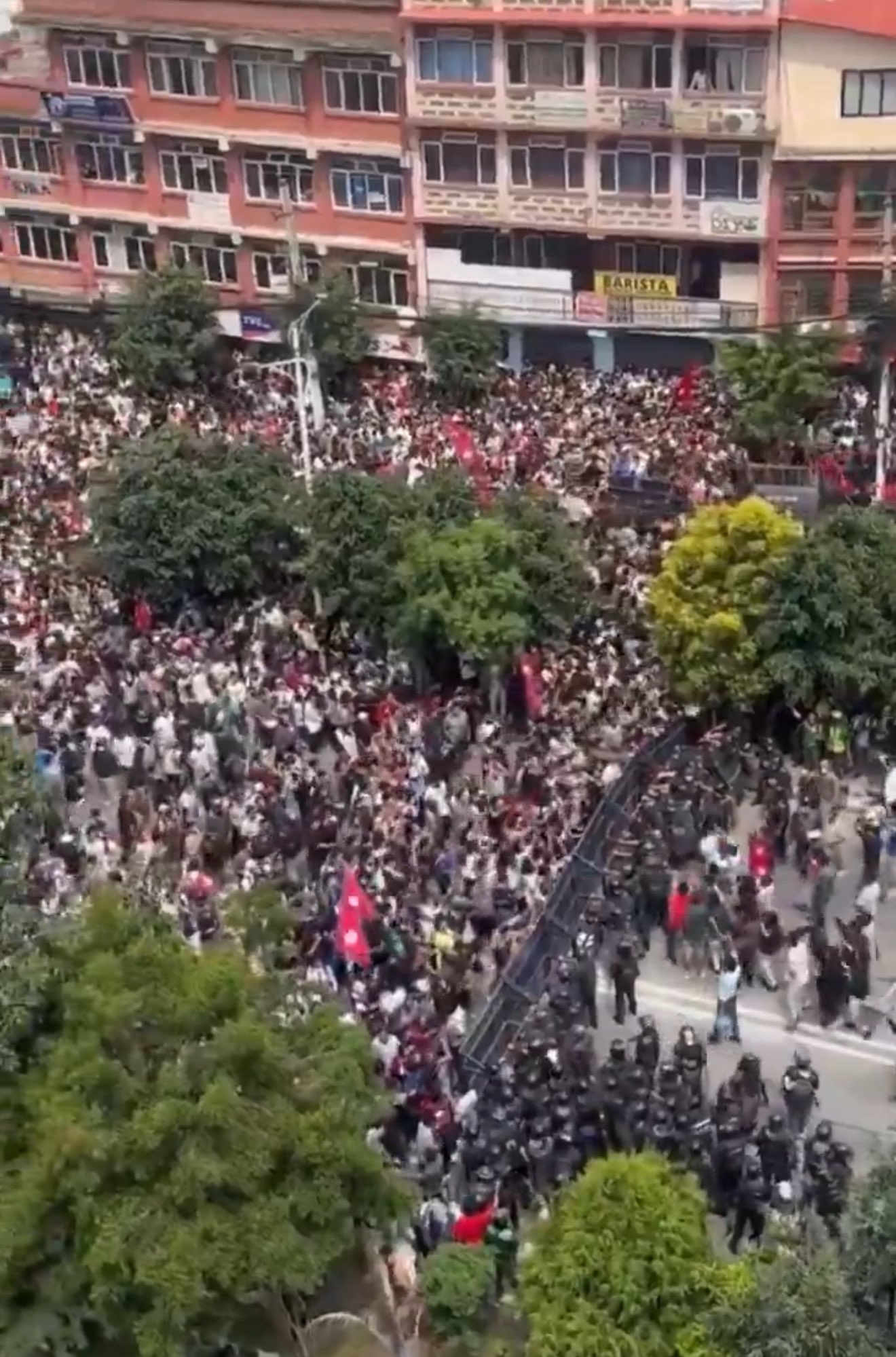
The streets of Kathmandu burned. The smoke carried the anger of a generation. For over a week, restless youths defied bullets. They asked why a country that housed the tallest mountain on earth had sunk into the deepest valley of corruption. They could not reconcile the majesty of Everest with the squalor of public malfeasance. They had grown tired of excuses. Tired of the rulers who promised reforms but delivered rot. Tired of institutions that spoke of democracy but acted as accomplices in looting. Their frustrations overflowed into rage. And rage became fire. The parliament building fell to flames. The home of a former Prime Minister collapsed under their fury. His wife, tragically, did not survive. It is easy for rulers to dismiss youths as reckless. Easy to paint them as misguided. But that dismissal is dangerous. For behind the rage is lived experience. Behind the fury is hunger. Behind the streets’ rage is the memory of broken promises. When young people say enough, they are not speaking out of idle fancy. They are speaking out of daily suffering.
History repeats this lesson, again and again. But, as always tone-deaf rulers refuse to learn. The storming of the Bastille in 1789 is not a French story alone. It is a universal parable. The queen, Marie Antoinette, mocked starving Parisians with the arrogance of cake. “Let them have cake”, she is quoted to have said when told that the peasants were demanding for bread. Though, there’s no agreement among historians that she ever uttered those words. The poor answered with fire and steel. The monarchy fell. A republic rose. That was not an accident of history. It was the force of a people betrayed. Nepal’s story is today’s reminder. It is also yesterday’s echo. From Dhaka to Cairo, from Lagos to Santiago, whenever rulers stretch the rope of corruption, citizens pull back. Sometimes they pull gently with protests. Sometimes they yank violently with uprisings. The pattern is always the same. Power abuses. Citizens resist.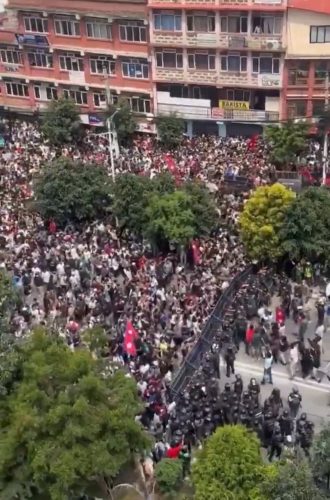
Dictators often forget the social contract. They treat citizens as subjects, not partners. They see public office as a throne, not a trust. But every throne rests on the consent of the governed. Once that consent is withdrawn, the throne collapses. No army can fully protect a ruler from a people united. No police can shoot at every citizen without shooting at themselves. The youths of Nepal did not act out of abstract ideology. They acted out of daily realities. No jobs. No dignity. No future. They watched elites grow fat while their own stomachs shrank. They saw public funds vanish while schools crumbled. They saw ministers live in palaces while families starved. What choice did they have but to rise?
The social contract is simple. Leaders must serve. Citizens must obey laws in return. When leaders loot, the contract breaks. When leaders kill, the contract ends. When leaders mock the poor, the contract burns. And when the contract burns, no constitution, no army, no police can hold society together.
This is the lesson dictators ignore. They believe power is permanent. They mistake silence for consent. They think repression will last forever. But silence is often the pause before a shout. Consent can be withdrawn in a day. And repression breeds only more resistance.
Bangladeshi youths gave the world warnings last year. Their protests began as peaceful demands from university students to abolish quotas in civil service jobs. They filled the streets of Dhaka and elsewhere. The police cracked down. The crackdown failed. The students grew bolder. The government fell. The Prime Minister, Sheikh Hamina, fled into exile in India. That was another teachable moment. Did the rulers in Kathmandu miss it? Or did they simply refuse to see?
Nepal is not unique. It is simply the latest country to remind us of the eternal truth: youths are the custodians of tomorrow, but they are also the judges of today. They do not wait forever. They cannot wait forever. Hunger makes the wait shorter. Hunger pushes the youths to occupy the streets and demand change and accountability. One can hear the voices of the Nepali youths. “Why must my father die of curable illness while ministers fly abroad for checkups?” “Why must my mother beg for rice while parliamentarians drive new cars?” “Why must my sister walk miles for water while officials sell contracts for pipelines that never arrive?” These are not abstract questions. They are wounds that bleed every day.
Dictators love to think that people forget. But memory is a stubborn lover. Memory holds onto injustice like a scar. Memory whispers to the young, reminding them of what their parents suffered. Memory fuels movements. It fueled the Arab Spring. It fueled South Africa’s freedom struggle. It fueled the democracy marches of Eastern Europe. It fueled the EndSars protests. And now, it fuels Nepal.
The tragedy of the former Prime Minister’s wife should not be ignored. Her death is a reminder that violence spares no one. Revolutions do not discriminate between the guilty and the innocent. When rage explodes, it engulfs everything. That is why rulers must listen before it is too late. Listening is cheaper than bullets. Dialogue is safer than fire. Reforms are wiser than repression. But, rulers often gamble. They believe repression buys them time. They think bribes buy loyalty. They assume the youths will eventually give up. That is the miscalculation of every dictator. Youth do not give up. They grow in number. They grow in anger. They grow in solidarity. The chain they form, hand to hand, is stronger than the individual links.
The image of Nepali youths occupying parliament is symbolic. It is more than a building set aflame. It is a declaration that legitimacy no longer resides in marble walls but in the streets. The building may burn, but the idea of justice will rise from the ashes. That is what dictators do not understand: institutions are only as strong as the trust citizens place in them. Without trust, even the grandest building is hollow.
Youth power is not just about protest. It is about imagination. It is about daring to dream of a society where honesty matters more than theft. Where competence matters more than connections. Where justice matters more than power. This is the radical gift that youths bring to politics. They imagine better. They demand better. They risk everything for better.
Nepal has now given the world another lesson. Corruption breeds revolt. Repression fuels resistance. Broken promises end in burnt buildings. And youth, no matter how silenced, will eventually roar. The question is not whether they will rise. The question is when. For other countries watching, the warning is clear. African countries should listen, in particular. Youth unemployment, inequality, and climate despair are all tall grasses waiting to be torched. The torches come from injustices, big and small. Once lit, it will spread faster than rulers can control.
What should dictators learn? They should learn that the day of Bastille was not just about Paris. It was about the universal impatience of the hungry. They should learn that when young people hold hands, the chain is unbreakable. They should learn that public office is not private property. They should learn that corruption is not merely theft, it is grand violence against the people.
The lessons from Nepal are human lessons. The faces of young protesters remind us of our children. Their anger mirrors the anger of youths everywhere. Their sufferings echo afar. When they chant in the streets, they are chanting not just for themselves, but for every generation betrayed.
Nepal today is scarred. Buildings are gone. Lives are lost. Trust is broken. Still, out of that rubble lies an opportunity. The opportunity to rebuild the social contract. The opportunity to learn from history. The opportunity to listen to the youths not as enemies, but as partners. If Nepal seizes this moment, it can heal. If it ignores it, the flames will return.
Dictators elsewhere should not wait for their own flames. They should study Nepal. They should look in the mirror and ask: are we building consent or burning it? Are we feeding hope or starving it? Are we remembering history or mocking it? Those who mock history always pay. Sometimes with crowns. Sometimes with lives. Always with regret. Nepal is not a faraway tragedy. It is a nearby warning. The Everest of corruption will always crumble under the avalanche of youth. And that avalanche, once started, cannot be stopped. The young have spoken. The world must listen. The rulers must learn. Are Nigerian rulers watching?
For publication of your news content, articles, videos or any other news worthy materials, please send to newsleverage1@gmail.com. For more enquiry, please call +234-901-067-1763 or whatsapp +234-901-067-1763. To place an advert, please call 09010671763







Amaiyi Okpo Traditional Ruler Appeals to Gov. Alex Otti to End Decades of Road Neglect

Otti Celebrates Barth Nnaji At 70, Says Geometric Power Fuels Abia’s Economic Transformation

Massive Turnout in Abiriba as LP Stakeholders Endorse Otti, Bourdex Ahead of 2027

Wike to Critics: “Disprove FCT Road Achievements and I’ll Resign”

Family of Late Mary Habila Petitions IGP Over Daughter’s Corpse

Arochukwu Christian Community Announces Activities for the 2nd Coronation Anniversary of Eze Aro Dr Eberechukwu Oji

‘Abia Only Niger Delta State Embracing PPP Development Model’ – Development Expert Obiaraeri

2027: Why Rt. Hon. Chinedum Enyinnaya Orji Is the Choice for Ikwuano/Umuahia Anosike

Falana Faults FG’s Housing for Judges, Demands Equal Welfare for All Public Servants

Mary Habila: “She Was Like a Daughter to Me” – Umahi Speaks, Demands Thorough Police Investigation

Breaking! Young Boy Slits Father’s Throat and Cuts Off Testicles

CBN Revokes Operating Licences of 46 Banks

Sunday Igboho Issues Two-Hour Ultimatum to Fulani Community Over Alleged Kidnappings

Ex-Banker Arraigned for Alleged N294.5m Theft in Lagos

Nigeria is Bleeding, Nigerians are Suffering and the Time for Action is Now – Otunba Babatunde Olushola Senbanjo Writes Tinubu

Pastor Chibuzor Nwosu Pens Emotional Posthumous Birthday Tribute to Late Father, Barr. Sir F.N. Nwosu

“Jonathan and Buhari Didn’t Destroy Yoruba Communities, Why Is Tinubu Doing So?” – Lagos Residents Protest Demolitions

Arochukwu: A Sacred Kingdom, the Long Juju, and the 2nd Coronation Anniversary of Eze Aro IX, His Eminence Engr. Dr. Eberechukwu Oji – Mazi Nwaka

Abia Women Assembly President Barr. Nnenna Obewu Onwuka Hails Don Lulu at Birthday, Describes Him as a Man After God’s Heart

Publisher of Igbo Times, iNews Remanded Over Alleged Defamatory Publication Against Governor Soludo’s Family

The final 6 ‘Game of Thrones’ episodes might feel like a full season
New Season 8 Walking Dead trailer flashes forward in time
Mod turns ‘Counter-Strike’ into a ‘Tekken’ clone with fighting chickens
Meet Superman’s grandfather in new trailer for Krypton
Disney’s live-action Aladdin finally finds its stars
Who are the early favorites to win the NFL rushing title?
The old and New Edition cast comes together to perform
Boxing continues to knock itself out with bewildering, incorrect decisions
Steph Curry finally got the contract he deserves from the Warriors
Phillies’ Aaron Altherr makes mind-boggling barehanded play
-
 CRIME1 week ago
Breaking! Young Boy Slits Father’s Throat and Cuts Off Testicles
-
 NATIONAL NEWS2 weeks ago
CBN Revokes Operating Licences of 46 Banks
-
 METRO4 weeks ago
Sunday Igboho Issues Two-Hour Ultimatum to Fulani Community Over Alleged Kidnappings
-
 CRIME1 week ago
Ex-Banker Arraigned for Alleged N294.5m Theft in Lagos
-
 Articles4 weeks ago
Nigeria is Bleeding, Nigerians are Suffering and the Time for Action is Now – Otunba Babatunde Olushola Senbanjo Writes Tinubu