
Articles
The Presidential Spokesman Who Is Out of Touch – Abdul Mahmud

By Abdul Mahmud
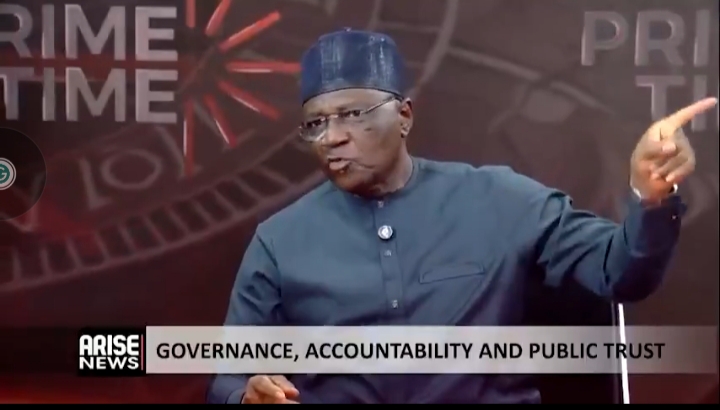
Public officials often forget that their words travel further than their offices. A minister, adviser or presidential spokesman may regard an interview as another routine media appearance, but citizens hear something else: an account of how those who govern understand their condition. That is why Bayo Onanuga’s recent remarks during his interview with Charles Aniagolu on Arise Television have provoked such public discomfort. In dismissing claims of widespread hunger and hardship, or suggesting that the suffering Nigerians describe does not correspond with his own observation, the presidential spokesman revealed a troubling distance between official perception and social reality.
A spokesman is not merely a defender of government policy. He is expected to interpret government to citizens and communicate public sentiment back to government. That role requires attentiveness and restraint. Loyalty to an administration cannot replace acquaintance with everyday life. Once public communication becomes detached from lived experience, official statements begin to sound less like explanations and more like declarations from another country. The difficulty with Onanuga’s comments lies not simply in disagreement over economic policy. Citizens may differ on whether reforms are necessary or whether temporary pain is justified by promised future gains. The difficulty lies in denying the existence or scale of hardship at a time when ordinary Nigerians have reorganised their lives around scarcity.
One does not require a statistical report to notice what has happened to the country. Markets have become sites of daily adjustments. Families that once bought food in quantity now purchase in fragments. Transport costs determine whether workers go to work every day. School fees compete with food bills. Medical appointments are postponed. Social ceremonies increasingly function as informal fundraising opportunities. Across urban centres and smaller communities alike, survival has become an exercise in difficult calculation.
Global institutions have not ignored these developments. Reports over the past two years from international development and humanitarian agencies have repeatedly identified Nigeria as facing rising food insecurity, deteriorating household purchasing power and growing poverty levels. Food inflation has remained persistently high while incomes have failed to keep pace with rising costs. Such findings may be debated in terms of causes and remedies, but dismissing the underlying distress places official claims in direct conflict with evidence and with lived experience. Supporters of President Bola Tinubu would argue, with some justification, that inherited economic distortions required difficult choices. They point to fuel subsidy removal, exchange rate liberalisation and broader economic reforms as unavoidable measures postponed by previous administrations. Economic reforms are rarely painless, and no serious observer expects structural adjustments to produce immediate comfort.
Citizens, however, are entitled to examine outcomes.
Fuel subsidy removal increased transportation costs almost immediately and produced consequences across every layer of economic life. Exchange rate reforms increased the cost of imports and raised production expenses for local businesses. Prices adjusted upward. Household budgets contracted. Small businesses struggled to absorb higher operating costs. Wages remained largely static while inflation reduced their value in practical terms.
Economic arguments lose persuasive force when daily experience moves in the opposite direction.
A worker whose salary has technically increased but whose purchasing power has collapsed does not experience improvement. Families that once maintained modest stability now depend on relatives abroad, informal loans or support networks. Professionals quietly adjust expectations downward. Retirement savings lose value. Young people postpone milestones once considered ordinary. Many Nigerians who previously occupied stable middle class positions now speak openly about survival.
This explains why remarks denying widespread hardship have generated such resentment. Citizens can endure sacrifice more easily than dismissal. Governments gain public trust when they acknowledge burdens honestly and explain their choices with candour. Public anger grows when officials appear insulated from consequences borne by everyone else. Political office creates its own form of distance. Daily exposure to official briefings, controlled environments and protected routines can produce an incomplete picture of national life. Those who occupy such spaces risk believing that public complaints are exaggerated because deprivation is no longer visible within their immediate surroundings.
That danger is not unique to Nigeria.
Political history contains many examples of governing classes that gradually lost contact with social conditions until public frustration became impossible to ignore. The comparison many Nigerians drew after Onanuga’s interview was the famous phrase associated with pre-revolutionary France: “Let them eat cake.” Historians have long disputed whether Marie Antoinette ever uttered those words. Their symbolic significance remains powerful because they represent indifference born of distance. When ordinary people complained of hunger, the phrase imagined rulers so removed from public suffering that they responded with disbelief and absurdity.
No one suggests that Nigeria is at the same stage as pre-revolutionary France, nor should historical comparisons be stretched beyond their limits. The lesson remains useful. Public officials must resist the temptation to substitute personal observation for collective reality. Bayo Onanuga’s responsibility is not to agree with every criticism of the Tinubu administration. His responsibility is to speak with enough humility to recognise that millions of Nigerians understand their own circumstances better than any official briefing can describe.
A spokesman who cannot hear public hardship risks speaking only to power while losing the confidence of the public he is meant to address.

For publication of your news content, articles, videos or any other news worthy materials, please send to newsleverage1@gmail.com. For more enquiry, please call +234-901-067-1763 or whatsapp +234-901-067-1763. To place an advert, please call 09010671763



INEC Dismisses False Report on Governorship Candidates’ List in Six States

International Day of the Girl Child: Chidi Nnamdi Calls for Greater Support, Opportunities for Girls

International Day of the Girl Child: Chinedum Orji Urges Greater Support for Girls

“Anambra Erosion is Beyond State Capacity, Vote Tinubu” – Soludo to Ndi Anambra

Obi Aguocha: Show Your Scorecard Before Seeking Another Mandate – Loveday Chidi

2027: Hon. Chidi Nnamdi Urges Obioma-Ngwa Voters to Collect PVCs

A Coastal Highway Re-routed by Presidential Fiat – Abdul Mahmud

Who is Really Governing Nigeria: President Tinubu or Minister Wike? – Otunba Babatunde Olushola Senbanjo Asks

“We Have Tried Orji Kalu; Now Try Someone Else” – Bourdex Tells Bende Monarchs

Facebook Dispute: Rt. Hon. Ochei Campaign Council Demands Immediate Release of Detained Aide

Ikeji Aro 2026 on Avor Osu Day: Nkita Oku, Inum, Ekpe Erim, Other Ekpo Masquerades Pay Homage to Eze Eberechukwu Oji

97-Year-Old Dr Mrs. Shields Reconstructs, Reopens Mary Slessor Library in Arochukwu

Ikeji-Aro 2026: ‘We Are Repackaging Aro Traditional Healing Practices for the Younger Generation’ – Mazi Ernie Onwumere

2027: Hon. Ike Bishop Okoronkwo Mobilises Abia North Grassroots, Tasks ADC Coordinators on Polling Units

Eze Eberechukwu Oji Commissions Amuvi Community Self-Built Connectivity Hub

Nigeria Owes Tobi Amusan a Statue – Abdul Mahmud

Obioma-Ngwa 2027: Chidi Nnamdi Pushes Case for Responsive Representation – Comrade Abuchi Isaac

‘We Will, We Will, We Will’: Atiku Slams Tinubu Over Promises, Questions Achievements After Three Years

Leave Chidi Nnamdi Alone, Earn the People’s Trust – New Direction Agenda

NIGERIA at 66: What is the Way Forward? – Otunba Babatunde Olushola Senbanjo Calls for Rescue, Rebuild and Restore the Nation

The final 6 ‘Game of Thrones’ episodes might feel like a full season
New Season 8 Walking Dead trailer flashes forward in time
Mod turns ‘Counter-Strike’ into a ‘Tekken’ clone with fighting chickens
Meet Superman’s grandfather in new trailer for Krypton
Disney’s live-action Aladdin finally finds its stars
Who are the early favorites to win the NFL rushing title?
The old and New Edition cast comes together to perform
Boxing continues to knock itself out with bewildering, incorrect decisions
Steph Curry finally got the contract he deserves from the Warriors
Phillies’ Aaron Altherr makes mind-boggling barehanded play
-
 Abia State News3 weeks ago
Ikeji Aro 2026 on Avor Osu Day: Nkita Oku, Inum, Ekpe Erim, Other Ekpo Masquerades Pay Homage to Eze Eberechukwu Oji
-
 Abia State News2 weeks ago
97-Year-Old Dr Mrs. Shields Reconstructs, Reopens Mary Slessor Library in Arochukwu
-
 Abia State News4 weeks ago
Ikeji-Aro 2026: ‘We Are Repackaging Aro Traditional Healing Practices for the Younger Generation’ – Mazi Ernie Onwumere
-
 POLITICS2 weeks ago
2027: Hon. Ike Bishop Okoronkwo Mobilises Abia North Grassroots, Tasks ADC Coordinators on Polling Units
-
 Abia State News2 weeks ago
Eze Eberechukwu Oji Commissions Amuvi Community Self-Built Connectivity Hub