
Articles
From Daboh-Tarka to Oshiomhole-Idahagbon – Abdul Mahmud

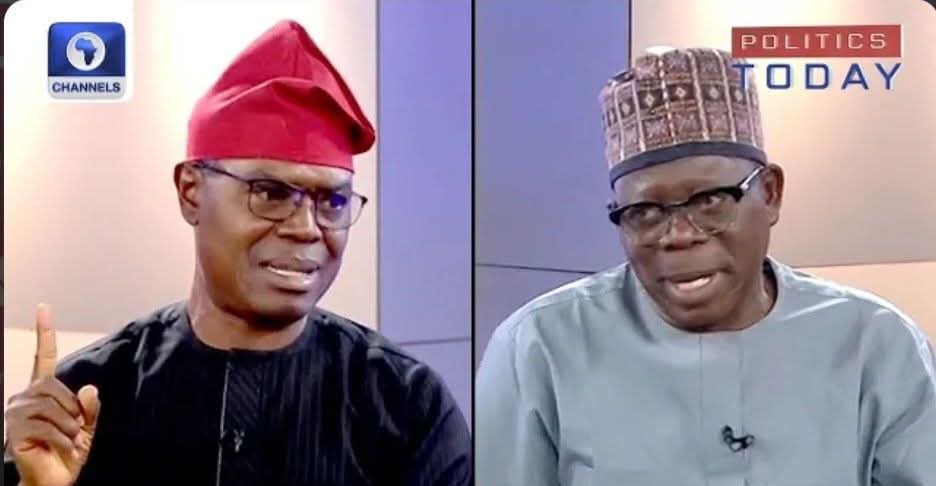
By Abdul Mahmud
“Nigeria has seen this play before. A public accusation is hurled from a lofty platform. The accused stands exposed before the nation. Applause follows the accuser. Doubt settles on the accused. Defence comes later, if at all, and rarely from a place of equal power.
The encounter between Senator Adams Oshiomhole and Henry Omoregie Williams Idahagbon cannot properly be described as a clash. It is a public exchange of accusations, each side lobbing brickbats that fit neatly into the old Daboh-Tarka script. At the Senate confirmation hearing, Oshiomhole declared that he once nominated Idahagbon but later came to regret the decision. He alleged corruption and malpractice in recruitment and promotion during Idahagbon’s tenure as a federal commissioner. Those words were uttered under the protective canopy of parliamentary privilege. They carried the weight of authority. They also carried consequences. Idahagbon’s nomination was effectively buried in that chamber. Idahagbon has responded with a petition that turns the accusation on its head. According to him, the objection had little to do with integrity and everything to do with refusal. Refusal to bend civil service rules. Refusal to manipulate recruitment outcomes. Refusal to rescue a candidate linked personally to the senator who allegedly failed an examination badly. In his telling, the price of institutional fidelity was public humiliation.
This duel of accusation and counter accusation takes Nigeria back to the stormy politics of the 1970s. The Daboh-Tarka saga remains one of the most infamous episodes in the history of exhibitive power and personal vendetta. Accusations and counter-accusations flew. Reputations burned. The phrase that followed became a shorthand for mutual destruction in public life. “If you Daboh me, I will Tarka you””.
This duel of accusation and counter accusation takes Nigeria back to the stormy politics of the 1970s. The Daboh-Tarka saga remains one of the most infamous episodes in the history of exhibitive power and personal vendetta. Accusations and counter-accusations flew. Reputations burned. The phrase that followed became a shorthand for mutual destruction in public life. “If you Daboh me, I will Tarka you”. That era taught painful lessons about how allegations can become weapons and how institutions can be conscripted into personal wars. The current drama feels like a modern echo. Replace the names and the saga looks familiar. A powerful lawmaker invokes moral authority without evidence tested in open inquiry. A nominee finds his name dragged through the mud without a fair chance to reply. Public trust bleeds quietly while political theatre roars.
The most troubling aspect of the Oshiomhole intervention lies not only in the allegation but in the forum. A Senate confirmation hearing offers no real space for defence. The nominee appears as a supplicant. Senators speak as judges. Once an accusation of corruption lands in that setting, the damage travels faster than facts ever could. The accused walks away stained while the accuser enjoys immunity from consequence. Parliamentary privilege exists to protect democratic debate, not to license character assassination. When privilege becomes a shield for untested claims, democracy suffers a distortion. The Senate then risks transforming from a deliberative body into a coliseum where reputations are sacrificed for spectacle or personal score settling.
The Idahagbon petition raises a deeper question about the Nigerian civil service. Recruitment and promotion remain among the most sensitive pressure points in governance. Political interference has long corroded merit based systems. If a commissioner truly resisted such interference, that act deserves commendation rather than punishment. If the commissioner instead presided over corruption, that conduct demands exposure and sanction. Both claims cannot remain suspended in the air of public gossip. This standoff therefore demands more than newspaper commentary or partisan shouting. Independent investigation becomes the only honourable path. The Independent Corrupt Practices Commission has the statutory mandate to examine allegations of abuse in public office. The Nigeria Police Force retains investigatory powers where criminal conduct appears. Both institutions owe the public clarity. An inquiry must examine recruitment records at the Federal Civil Service Commission during Idahagbon’s tenure. Examination results should be scrutinised. Promotion patterns should be reviewed. Communications and influence trails should be traced. The focus must rest on evidence, not volume. If wrongdoing emerges, accountability should follow without fear or favour. If innocence stands proven, public vindication must match the scale of the original accusation.
Oshiomhole also carries a burden in this moment. As a former labour leader and public moralist, his words command attention. That stature imposes restraint. Allegations aired in the Senate ought to rest on documented complaints already investigated, not on recollection or personal grievance. The power to speak without legal consequence carries an ethical obligation to speak with precision and fairness. The Senate itself must reflect. Confirmation hearings should not become ambush arenas. Clear procedural safeguards can allow nominees respond to adverse claims before decisions harden. Silence forced by protocol undermines justice. A chamber that prides itself on oversight must also model due process.
Nigeria’s history offers enough warnings. The Daboh-Tarka episode left scars that outlived the actors involved. Careers ended. Truth became collateral damage. The nation gained nothing lasting except a cautionary tale. Repeating that cycle would signal an unwillingness to learn.
Public confidence in institutions remains fragile. Every unresolved accusation deepens cynicism. Every abuse of privilege widens the gap between citizens and the state. This saga stands at a fork in the road. One path leads to clarity through investigation. The other descends into a familiar spiral of accusation and retaliation. The call therefore goes beyond the two men at the centre. Anti corruption agencies must act. The Senate must examine its own conduct. Nigerians must insist that power submit to scrutiny. No individual should be condemned without proof. No office should shield misconduct.
History watches closely. The refrain from the past still echoes as a warning. Nigeria can choose inquiry over insult. Evidence over bravado. Justice over noise. Our country deserves nothing less.
For publication of your news content, articles, videos or any other news worthy materials, please send to newsleverage1@gmail.com. For more enquiry, please call +234-901-067-1763 or whatsapp +234-901-067-1763. To place an advert, please call 09010671763



Zulum Distributes Food Items to Christian Widows, Vulnerable

Ghana Deports 68 Foreign Nationals Including Nigerians

Oyedele Says Circulating Versions of New Tax Laws Are Fake

From Daboh-Tarka to Oshiomhole-Idahagbon – Abdul Mahmud

Abia Rejoice Media Team Celebrates Dr Uchechukwu Sampson Ogah as a National Asset on His Birthday

Otti Grants Automatic Employment to 50 TechRise Graduands

NAFDAC Issues Public Alert on Recall of Indomie Vegetable Flavour Noodles

Tinubu Presents ₦58.47 Trillion 2026 Budget with Focus on Security, Infrastructure, Education

NAFDAC Destroys ₦55bn Worth of Fake, Expired Products in Ibadan

IPMAN Directs Members to Prioritise Dangote Refinery Fuel
Tinubu Reconstitutes NERC Board, Appoints New Chairman and Commissioners

Bus Carrying Passengers Attacked, Travellers Abducted in Ngor-Okpala

Aunty Esther: The Constitution Protects Life, Not Death by Belief – Abdul Mahmud

Just-In: Woman Arrested for Running Own Prison

Joint Revenue Board Abolishes Road Stickers, Cracks Down on Illegal Roadblocks

El-Rufai Questions Sentencing Gap Between Nnamdi Kanu and Boko Haram Leader Husseni

Tragic: Three Days After Wedding, Man Allegedly Killed by Wife

Police Debunks Viral Video Claiming Mass Kidnapping in Ngor Okpala

Tinubu Appoints Okowa, Anyim as South-South, South-East Coordinator of Renewed Hope Initiative

“I Won’t be Silenced” – Dickson Fires Akpabio Over Disruption During Insecurity Debate

The final 6 ‘Game of Thrones’ episodes might feel like a full season
New Season 8 Walking Dead trailer flashes forward in time
Mod turns ‘Counter-Strike’ into a ‘Tekken’ clone with fighting chickens
Meet Superman’s grandfather in new trailer for Krypton
Disney’s live-action Aladdin finally finds its stars
Who are the early favorites to win the NFL rushing title?
The old and New Edition cast comes together to perform
Boxing continues to knock itself out with bewildering, incorrect decisions
Steph Curry finally got the contract he deserves from the Warriors
Phillies’ Aaron Altherr makes mind-boggling barehanded play
-
 NATIONAL NEWS4 days ago
Tinubu Reconstitutes NERC Board, Appoints New Chairman and Commissioners
-
 METRO3 weeks ago
Bus Carrying Passengers Attacked, Travellers Abducted in Ngor-Okpala
-
 Articles2 weeks ago
Aunty Esther: The Constitution Protects Life, Not Death by Belief – Abdul Mahmud
-
 METRO2 weeks ago
Just-In: Woman Arrested for Running Own Prison
-
 NATIONAL NEWS1 week ago
Joint Revenue Board Abolishes Road Stickers, Cracks Down on Illegal Roadblocks