
Articles
Abdul Mahmud: Have You Read the Report on Tiger Base, IGP Disu?

By Abdul Mahmud

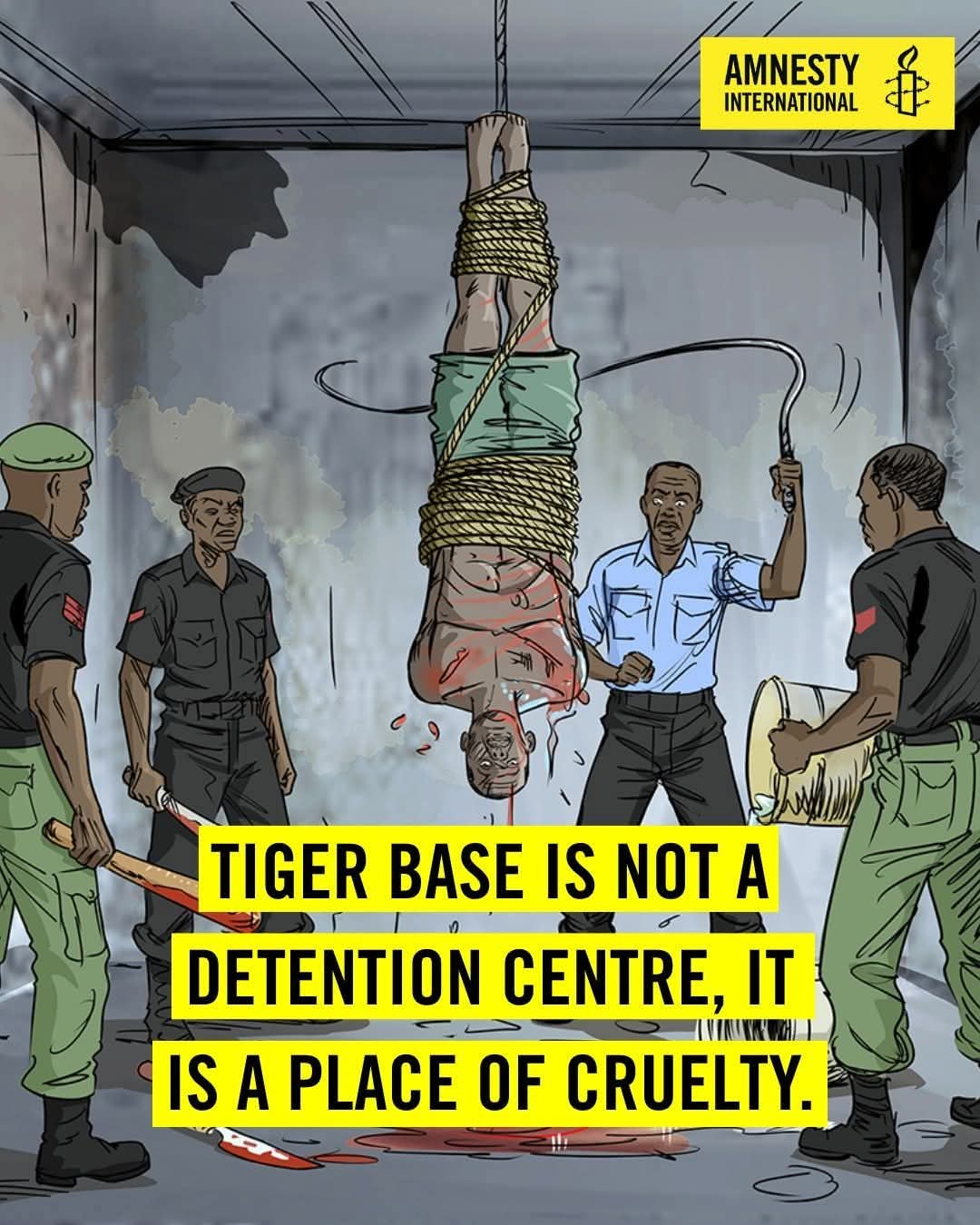
Recently, Amnesty International Nigeria released a disturbing report on the police detention facility in Owerri known as Tiger Base. The report is not only troubling, it is damning. It describes a place where the law is suspended and human beings are treated as expendable objects in the machinery of the policing powers of the state. Also, the report lays bare a brutal truth. In a country that calls itself a constitutional democracy, the police have created and maintained a detention centre that functions outside the discipline of the law.
The question therefore must be asked directly. Have you read the report, IGP Tunji Disu?
For what the report reveals is not simply a story of police misconduct, it is a story about the collapse of constitutional restraints. It is about a law enforcement institution that appears to have forgotten that it exists within a constitutional order. The Nigerian Police was not created to operate torture chambers. It was established to enforce the law within the framework of the Constitution. The existence of Tiger Base offends that framework. Nigeria’s Constitution is explicit on the sanctity of personal liberty. Section 35 guarantees that no person shall be deprived of liberty except in accordance with procedures permitted by law. The same section insists that anyone arrested must be brought before a court within a reasonable time.
The meaning of reasonable time is defined with precision. It is one day where a court exists within forty kilometres and two days where it does not. Tiger Base detention centre in Owerri mocks these provisions.
The report documents prolonged detention without trial. It documents torture and coercive interrogations designed not to discover truth but to extract confessions. The catalogue of human rights abuses attributed to the Tiger Base is both extensive and disturbing. It ranges from torture and unlawful detention to inhuman and degrading treatment, enforced disappearances, extortion and extortion-driven investigations, as well as deaths in custody.
According to Amnesty International Nigeria, these allegations are not isolated incidents but part of a troubling pattern documented through careful investigation. As the organisation notes: “To document this situation, between May 2025 and February 2026, Amnesty International conducted three research missions to Owerri, Imo State. During these missions, interviews were held at secure locations with 19 survivors and relatives of victims of human rights violations perpetrated by officers of Tiger Base, as well as two lawyers and two civil society leaders based in Imo State. To protect identities, the names of all survivors and witnesses whose testimonies appear in this briefing have been withheld or altered”.
The organisation’s findings reveal what it describes as a persistent pattern of abuse of power by officers attached to the unit, accompanied by a consistent failure by Nigerian authorities to hold perpetrators accountable. Cases of torture and other forms of ill-treatment, the report notes, are rarely investigated, and officers implicated in such abuses are almost never subjected to disciplinary or criminal proceedings.
Indeed, none of the cases documented in the briefing resulted in either an investigation or prosecution. This record of impunity is particularly troubling given that Nigeria formally criminalised torture through the Anti-Torture Act 2017. The continued violations allegedly committed by officers of Tiger Base, Amnesty International argues, point to deeper structural problems within the country’s policing system, chief among them weak accountability mechanisms and entrenched institutional impunity that allow detainees are reportedly to be held in degrading conditions that assault both body and dignity.
Some are detained for weeks or months without access to lawyers, families, or courts. Many women are forced to carry out menial works on the premises of the detention centre, against Section 34(1)(c) which provides that “no person shall be required to perform forced or compulsory labour”. These practices violate the Constitution. They violate the Administration of Criminal Justice Act, 2015. They violate the Anti-Torture Act, 2017. They violate Nigeria’s international obligations under treaties such as the United Nations Convention Against Torture and the African Charter on Human and Peoples’ Rights. The police cannot plead ignorance of these laws. They are not obscure provisions buried in legal texts. They are the basic rules governing the treatment of persons in custody.
When the police violate them systematically, the result is not law enforcement. The result is institutionalised lawlessness. But, Nigeria has seen this story before. The report on Tiger Base recalls a dark episode from the 1980s. During the years of military rule, Nigerians were shocked by revelations about the secret detention centre on Ita-Oko Island on the Lagos Lagoon. The existence of that camp was exposed by a small band of human rights activists and journalists. Among them were Olisa Agbakoba SAN, Richard Akinola, Abdul Oroh, Ama Ogan, Clement Nwankwo and Emmanuel Erakpotobor. Their discovery shocked the nation. The Ita-Oko facility was officially described as a farm settlement. In reality it was a remote detention camp where individuals were held outside the scrutiny of courts and the public. It existed in secrecy. It thrived on isolation. It depended on the belief that power did not need justification. It was the logic of authoritarian rule. Nigeria has since moved from military dictatorship to constitutional democracy. At least, that is what the Constitution proclaims.
Still, the existence of Tiger Base suggests that the authoritarian habits of the past have not disappeared. They have merely changed uniforms.
The difference between Ita-Oko and Tiger Base is supposed to be the difference between dictatorship and democracy. But, the similarities are unsettling. Both facilities represent the same institutional instincts. When the state wishes to act without legal restraint, it retreats into spaces of torture. It builds detention centres that operate beyond the reach of courts. It relies on fear, silence and bureaucratic denial. In a democracy, this instinct must be resisted with urgency. The police do not possess inherent powers. Their authority derives from the Constitution. Once they begin to act outside constitutional limits, they undermine the very legal order they claim to protect. Tiger Base, therefore, raises grave constitutional questions. Why are allegations of torture, deaths in detention, and enforced disappearances repeatedly linked to the facility? Under whose authority are persons detained there beyond what the constitution provides? Why are detainees denied prompt access to lawyers and courts?
These questions are not rhetorical flourishes posed for dramatic effect. They are serious questions that demand clear, honest and public answers from those entrusted with the authority of the state. They arise from allegations that go to the very heart of the rule of law and the protection of human dignity. To ignore them, evade them, or respond with bureaucratic silence would only deepen public distrust and reinforce the perception that impunity has become institutionalised in the police force. What is required, therefore, is not merely explanation but decisive administrative action.
Investigations must be initiated without delay, responsibility must be established through transparent processes, and where wrongdoing is confirmed, appropriate sanctions must follow. Only such prompt and credible action can begin to restore confidence in the institutions charged with upholding justice and protecting the rights of citizens.
The Nigerian Police cannot investigae itself in secrecy and expect public confidence. Allegations of torture and unlawful detention require independent scrutiny. They require transparency and accountability. More importantly, they require immediate reform. The first step must be simple and decisive. Tiger Base must be closed. No police facility that operates in violation of constitutional guarantees should remain open. The continued existence of such a centre sends a dangerous message. It suggests that the rule of law is optional. It also suggests that constitutional rights exist only on paper. Nigeria cannot afford that message. The country is already struggling with a crisis of public trust in law enforcement. Incidents of police brutality have repeatedly provoked national outrage. The memory of the protests that erupted across the country in 2020 remains fresh. Citizens took to the streets because they believed the police had become predators rather than protectors. Reports like the one on Tiger Base deepen that perception. A police force that detains people unlawfully and extracts confessions through torture does not fight crime. It manufactures injustice and destroys evidence. It corrupts prosecutions and erodes public cooperation which is the foundation of effective policing.
The irony in all of this is that the police themselves become weaker.
A law enforcement agency that abandons legality loses legitimacy. Without legitimacy it cannot command public trust. Without trust it cannot obtain the information and cooperation necessary to fight crime. Thus, the cycle of failure continues. The closure of Tiger Base would not solve every problem within the Nigerian Police. But it would send a powerful signal. It would affirm that the Constitution still matters, and would demonstrate that impunity is not permanent. Of course, it would honour the courage of those who exposed Ita-Oko decades ago. Those activists risked intimidation and repression because they believed Nigerians deserved better than torture chambers and hellholes for disappearing. Their struggle helped shape the human rights movement that Nigeria celebrates today.
To permit Tiger Base to continue operating is to betray that history and to dishonour the hard struggles through which Nigerians sought to free their country from torture chambers detention and unaccountable power. Dear IGP Disu, the report released by Amnesty International Nigeria is not merely another human rights document destined for the archives of public outrage. It is something far more serious. It is a test of leadership and institutional conscience. It asks whether the police force under your command recognises that its legitimacy does not flow from uniforms, weapons, or the authority of office, but from its fidelity to the Constitution and the rule of law. The choice before you is therefore stark and unavoidable. You may dismiss the report and attempt to defend what cannot be defended. Or you may confront its findings with honesty and resolve, acknowledging that no institution entrusted with the coercive powers of the state can remain credible if it is seen to operate outside the law it claims to enforce. What must follow from that recognition is equally clear. Tiger Base must be closed.
The allegations of torture, unlawful detention, and degrading treatment must be subjected to a transparent and independent investigation. Those responsible must be held to account, not as a gesture of public relations but as a demonstration that constitutional limits still govern the conduct of state power.
The police must reclaim the discipline of legality that is the foundation of democratic policing. Anything less would confirm a troubling suspicion that many Nigerians already harbour. That the spectre of the old secret detention camp at Ita-Oko Island Detention Camp has not vanished from the nation’s public life, but has merely assumed new forms within institutions that should have long outgrown such practices. If that ghost still walks within the Nigerian state, and even within the force under your command, then the task before you is unmistakable.
The time has come for its exorcism.
For publication of your news content, articles, videos or any other news worthy materials, please send to newsleverage1@gmail.com. For more enquiry, please call +234-901-067-1763 or whatsapp +234-901-067-1763. To place an advert, please call 09010671763


Abdul Mahmud: Have You Read the Report on Tiger Base, IGP Disu?

“Half Our Revenue Lost to ‘Big Men’ in Abuja” – Keyamo Ends VIP Privileges at Airport Tollgates

ADC Says Appeal Court Ruling Did Not Affect Party Leadership

Cubana Chief Priest Explains Support for Tinubu, Says He Won’t “Waste Vote Again”

Teacher Suspended for Rejecting Ramadan Palliative

Opinion: Obituary for the PDP – Kperogi Writes

NIPR Abia Congratulates OMPAN Chairman Promise Okoro on Re-Election

2027: Orji Kalu’s Win Will Also Benefit Abia Central – Rt. Hon. Chinedum Orji

Anambra Government Parades Nnewi Native Doctor “Mmou Mmili Afulu Anya”

2027: ‘We’ll Fight Anyone Who Wants to Fight’ – Orji Uzor

Army Foils Ambush on GOC Convoy by Lakurawa Terrorists, Kills Five Terrorists

Obi: Counting the Counters – Abdul Mahmud

Amaiyi-Okpo-Achara Ihechiowa Ring Road: No Road Has Been Abandoned – Otti

El-Rufai Writes NSA Ribadu, Seeks Clarification on Alleged Importation of Poison

Daniel Bwala and the Tragedy of Activism – Abdul Mahmud

‘Yes, Our Leaders’ – Abdul Mahmud Writes on Moral Collapse of Yesterday’s Radicals

Fulani Herdsmen Attack Family in Avodim Community, Abia

Breaking! Dame Mrs Ngozi Onyioha-Orji Emerges ADC MMRR Chairperson in Abia

BREAKING: Native Doctor Akwa Okuko Tiwaraki na Oba Jailed 11 Months for Okeite Practice

Kalu Clarifies ₦25bn SEDC Allocation, Says Funds Not From South East Governors

The final 6 ‘Game of Thrones’ episodes might feel like a full season
New Season 8 Walking Dead trailer flashes forward in time
Mod turns ‘Counter-Strike’ into a ‘Tekken’ clone with fighting chickens
Meet Superman’s grandfather in new trailer for Krypton
Disney’s live-action Aladdin finally finds its stars
Who are the early favorites to win the NFL rushing title?
The old and New Edition cast comes together to perform
Boxing continues to knock itself out with bewildering, incorrect decisions
Steph Curry finally got the contract he deserves from the Warriors
Phillies’ Aaron Altherr makes mind-boggling barehanded play
-
CRIME3 weeks ago
Army Foils Ambush on GOC Convoy by Lakurawa Terrorists, Kills Five Terrorists
-
 Articles4 weeks ago
Obi: Counting the Counters – Abdul Mahmud
-
 Abia State News2 weeks ago
Amaiyi-Okpo-Achara Ihechiowa Ring Road: No Road Has Been Abandoned – Otti
-
NATIONAL NEWS4 weeks ago
El-Rufai Writes NSA Ribadu, Seeks Clarification on Alleged Importation of Poison
-
Articles1 week ago
Daniel Bwala and the Tragedy of Activism – Abdul Mahmud