
Articles
Abdul Mahmud: Flowers for Peter Dunia

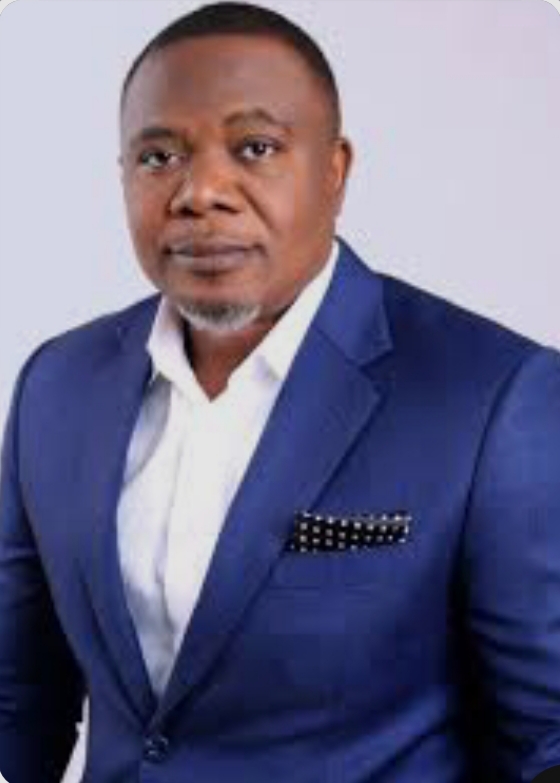
By Abdul Mahmud
In a world often dominated by the clamour of politics and the pursuit of personal gain, the quiet acts of giving back can sometimes be overlooked. Yet it is in these acts that the true measure of character is revealed. Peter Omoh Dunia, a businessman and philanthropist from Etsako in Edo State, stands as a stellar example of such character. Little known beyond his provenance, Etsako land, he has devoted his resources, energy, and imagination to the upliftment of his community, demonstrating that philanthropy is not merely about wealth but about vision, courage, and love for the common good. The most striking of Dunia’s recent interventions is his work on Auchi College, Auchi, Edo State. For decades, this school stood in neglect and a dilapidated shadow of its former self, abandoned by the very government charged with nurturing its promise. Classrooms crumbled, roofs caved in, and generations of students faced the indignity of learning in spaces that were unsafe, uninspiring, and inadequate. For the Edo State Government, this school had become an afterthought, a failed institution whose decay went unnoticed in the corridors of power.
Peter Dunia, however, saw the possibility of transformation where others saw only ruin. To say that he embarked on a renovation of the school is to understate his intervention. He did not merely repair what was broken. He tore down the remnants of neglect and built the school anew, from the ground up. Classrooms, administrative blocks, and common spaces rose like a phoenix from the red earth of Auchi, a testament to what can happen when vision meets action. Beauty, order, and purpose now occupy the spaces that once knew only decay. Students who enter Auchi College today do so under a roof that inspires hope and ambition, rather than despair.
But, Dunia’s work is not limited to one school. Roads in his provenance bear the mark of his commitment to public welfare, connecting communities and improving access to markets, schools, and health centers. Every mile of road and every block laid in Auchi College, speaks to a philosophy that values collective progress over private accumulation, that sees the community not as a burden but as a sacred trust. Philanthropy in Nigeria often comes under the shadow of cynicism. We are accustomed to seeing wealth hoarded, sometimes flaunted, and too often used to secure political influence. Politicians across states and generations have looted public coffers, leaving schools in ruins, hospitals incomplete, and infrastructure decrepit. The legacies they leave behind are rarely those of genuine social development. Too many schools that should have stood as monuments to the future of Nigeria’s children lie crumbled and abandoned, victims of greed and negligence. In this context, therefore, Peter Dunia’s intervention is not merely charitable. It is revolutionary. It reminds us that the health of a community, the education of its young, and the dignity of public space can be restored, not through empty promises but through decisive action.
There is a lesson in Dunia’s work that extends beyond Auchi and Etsako. It is a lesson about the moral imperative to give back. Wealth, after all, is not an end in itself but a tool for shaping society. Dunia understands that to build schools is to build futures, and to pave roads is to create opportunity. These interventions are acts of courage because they challenge the prevailing culture of indifference. They demand that others recognise the possibility of what can be done, not for personal gain, but for the collective good.
Philanthropy, when done with integrity, carries a contagious power. Children who study in Auchi College will carry the knowledge that someone believed in them, and that someone invested in their future when the state turned its face the other away. Teachers who work in a safe, well-equipped environment will teach with renewed zeal. Communities will grow in pride and confidence, seeing that their potential has worth and that their aspirations matter. These are outcomes that no amount of money can quantify, yet they are among the most enduring legacies of human kindness. It is also important to note that Dunia’s philanthropy operates without fanfare. There are no headlines claiming credit, and no political slogans attached to his work. The roads he builds and the schools he reconstructs are not means to an end but ends in themselves. They are tangible affirmations that one individual, guided by conscience and generosity, can counterbalance years of neglect. In a country often impatient with the slow work of moral courage, Dunia reminds us that sustained commitment yields results far beyond the ephemeral applause of public office.
The act of rebuilding Auchi College is symbolic. It is a statement that the future of Etsako, of Edo State, and indeed of Nigeria lies not in the short-term manipulations of political power but in the enduring structures that support education, community life, and civic dignity. Dunia’s intervention teaches us that it is possible to reclaim what has been lost, to restore hope where despair has taken root, and to craft a legacy that is measured not by accumulated wealth but by lives uplifted.
In celebrating Peter Omoh Dunia, we celebrate more than one man’s philanthropy. We celebrate the principle that those who have the capacity to act have a duty to act. We affirm that the common good is real, and that investing in schools, roads, and community infrastructure is as sacred as it is strategic. Dunia has shown that giving back is not a gesture of charity alone but a profound moral commitment, one that transforms spaces, minds, and hearts.
As Nigerians, we are often quick to despair and to cynically note the failures of our leaders. Yet, the story of Peter Dunia offers the corrective. It reminds us that greatness is not confined to office or title, that leadership can be enacted quietly through deeds rather than speeches, and that the noblest form of wealth is that which is used to uplift others. In the red earth of Auchi, in the bright classrooms of a school reborn, in the roads that connect communities, we see the flowering of hope, the manifestation of vision, and the tangible proof that one person’s dedication can change the world around them.
Peter Omoh Dunia is a gardener of society, planting seeds where neglect had taken root, nurturing spaces where the future of a people may flourish. Flowers bloom where he has laboured, and in those blooms, the generations to come will see not only beauty but the enduring power of generosity and conscience. It is right, therefore, that we offer flowers for Peter Dunia. Not literal flowers, but the recognition, admiration, and gratitude that accompany deeds of genuine human significance. In our country where the public good is often trampled by self-interest, Dunia’s life and work remind us that another path is possible; one where the community thrives, where schools are legacies, and where roads and buildings are monuments to care, diligence, and foresight.
In celebrating his philanthropy, we do more than commend a generous man; we consecrate a standard. We affirm that wealth is not an ornament of privilege but a burden of duty, that society finds its fullest expression when individuals bind their fortunes to the common good, and that the true measure of a life is not in what is amassed, but in what is bequeathed. In Peter Omoh Dunia, we witness a legacy already in motion, a legacy inscribed not in monuments of vanity, but in the quiet restoration of hope, the steady reclamation of dignity, and the widening of opportunity for others. Such a life does not merely pass through the world; it alters it. And so, we do not just offer our flowers, we stand in the presence of a man who has earned them.
Thank you, Dunia.

For publication of your news content, articles, videos or any other news worthy materials, please send to newsleverage1@gmail.com. For more enquiry, please call +234-901-067-1763 or whatsapp +234-901-067-1763. To place an advert, please call 09010671763






Bourdex Tackles Orji Kalu Over Political U-Turn, Demands Answers on Sudden Praise for Otti

Ikpeazu Represents Nigeria at Spain’s National Day Celebration in Madrid

Bourdex Congratulates Victor Ikeji on Appointment to Tinubu’s Presidential Campaign Team

NAFDAC Raids Facility, Arrests Two Over Counterfeit ‘Bullet’ Drink Production

SDP’s Presidential Candidate Adebayo Demands Immediate Release of ‘Tinubu Must Go’ Protesters

Mayor Lucky Igbokwe Celebrates Seyi Tinubu, Reaffirms CityBoy Movement’s Commitment to Youth Development

$20 Billion Loan Controversy: Otunba Babatunde Olushola Senbanjo Challenges Tinubu Over Lagos-Calabar Highway Rerouting

Stop Complaining, Tinubu Will Win 2027 Without Rigging, Orji Kalu Says

From Classrooms to Communities: Chinedum Orji’s Legacy of Educational Development

Wike: I Helped Defeat Ighodalo to Stop Obaseki’s Return Through Him

Ikeji Aro 2026 on Avor Osu Day: Nkita Oku, Inum, Ekpe Erim, Other Ekpo Masquerades Pay Homage to Eze Eberechukwu Oji

97-Year-Old Dr Mrs. Shields Reconstructs, Reopens Mary Slessor Library in Arochukwu

Ikeji-Aro 2026: ‘We Are Repackaging Aro Traditional Healing Practices for the Younger Generation’ – Mazi Ernie Onwumere

2027: Hon. Ike Bishop Okoronkwo Mobilises Abia North Grassroots, Tasks ADC Coordinators on Polling Units

Eze Eberechukwu Oji Commissions Amuvi Community Self-Built Connectivity Hub

Nigeria Owes Tobi Amusan a Statue – Abdul Mahmud

Cardinal Onaiyekan: Governor Alia Was Suspended for Defying Catholic Church Rules on Politics

Obioma-Ngwa 2027: Chidi Nnamdi Pushes Case for Responsive Representation – Comrade Abuchi Isaac

‘We Will, We Will, We Will’: Atiku Slams Tinubu Over Promises, Questions Achievements After Three Years

Leave Chidi Nnamdi Alone, Earn the People’s Trust – New Direction Agenda

The final 6 ‘Game of Thrones’ episodes might feel like a full season
New Season 8 Walking Dead trailer flashes forward in time
Mod turns ‘Counter-Strike’ into a ‘Tekken’ clone with fighting chickens
Meet Superman’s grandfather in new trailer for Krypton
Disney’s live-action Aladdin finally finds its stars
Who are the early favorites to win the NFL rushing title?
The old and New Edition cast comes together to perform
Boxing continues to knock itself out with bewildering, incorrect decisions
Steph Curry finally got the contract he deserves from the Warriors
Phillies’ Aaron Altherr makes mind-boggling barehanded play
-
 Abia State News3 weeks ago
Ikeji Aro 2026 on Avor Osu Day: Nkita Oku, Inum, Ekpe Erim, Other Ekpo Masquerades Pay Homage to Eze Eberechukwu Oji
-
 Abia State News2 weeks ago
97-Year-Old Dr Mrs. Shields Reconstructs, Reopens Mary Slessor Library in Arochukwu
-
 Abia State News4 weeks ago
Ikeji-Aro 2026: ‘We Are Repackaging Aro Traditional Healing Practices for the Younger Generation’ – Mazi Ernie Onwumere
-
 POLITICS3 weeks ago
2027: Hon. Ike Bishop Okoronkwo Mobilises Abia North Grassroots, Tasks ADC Coordinators on Polling Units
-
 Abia State News2 weeks ago
Eze Eberechukwu Oji Commissions Amuvi Community Self-Built Connectivity Hub