
Articles
Thompson Adams: Schoolmates As Killers – Abdul Mahmud

By Abdul Mahmud

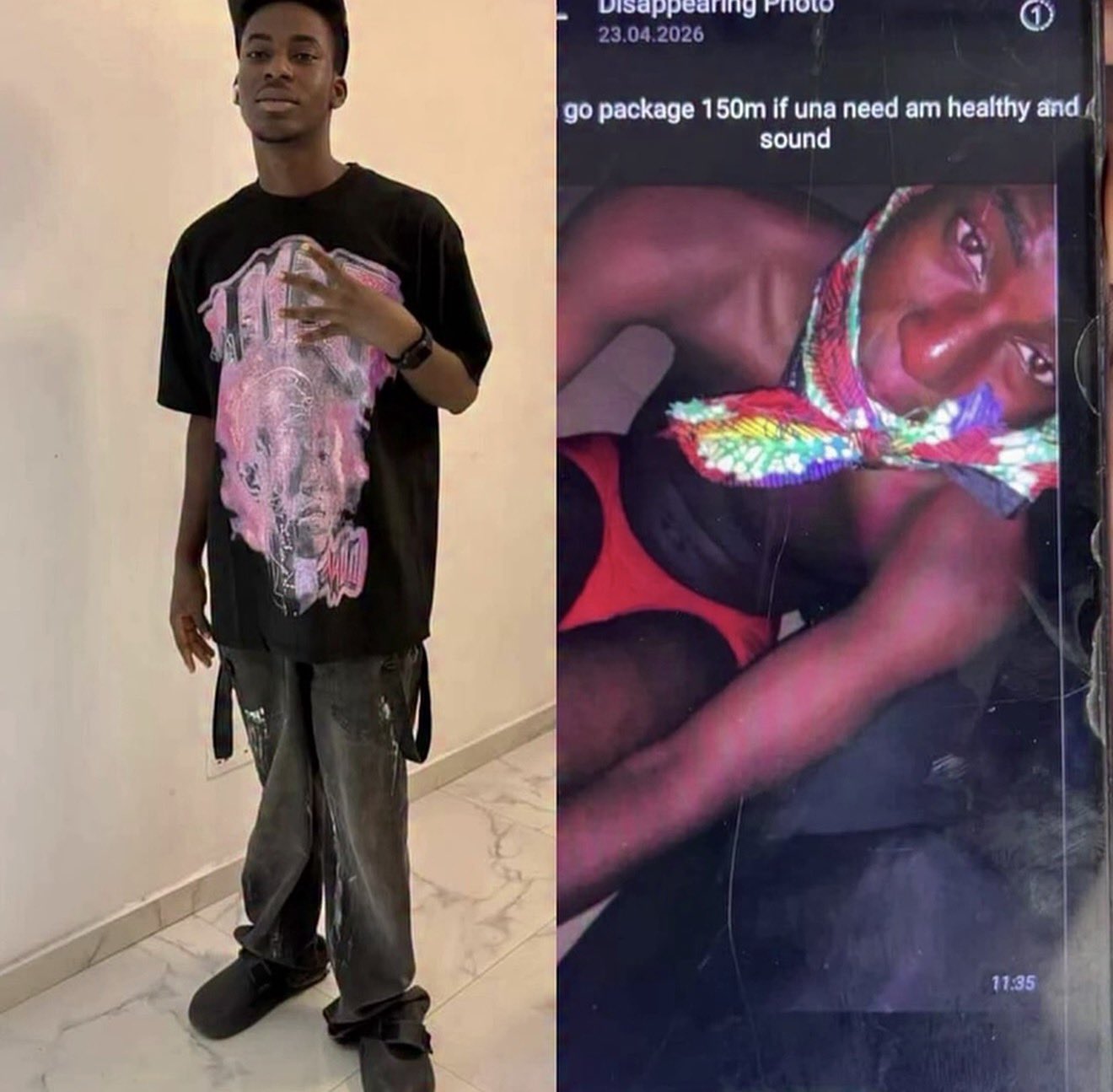
There are moments in the life of a country when a single story captures the collapse of everything that once held its people together; and the killing of seventeen-year-old Thompson Adams in Ikorodu, Lagos State, is one of those moments that should stop us in our tracks and force us to confront what Nigeria has become, because this is not simply a crime story, this is a mirror held up to a country that has gone bonkers; a country that now resembles an asylum taken over by its sickest inmates, and a country where the rules of decency have been discarded and the line between friendship and fatal betrayal erased.
A boy leaves home to write the Unified Tertiary Matriculation Examination, UTME, an ordinary rite of passage for millions of Nigerian students who still believe that education offers a ladder out of hardship, and somewhere between the examination hall and his home, he walks into the hands of people who once shared the same classrooms with him, people who knew his name, his face, his voice, people who could recall the same teachers and the same jokes, and in a turn that defies reason and mocks the very idea of shared humanity, those familiar faces become the agents of his death, luring him into an apartment where his life is cut short, his future extinguished, and his family condemned to a grief that will not heal. One is tempted to ask: what kind of country produces such a story? What kind of moral universe allows young men barely out of adolescence to plan and execute the killing of someone they once called a classmate? What has pushed people who pride themselves on communal values, on extended family ties, on the language of brotherhood and sisterhood, far into hell pits where proximity no longer guarantees safety and familiarity no longer inspires trust? What we are witnessing is not simply the rise of crime but the normalisation of cruelty among the young; a generation that has grown up in an environment where violence is not shocking but routine, where life is cheap, and where the consequences of wrongdoing often appear distant or negotiable.
Nigeria today feels like a vast, unregulated asylum in which those who should be custodians of order have lost control and those who should be guided by moral instruction have lost their bearings, and in this strange and troubling country, the boundaries that once separated right from wrong have become blurred to the point of invisibility, leaving behind a country in which people drift without anchors, improvising their values from the fragments of broken systems, learning more from the streets than from their homes, and absorbing lessons from a culture that rewards cunning over character and celebrates wealth without asking questions about its origins.
The tragedy of Thompson Adams cannot be isolated from this wider context, because crimes of this nature do not emerge out of the blue. They are incubated in the environment of moral neglect and social disorder, where institutions that should shape young minds have become weak or compromised, where schools focus on examinations without paying attention to character formation, where families struggle under economic pressure and have little time or energy to instill discipline, and where public figures, who should serve as examples of integrity, often project the opposite, sending a silent but powerful message that success at any cost is acceptable. “Eferibodi wan hammer”, as it often put in the streets. There is also the uncomfortable truth that the erosion of consequences has contributed to this descent, because when young people observe that wrongdoing is frequently met with impunity, when they see corruption rewarded and justice delayed, when they hear stories of criminals who evade accountability through connections or money, they begin to internalise the dangerous belief that actions do not carry weight, that the system can be beaten, that morality is optional, and in such a climate, the leap from petty wrongdoing to grave violence becomes shorter than we would like to admit.
The police have done well to arrest suspects in this case, and their swift action offers a measure of reassurance that the machinery of law enforcement still functions in moments of urgency, but arrests alone cannot address the deeper malaise that this incident reveals, because the problem is not only about catching those who commit crimes, it is about preventing the conditions that make such crimes conceivable in the first place, and that requires a more fundamental reckoning with who we are as a people and what we have allowed our society to become.
A country that once held tightly to the idea that every child belongs to the community now finds itself in a situation where children are unsafe among their peers, a country that once emphasised respect for life now grapples with a culture in which life can be taken with alarming ease, and a country that once spoke proudly of its moral and religious foundations now struggles to translate those declarations into everyday conduct, creating a gap between what is preached and what is practiced that grows wider with each passing day.
The language we use to describe Nigeria often leans toward optimism, invoking resilience and potential, but there are moments when honesty demands a harsher description, and this is one of those moments. A country in which schoolmates can lure and kill one another has lost something fundamental, something that cannot be measured in economic terms or political indices, and something that goes to the heart of what it means to live together as human beings bound by a shared sense of right and wrong.
If there is any meaning to be salvaged from this tragedy, it lies in the urgency of collective introspection, the need for parents to reengage with the moral upbringing of their children despite the pressures of daily survival, the responsibility of schools to move beyond academic instruction and invest in character education, the obligation of leaders to model ethical behaviours in both public and private life, and in the duty of society at large to reject the quiet acceptance of wrongdoing that has crept into everyday existence.
The death of Thompson Adams cannot be confined to the private grief of his family, heavy and unending as that grief will be, because it stands as a public indictment of a nation that has drifted into a deep and troubling state of moral confusion, where the basic assumptions that once guided human conduct have been weakened to the point of irrelevance, and where the bonds that ought to hold young people together in trust and familiarity have been corroded by a culture that increasingly normalises deception, violence, and the pursuit of gain without regard for consequence or conscience. In such a climate, the idea of a shared moral order begins to dissolve, leaving behind a country in which citizens navigate life without clear boundaries, drawing their sense of right and wrong from a chaotic mix of survival instincts, distorted aspirations, and the silent approval of a country that too often fails to punish wrongdoing with clarity and consistency.
This tragedy also exposes the failure of the institutions that should nurture, guide, and restrain the impulses of the young. No country arrives at this point by accident, it arrives here through years of neglect, through the steady erosion of values within families struggling under economic pressure, through an educational system that prizes success in examinations while paying insufficient attention to character formation, and through a public culture in which those who ought to serve as moral exemplars frequently project the opposite, thereby sending a powerful and dangerous signal that integrity is optional and that outcomes matter more than the means by which they are achieved. When such lessons are absorbed over time, they shape a generation for whom the distinction between ambition and desperation becomes obviated, and for whom the humanity of others can be subjected to fiendish desires. Except there are conscious and sustained efforts to confront this moral drift and rebuild the ethical foundations of our collective life, our country risks becoming inured to stories like this, reacting with momentary outrage before allowing them to fade into the background noises of a country and a people that have grown disturbingly accustomed to their own unravelling, and in that dangerous acceptance lies the real threat, because a people who cease to be shocked by cruelty have already surrendered a vital part of their humanity. What is required is not only the enforcement of law but the renewal of values across every level of society, from the home to the school to the corridors of power, so that the worth of human life is restored to its rightful place.
There are moments in the life of a country when a single story captures the collapse of everything that once held its people together, and the killing of seventeen-year-old Thompson Adams in Ikorodu is one of those moments that compels us to confront the uncomfortable truth that our country is sliding into a state where sanity is no longer assured, where decency is no longer dependable, and where places that should offer safety to its young instead reflect the grim image of an asylum overtaken by those who no longer recognise the value of the lives around them.
For publication of your news content, articles, videos or any other news worthy materials, please send to newsleverage1@gmail.com. For more enquiry, please call +234-901-067-1763 or whatsapp +234-901-067-1763. To place an advert, please call 09010671763




‘The Owners Are Billing Darkness’: Ben Murray-Bruce Urges Tinubu to Reset Nigeria’s Power Sector

Ibeku Traditional Rulers Endorse Chinedum Orji for Ikwuano/Umuahia Federal Constituency

Adeleke Watch it: Who Really Won the Osun Election? – Balogun

Now That Tinubu and Atiku Agree on Cheap Petrol – Kperogi
2027: Tinubu Is a Lion With Horns, Opposition Must Unite to Defeat Him – Donald Duke

Again, Ikwuano/Umuahia Women Endorse Ikuku, Promise Massive Support

Bourdex, OUK and the Real Test of Political Influence: Let the Evidence Speak

35 Years After Kirikiri Release, Abdul Mahmud Remembers Bamidele Aturu, Says ‘The Struggle Remains Unfinished’

Subsidy Removal, Naira Float Triggered Unprecedented Inflation, Poverty – Rev. Fr. Ehusan

Atiku Vows to Reopen Borders, Revive Regional Trade If Elected

Tinubu’s Intervention on the Osun Accounts: A Welcome Commitment to Electoral Fairness Within Constitutional Limits – Afikuyomi, Esq.

Otunba Babatunde Olushola (BOS) at 69: Celebrating a Life of Mentorship, Leadership, Compassion and Service

#OsunDecides2026: Akpabio Stops Collation – Davido
35 Years After Kirikiri Release, Abdul Mahmud Remembers Bamidele Aturu, Says ‘The Struggle Remains Unfinished’

Former IGP Mike Okiro Hoists CityBoy Movement Flag in Abia, Applauds Seyi Tinubu for Creating Movement

Abia Govt Explains Teacher Recruitment Process, Discloses Number of Candidates Who Scored Over Benchmark

Abia Arise Movement Unveils Mega Rally to Reaffirm Support for Governor Alex Otti’s 2027 Re-election

Why Supporters Say Chinedum Orji Is the Right Choice for Ikwuano/Umuahia Federal Constituency in 2027 – Onukwuo

24A, 24B Aba/Owerri Road: Counsel Defends Ribiza Deal, Challenges Authority of Disputed 2014 Resolution

Otunba Senbanjo Celebrates Babangida at 85, Hails Former Head of State as Icon of Leadership and National Service

The final 6 ‘Game of Thrones’ episodes might feel like a full season
New Season 8 Walking Dead trailer flashes forward in time
Mod turns ‘Counter-Strike’ into a ‘Tekken’ clone with fighting chickens
Meet Superman’s grandfather in new trailer for Krypton
Disney’s live-action Aladdin finally finds its stars
Who are the early favorites to win the NFL rushing title?
The old and New Edition cast comes together to perform
Boxing continues to knock itself out with bewildering, incorrect decisions
Steph Curry finally got the contract he deserves from the Warriors
Phillies’ Aaron Altherr makes mind-boggling barehanded play
-
 Articles3 weeks ago
Tinubu’s Intervention on the Osun Accounts: A Welcome Commitment to Electoral Fairness Within Constitutional Limits – Afikuyomi, Esq.
-
 METRO3 weeks ago
Otunba Babatunde Olushola (BOS) at 69: Celebrating a Life of Mentorship, Leadership, Compassion and Service
-
 POLITICS2 weeks ago
#OsunDecides2026: Akpabio Stops Collation – Davido
-
 Articles1 day ago
35 Years After Kirikiri Release, Abdul Mahmud Remembers Bamidele Aturu, Says ‘The Struggle Remains Unfinished’
-
 NATIONAL NEWS3 weeks ago
Former IGP Mike Okiro Hoists CityBoy Movement Flag in Abia, Applauds Seyi Tinubu for Creating Movement
Isaiah886
May 13, 2026 at 4:18 am
https://shorturl.fm/LLOK5