
Articles
Abdul Mahmud: Wole Soyinka On Okada

By Abdul Mahmud
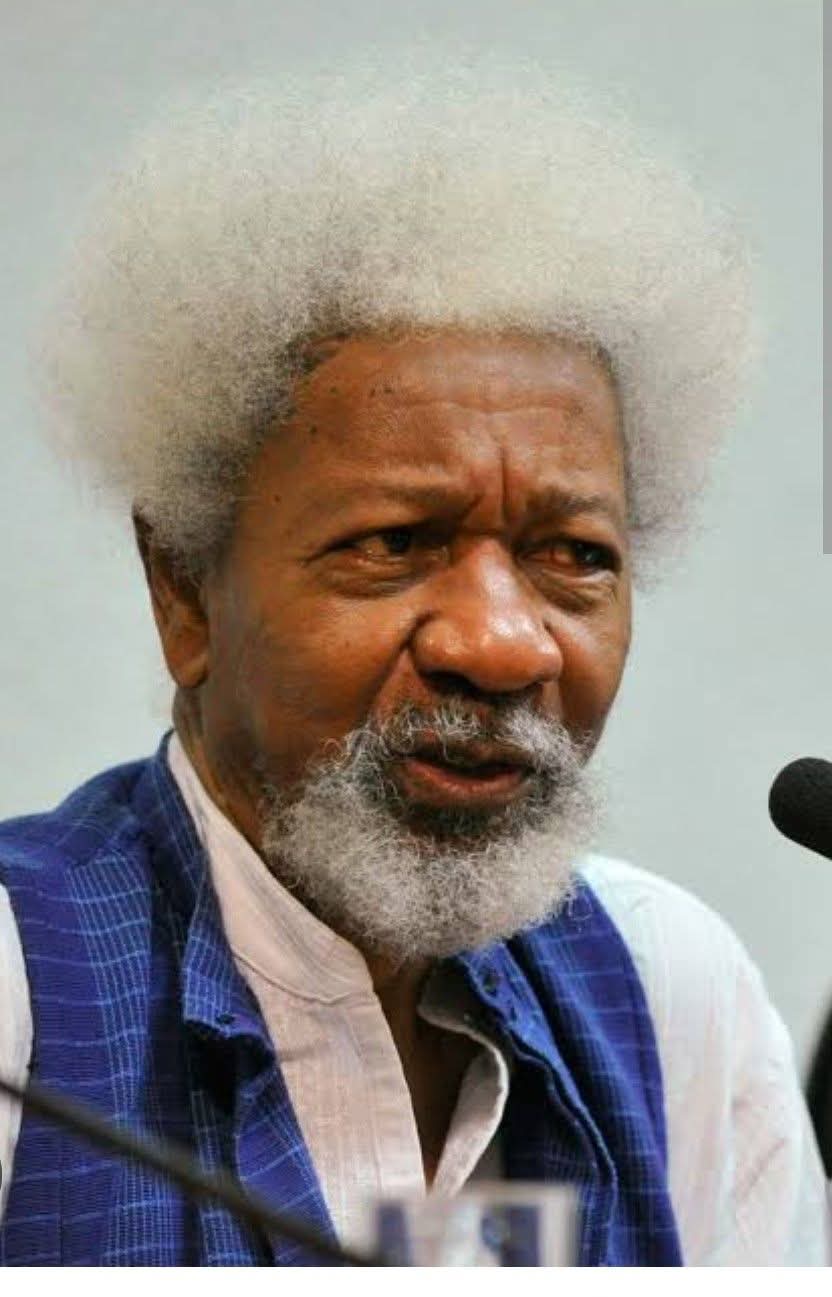
Professor Wole Soyinka needs no introduction. His full name, Akinwande Oluwole Babatunde Soyinka, carries a weight that extends far beyond Nigeria, and even the abbreviated initials, WS, are enough to summon instant recognition across continents. He stands as one of the few figures on the continent whose name evokes not only literary excellence but also moral courage, intellectual clarity, and an enduring willingness to confront power. He is exactly who we say he is: a brilliant playwright, novelist and poet, advocate of causes, and above all, a man unafraid of risk. It is this last quality, his appetite for risk, that invites reflection at this moment.
For more than sixty years of public engagement, Soyinka has placed himself in situations that might easily have erased him from history. His life is marked by moments that blur the line between intellectual commitment and physical danger. In the mid-1960s, during the turbulent Western Region crisis, he was accused of entering a radio station in Ibadan and interfering with a broadcast. The widely reported account is that he seized the studio and replaced an official announcement with his own message intended to challenge what he saw as electoral heist. Although the popular re-telling often embellishes the story with claims of a gun to the head of a duty announcer, Soyinka himself has consistently denied the more dramatic elements, maintaining that his intervention was political rather than violent. Regardless of the precise details, the episode reveals a man willing to confront power directly, in pursuit of what he believed to be truth. That same disposition defined his actions in the months preceding the Nigerian Civil War. At a time when the country was sliding into catastrophe, Soyinka undertook a perilous journey to engage leaders in the Eastern region, in an attempt to persuade them to reconsider the path of war. This effort, long before the late Henry Kissinger popularised the term shuttle diplomacy, was entirely self-imposed and carried out without the protection or sanction of the Nigerian state. It was a mission fraught with danger, as he crossed what were rapidly becoming enemy lines in a country already at the precipice. For this, he paid a heavy price. The federal government detained him for nearly two years, much of it in solitary confinement, a punishment that could have broken a lesser spirit.
These are not isolated incidents but part of a pattern that defines Soyinka’s life. His courage has never been for self-exhibition. It has always been lived and tested against real danger. Though, as time passes, the meaning of such risk evolves. What appears as bravery in youth may invite real concern in old age.
This tension came into sharp focus recently when a video surfaced on social media showing the nonagenarian Nobel laureate riding on an Okada through the busy streets of Lagos. Admirers could be heard in Yoruba urging the rider to proceed with caution, their concerns audible and immediate. At first glance, the scene carried a certain charm, even a kind of defiant vitality. Here was a man of ninety-one, still moving through the city with the same disregard for convention that has always marked his life. Still, the image is unsettling. In a country where accidents involving Okada riders claim countless lives, the decision to ride an Okada is not merely unconventional but dangerous. It is a risk that feels unnecessary, even troubling and reckless, given his stature. Soyinka’s life has always resisted the ordinary, and perhaps it is unreasonable to expect him now to conform to the expectations of caution that come with age. But, the moment raises important questions about the relationship between great individuals and the countries that claim them.
What does a country owe its cultural icons, and how should it respond when those icons place themselves in harm’s way?
History offers some guidance. During the unrest of May 1968 in France, the philosopher, Jean-Paul Sartre, was arrested for participating in protests and distributing revolutionary pamphlets. When the matter reached President Charles de Gaulle, he intervened decisively. Ordering Sartre’s release, he famously declared that “one does not arrest Voltaire”. In that statement, De Gaulle was not merely defending an individual but recognising the symbolic importance of intellectual figures in every country’s life. Sartre, like Voltaire before him, represented a voice that transcended ordinary political realms. Soyinka occupies a similar place in Nigeria. He is not simply a writer among writers or an activist among activists. He is, in many ways, the country’s preeminent intellectual voice, a figure whose work and actions have shaped the imaginations of generations. His presence carries meaning that extends beyond his person. To lose him to avoidable risk would not be a private tragedy but a national one. This is why the Okada episode cannot be dismissed as a harmless eccentricity. It compels us to think more carefully about how we value those who have given so much to our national life. Respect for Soyinka’s independence must be balanced with a recognition of his irreplaceable role. A society that takes its cultural heritage seriously does not stand idly by while its most important figures expose themselves to unnecessary danger.
At the same time, it would be a mistake to interpret this concern as a call to restrain Soyinka or diminish the very qualities that have made him who he is. His willingness to take risks is not incidental but central to his identity. It is what has allowed him to speak truth in moments when silence would have been safer. It is what has sustained his relevance across decades, marked by political upheavals and social change. To ask him to abandon that instinct entirely would be to misunderstand the source of his greatness. The challenge, then, lies in finding a way to honour both his independence and his significance. It requires a cultural shift in how we treat our icons, moving beyond admiration to a more active form of care. This might involve practical measures to ensure their safety, as well as a broader effort to cultivate an environment in which their contributions are protected and valued.
Soyinka himself may resist such gestures. He has always been a man who defines his own path, indifferent to the expectations of others. But, he must recognise that his life now carries a different kind of weight. At ninety-one, he is not only an individual but an institution, and a living portrait of our struggles and contradictions.
The image of Soyinka riding on an okada will linger, not because it is extraordinary in itself but because of what it reveals about the enduring tension between freedom and responsibility. It is a reminder that greatness does not exempt one from being vulnerable, and that the line between courage and risk becomes finer with age.
Wole Soyinka will likely continue to live as he always has, guided by his own sense of purpose and unencumbered by the anxieties of others. That is both his strength and his challenge. For the rest of us, the task is to ensure that while he remains free to be himself, he is also protected for his and our sakes. For a country that has produced so few figures of his stature, the least we can do is to protect him, not only from the forces he has always confronted but also, when necessary, from the risks he continues to embrace. So, to speak of protecting him is not to misunderstand him. Soyinka belongs to that rare tradition of patriots for whom risk is not an accident of circumstance but an article of faith. The patriot who avoids risk may achieve comfort, but rarely achieves consequence. It is precisely because he refused the safety of silence for many years until recently that his voice has mattered, that his interventions have cut through the haze of complacency and fear that so often settles over public life in Nigeria.
History is unkind to the timid. It remembers, instead, those who dared to act when caution was wiser. Soyinka’s life has long stood as a testament to that ethic and the readiness to risk reputation, liberty, and even life in defence of truth. But, his critics now argue that his once reliable moral engine has begun to falter, like a car left idling too long, and its force diminished in the era of President Tinubu. They point to his troubling silence on some of the defining issues of our time, suggesting that silence in the face of tyranny signals the slow death of the critic. Still, even if the engine has lost some of its old fire, it does not erase the memory of the young gadfly who stung power without fear or favour. The paradox, then, endures. We cannot ask Soyinka to abandon the risks that once defined him without asking him to abandon himself. What we can do, however, is to build a country of safe roads and care, while remaining vigilant that courage, untethered from restraint or dulled into silence, does not drift into either recklessness or irrelevance, but remains what it once was: the principled act of defiance.

For publication of your news content, articles, videos or any other news worthy materials, please send to newsleverage1@gmail.com. For more enquiry, please call +234-901-067-1763 or whatsapp +234-901-067-1763. To place an advert, please call 09010671763



Ebola: Africa CDC Reveals Origin of Ebola Patient in Nigeria, Seeks Cooperation

‘One Day, We Will End Up Six Feet’ – Obi Says, Mourns NDC Supporter Killed in Enugu Campaign Attack

Of Turncoats and the Treachery of Yesterday’s Radicals – Abdul Mahmud
Ebola: Africa Better Prepared To Tackle Outbreaks – Africa CDC DG

Emenike Hospital Attacked Days After Footballer Criticised Alleged Corruption in Imo

Otti Flags Off Old Express, Uratta Road Reconstruction, Declares End to Aba’s Infrastructure Nightmare

2027: Ikuku Pledges Three Modern Skills Acquisition Centres for Ikwuano/Umuahia Constituency

2027: Bishop Sunday Onuoha Endorses Bourdex for Abia North Senate, Hails Him as Pathfinder

Ebonyi Arrests Over 30 Suspected Commercial Sex Workers, Seals Guest House

JAMB Registrar Clarifies Minimum Entry Score, Announces New Candidate-Friendly Measures

Ikeji Aro 2026 on Avor Osu Day: Nkita Oku, Inum, Ekpe Erim, Other Ekpo Masquerades Pay Homage to Eze Eberechukwu Oji

97-Year-Old Dr Mrs. Shields Reconstructs, Reopens Mary Slessor Library in Arochukwu

2027: Hon. Ike Bishop Okoronkwo Mobilises Abia North Grassroots, Tasks ADC Coordinators on Polling Units

Cardinal Onaiyekan: Governor Alia Was Suspended for Defying Catholic Church Rules on Politics

Eze Eberechukwu Oji Commissions Amuvi Community Self-Built Connectivity Hub

Eze Eberechukwu Oji Receives New Book on Arochukwu’s Cultural Heritage, Eulogizes Author

‘We Will, We Will, We Will’: Atiku Slams Tinubu Over Promises, Questions Achievements After Three Years

NIGERIA at 66: What is the Way Forward? – Otunba Babatunde Olushola Senbanjo Calls for Rescue, Rebuild and Restore the Nation

Leave Chidi Nnamdi Alone, Earn the People’s Trust – New Direction Agenda

“Tinubu Must Go”: Otunba Babatunde Olushola Senbanjo Accuses President of Constitutional Breach Over 21-Day Absence

The final 6 ‘Game of Thrones’ episodes might feel like a full season
New Season 8 Walking Dead trailer flashes forward in time
Mod turns ‘Counter-Strike’ into a ‘Tekken’ clone with fighting chickens
Meet Superman’s grandfather in new trailer for Krypton
Disney’s live-action Aladdin finally finds its stars
Who are the early favorites to win the NFL rushing title?
The old and New Edition cast comes together to perform
Boxing continues to knock itself out with bewildering, incorrect decisions
Steph Curry finally got the contract he deserves from the Warriors
Phillies’ Aaron Altherr makes mind-boggling barehanded play
-
 Abia State News4 weeks ago
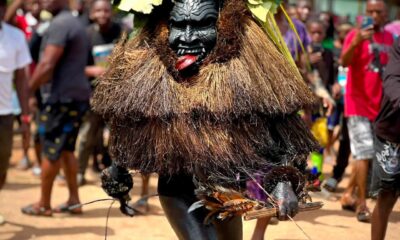
Ikeji Aro 2026 on Avor Osu Day: Nkita Oku, Inum, Ekpe Erim, Other Ekpo Masquerades Pay Homage to Eze Eberechukwu Oji
-
 Abia State News4 weeks ago
97-Year-Old Dr Mrs. Shields Reconstructs, Reopens Mary Slessor Library in Arochukwu
-
 POLITICS4 weeks ago
2027: Hon. Ike Bishop Okoronkwo Mobilises Abia North Grassroots, Tasks ADC Coordinators on Polling Units
-
 NATIONAL NEWS2 weeks ago
Cardinal Onaiyekan: Governor Alia Was Suspended for Defying Catholic Church Rules on Politics
-
 Abia State News4 weeks ago
Eze Eberechukwu Oji Commissions Amuvi Community Self-Built Connectivity Hub