
Articles
June 12 Honours List and the Missing Names – Abdul Mahmud

By Abdul Mahmud
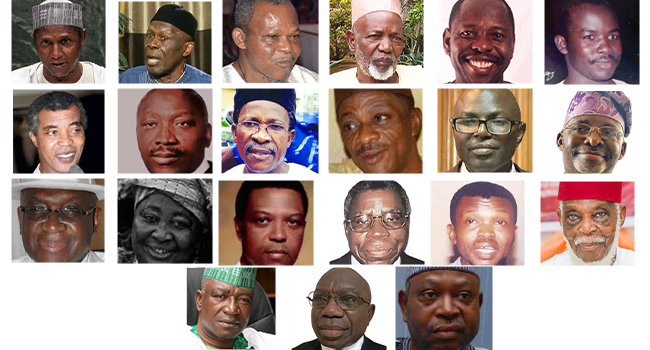
Governments often lionise those they choose, but history reserves its own place for those it recognises as true heroes. For anyone who followed the social and political movements of the 1980s and 1990s, and the long struggle for the revalidation of June 12, two names remain impossible to ignore: Glory Kilanko and Chom Bagu, who earned the epithet General during the halcyon years of the June 12 struggles. There are names that enter public records through appointments, titles, and ceremonial recognition. There are others that survive because they were written into difficult moments when fear carried official authority and resistance carried consequences. June 12 belongs to the latter category.
Each year, as speeches are delivered and honours lists are announced, the country performs remembrance in a language that increasingly favours visibility over sacrifice. Public memory becomes selective, and selective memory eventually transforms political history into a comfortable narrative in which victory appears detached from struggle.
That distortion deserves correction.
The annulment of the June 12, 1993 presidential election was not merely a constitutional rupture. It was experienced as a direct assault on democratic possibility by a generation that had spent years confronting military rule through student organising, labour mobilisation, and civic agitation. What followed was neither spontaneous outrage nor abstract idealism. Resistance had to be organised, coordinated, and sustained.
One of the decisive moments came in mid-July of that year at the residence of Dr. Beko Ransome-Kuti at 8, Imaria Street, Anthony Village, Lagos, where activists gathered to determine the course of organised resistance. Out of that meeting emerged the Campaign for Democracy as the principal vehicle through which opposition to annulment acquired structure, direction, and public expression. Instructions were clear. Resistance cells were to hold Lagos. Every axis had its assignment.
As activists prepared to leave, Beko turned his attention to the Lagos Island group and gave a specific directive. The embassies had to feel the reality of public anger and understand that the annulment had consequences beyond government communiqués and diplomatic briefings.
Indeed, there was work to do.
Fabian Okoye, Odion Akhaine, Omano Edigheji, Uche Onyeagocha and yours sincerely moved into action. I reached out to an old comrade from the University of Jos, Yakub Aromashodun, a son of Lagos Island, whose knowledge of the terrain became invaluable in navigating its streets, passages and strategic points. What followed remains among the defining memories of that period.
At Apongbon, activists confronted combined police and military resistance in one of the fiercest engagements of the June 12 struggle. The objective was political and geographical at once. Carter Bridge had to be held down. Victoria Island had to be separated from the rest of the city through strategic occupation of access routes. The bridge approaching Bonny Camp, home to one of the country’s most famous military barracks, became contested ground. The overhead bridge before the Nigerian Law School formed part of that theatre of resistance.
Those encounters were not symbolic exercises.
People faced batons, arrests, bullets, detention, death, and uncertainty with no assurance that history would remember their names.
Across Lagos, others opened different fronts of resistance. Activists such as Baba Aye, Wale Adeoye, John Odah, Uzo Nwaogbe, Ogaga Ifowodo, Lanre Ehonwa, the late Olaitan Oyerinde, the late Biodun Ogunade, Omoyele Sowore and Segun Mayegun occupied their own spaces within that movement and contributed to sustaining pressure at a time when silence offered greater personal comfort. Beyond Lagos, the struggle acquired national expression through figures, including Nasiru Kura, Lukman Salihu, Kingsley Chinda, Teejay Yusuf, Chijioke Uwasomba, HRM Chris Akani, Yomi Gidado, Jiti Ogunye, Ola Doifie, Edward Daudu, Louis Alozie SAN, the late Wisdom Durueke, and the late Chris Abashi among many others whose contributions deserve careful historical recovery. Many of these individuals emerged from the culture of struggle cultivated within the National Association of Nigerian Students, an organisation that, during those years, served as one of the principal organisations of democratic engagement and political courage.
Their stories remain largely absent from official recognition.
This omission matters because honours are never merely decorative. They are statements about what a nation values and whom it chooses to remember. They influence public understanding of how democratic gains were secured and whose labour made present freedoms possible. A country that commemorates June 12 while overlooking many of those who carried resistance into the streets risks reducing history into ceremony. Recognition cannot restore youth spent in struggle. It cannot return years consumed by detention, exile, or interrupted ambitions. However, it can restore honesty to national memory.
The names that appear on honours lists deserve scrutiny, not from resentment but from the belief that commemoration ought to meet the standards of historical seriousness. Numerous figures who stood at the barricades remain alive, while others who bore the weight of resistance continue to exist beyond official remembrance. Some whose sacrifices helped widen democratic space now watch later beneficiaries of that freedom occupy the centre of public recognition. History has a way of correcting omissions, though often more slowly than justice permits. June 12 was built through human courage and struggle. Those who shaped it should not be reduced to footnotes, nor should their place in national memory depend on political convenience.
Nigeria owes them remembrance.

For publication of your news content, articles, videos or any other news worthy materials, please send to newsleverage1@gmail.com. For more enquiry, please call +234-901-067-1763 or whatsapp +234-901-067-1763. To place an advert, please call 09010671763





‘It’s Time to Leave the Seat’ – Amobi Ogah Rallies Abia North Behind Bourdex

Eze Eberechukwu Oji Commissions Amuvi Community Self-Built Connectivity Hub

97-Year-Old Dr Mrs. Shields Reconstructs, Reopens Mary Slessor Library in Arochukwu

2027: Hon. Elvis Ogbonna (IGNES) Seeks Aro Support, Says ‘It’s Youth O’Clock’

Ikeji-Aro 2026: AITEO Boss Mazi Ike Okoronkwo Urges Aro Youths to Preserve Culture, Embrace Skills

Eke-Ekpe: We Look Back in Order to Move Forward – Eze Dr Eberechukwu Oji

‘No Going Back’: Abia North Stakeholders Rally Behind Otti, Vow to Sustain Governance Beyond 2031

Isuikwuato Traditional Rulers Deny Endorsing Orji Kalu

Lagos Traffic Is More Than a Problem, It’s a Lifestyle – Lagos Deputy Governor Hamzat

Gbajabiamila: Police, DSS, ICPC Cleared Me Over Alleged Fake Agency

Tinubu: ‘Senator, We Are Not With You’ – Community Tells Senator Ohuabunwa

NDC Notified Benue Police Ahead of Peter Obi’s Visit, Document Shows

Ibeku Traditional Rulers Endorse Chinedum Orji for Ikwuano/Umuahia Federal Constituency

Tension in Benue as Peter Obi’s Blocked Convoy Leads to Protest

Ikeji Aro 2026 on Avor Osu Day: Nkita Oku, Inum, Ekpe Erim, Other Ekpo Masquerades Pay Homage to Eze Eberechukwu Oji

Ikeji-Aro 2026: ‘We Are Repackaging Aro Traditional Healing Practices for the Younger Generation’ – Mazi Ernie Onwumere

Iwa Ji Festival: Ikuku’s Cultural Connection With Ibeku People Signals Strong Constituency Bond – Group

APC Sanctuary: How the Ruling Party Became Nigeria’s Governance Virus – Otunba Babatunde Olushola Senbanjo

2027: Hon. Ike Bishop Okoronkwo Mobilises Abia North Grassroots, Tasks ADC Coordinators on Polling Units

Ikeji-Aro 2026: CPC Chairman Elekwa Explains ‘Aro Renaissance’ Theme, Reveals Plans to Preserve Cultural Heritage

The final 6 ‘Game of Thrones’ episodes might feel like a full season
New Season 8 Walking Dead trailer flashes forward in time
Mod turns ‘Counter-Strike’ into a ‘Tekken’ clone with fighting chickens
Meet Superman’s grandfather in new trailer for Krypton
Disney’s live-action Aladdin finally finds its stars
Who are the early favorites to win the NFL rushing title?
The old and New Edition cast comes together to perform
Boxing continues to knock itself out with bewildering, incorrect decisions
Steph Curry finally got the contract he deserves from the Warriors
Phillies’ Aaron Altherr makes mind-boggling barehanded play
-
 POLITICS3 weeks ago
Tinubu: ‘Senator, We Are Not With You’ – Community Tells Senator Ohuabunwa
-
 NATIONAL NEWS3 weeks ago
NDC Notified Benue Police Ahead of Peter Obi’s Visit, Document Shows
-
 POLITICS4 weeks ago
Ibeku Traditional Rulers Endorse Chinedum Orji for Ikwuano/Umuahia Federal Constituency
-
 NATIONAL NEWS3 weeks ago
Tension in Benue as Peter Obi’s Blocked Convoy Leads to Protest
-
 Abia State News4 days ago
Ikeji Aro 2026 on Avor Osu Day: Nkita Oku, Inum, Ekpe Erim, Other Ekpo Masquerades Pay Homage to Eze Eberechukwu Oji