
Articles
Opinion: The Sacred Cow Republic – Abdul Mahmud

By Abdul Mahmud
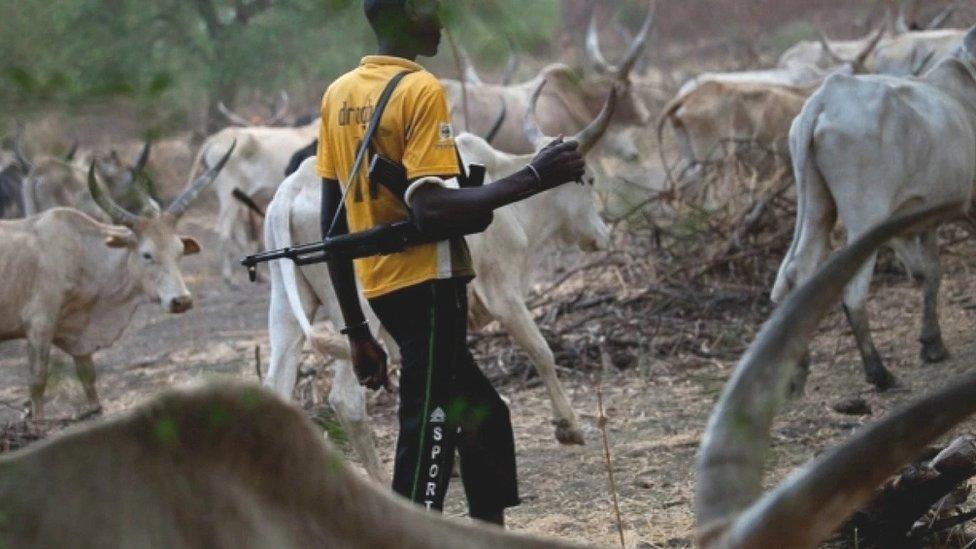
Nigeria is fortunate to have many citizens who profess loyalty to the country. Some express that loyalty through public service, civic engagement and genuine concerns for national unity. Others display a different kind of commitment. They are prepared to defend cows with remarkable zeal, so much so that one might imagine they would gladly rename Nigeria the Republic of Cows, yet they approach the killing of fellow citizens as a matter to be qualified, contextualised, rationalised and endlessly explained away. Across Nigeria, communities continue to suffer attacks, farmers are driven from their farm lands, families are displaced from ancestral homes and innocent people lose their lives. In many instances, public discussion quickly shifts away from the victims and towards elaborate attempts to explain why the events should be viewed through a different lens. Before grieving families have had the opportunity to bury their dead, there are already voices urging caution in assigning responsibility, warning against generalisations and encouraging the public to focus on broader historical and ethnic considerations.
This pattern has become familiar.
In many countries, the murder of innocent people by armed groups is recognised as a serious criminal act. In Nigeria, however, such murder generates extensive debates that scrutinise victims than the perpetrators. Explanations proliferate, while contexts are offered in defence of the murderers. The simple fact that innocent people have been killed is frequently overshadowed by efforts to interpret and rationalise what assaults the conscience of a nation. The consequence is that public attention becomes divided between sympathy for victims and jejune exercises that diminish accountability.
Among the most influential contribuors to this phenomenon are individuals whose primary allegiance appears to be ethnic rather than national. They approach questions of insecurity through the prism of primordial solidarity and regard criticisms of the murderers as an attack on their broader ethnic nation. In doing so, they transform discussions about crime into discussions about identity. The result is a public discourse in which concern for victims is frequently balanced against the perceived need to protect ethnic sensitivities. Every attempt to identify perpetrators is met with warnings about stereotyping. Every effort to discuss patterns of violence becomes an opportunity to shift attention towards the feelings of those who share linguistic, cultural or ancestral ties with the accused.
Such interventions often leave the impression that preserving ethnic solidarity is a higher priority than confronting criminality.
Alongside this group exists another constituency whose interests are tied, directly or indirectly, to the persistence of insecurity. Prolonged instability has created opportunities for military contracting, procurement spending and war profiteering. Senator Adams Oshiomhole recently drew attention to this uncomfortable reality when, during a plenary debate in the Senate, he called for an audit of military procurement. The concern is not merely that insecurity has become a lucrative enterprise for some, but that the incentives created by a prolonged crisis may weaken the urgency required to resolve it. This creates the unsettling impression that certain individuals derive greater benefit from managing insecurity than from ending it. Their public statements convey concern and commitment, yet their professional circumstances often appear remarkably compatible with the continuation of the crisis.
Then there are those who subscribe to a particularly curious hierarchy of values in which cattle occupy an elevated position in public discourse.
For this group, disputes involving livestock are treated with a seriousness that often appears disproportionate when compared with responses to the loss of human life. Arguments are advanced suggesting that Nigerians must accommodate grazing interests in the name of history, tradition or economic necessity. Farmers whose lands are encroached upon are urged to display understanding. Villages confronted by armed herders are encouraged to embrace coexistence. The burden of compromise consistently falls upon those whose homes, farms and livelihoods are directly affected. What is striking is that calls for accommodation are rarely accompanied by equally forceful demands that the murderers respect the rights and security of settled communities.
An observer unfamiliar with Nigeria might conclude that cows occupy a uniquely privileged position within the national conversation.
A country cannot sustain unity when public outrage is selective. Citizenship loses significance when the lives of some citizens appear less important than political calculations or ethnic considerations. Public trust erodes when violence becomes an avenue for economic gain and when accountability is subordinated to competing loyalties. Nigeria’s insecurity is sustained not only by those who commit acts of violence but also by those who excuse, rationalise, commercialise or minimise their consequences. Criminals may carry weapons, but they are assisted by individuals who provide narratives that dilute responsibility, justify inaction or divert attention from the suffering of victims. These enablers rarely participate directly in acts of violence. Their role is different. They shape public understanding, influence political responses and contribute to an environment in which accountability becomes difficult to achieve.
Nigeria continues to bear the cost of this arrangement.
The path out of Nigeria’s insecurity crisis begins with an uncompromising recognition that every citizen’s life is worth more than ethnic sentiment, political convenience or economic interest. So long as that principle remains subordinated to competing considerations, insecurity will persist as a defining feature of national life. Communities will continue to suffer, families will continue to mourn, and citizens will continue to wonder whether their safety truly ranks among the foremost concerns of those entrusted with the nation’s future. In such a climate, the sacred cow will continue to enjoy its privileged place in public discourse, while the sanctity of human life receives less attention than it deserves.

For publication of your news content, articles, videos or any other news worthy materials, please send to newsleverage1@gmail.com. For more enquiry, please call +234-901-067-1763 or whatsapp +234-901-067-1763. To place an advert, please call 09010671763







Bourdex Tackles Orji Kalu Over Political U-Turn, Demands Answers on Sudden Praise for Otti

Ikpeazu Represents Nigeria at Spain’s National Day Celebration in Madrid

Bourdex Congratulates Victor Ikeji on Appointment to Tinubu’s Presidential Campaign Team

NAFDAC Raids Facility, Arrests Two Over Counterfeit ‘Bullet’ Drink Production

SDP’s Presidential Candidate Adebayo Demands Immediate Release of ‘Tinubu Must Go’ Protesters

Mayor Lucky Igbokwe Celebrates Seyi Tinubu, Reaffirms CityBoy Movement’s Commitment to Youth Development

$20 Billion Loan Controversy: Otunba Babatunde Olushola Senbanjo Challenges Tinubu Over Lagos-Calabar Highway Rerouting

Stop Complaining, Tinubu Will Win 2027 Without Rigging, Orji Kalu Says

From Classrooms to Communities: Chinedum Orji’s Legacy of Educational Development

Wike: I Helped Defeat Ighodalo to Stop Obaseki’s Return Through Him

Ikeji Aro 2026 on Avor Osu Day: Nkita Oku, Inum, Ekpe Erim, Other Ekpo Masquerades Pay Homage to Eze Eberechukwu Oji

97-Year-Old Dr Mrs. Shields Reconstructs, Reopens Mary Slessor Library in Arochukwu

Ikeji-Aro 2026: ‘We Are Repackaging Aro Traditional Healing Practices for the Younger Generation’ – Mazi Ernie Onwumere

2027: Hon. Ike Bishop Okoronkwo Mobilises Abia North Grassroots, Tasks ADC Coordinators on Polling Units

Eze Eberechukwu Oji Commissions Amuvi Community Self-Built Connectivity Hub

Nigeria Owes Tobi Amusan a Statue – Abdul Mahmud

Cardinal Onaiyekan: Governor Alia Was Suspended for Defying Catholic Church Rules on Politics

Obioma-Ngwa 2027: Chidi Nnamdi Pushes Case for Responsive Representation – Comrade Abuchi Isaac

‘We Will, We Will, We Will’: Atiku Slams Tinubu Over Promises, Questions Achievements After Three Years

Leave Chidi Nnamdi Alone, Earn the People’s Trust – New Direction Agenda

The final 6 ‘Game of Thrones’ episodes might feel like a full season
New Season 8 Walking Dead trailer flashes forward in time
Mod turns ‘Counter-Strike’ into a ‘Tekken’ clone with fighting chickens
Meet Superman’s grandfather in new trailer for Krypton
Disney’s live-action Aladdin finally finds its stars
Who are the early favorites to win the NFL rushing title?
The old and New Edition cast comes together to perform
Boxing continues to knock itself out with bewildering, incorrect decisions
Steph Curry finally got the contract he deserves from the Warriors
Phillies’ Aaron Altherr makes mind-boggling barehanded play
-
 Abia State News3 weeks ago
Ikeji Aro 2026 on Avor Osu Day: Nkita Oku, Inum, Ekpe Erim, Other Ekpo Masquerades Pay Homage to Eze Eberechukwu Oji
-
 Abia State News2 weeks ago
97-Year-Old Dr Mrs. Shields Reconstructs, Reopens Mary Slessor Library in Arochukwu
-
 Abia State News4 weeks ago
Ikeji-Aro 2026: ‘We Are Repackaging Aro Traditional Healing Practices for the Younger Generation’ – Mazi Ernie Onwumere
-
 POLITICS3 weeks ago
2027: Hon. Ike Bishop Okoronkwo Mobilises Abia North Grassroots, Tasks ADC Coordinators on Polling Units
-
 Abia State News2 weeks ago
Eze Eberechukwu Oji Commissions Amuvi Community Self-Built Connectivity Hub