
Articles
Time We Refix Nigeria, Abdul Mahmud Writes

By Abdul Mahmud

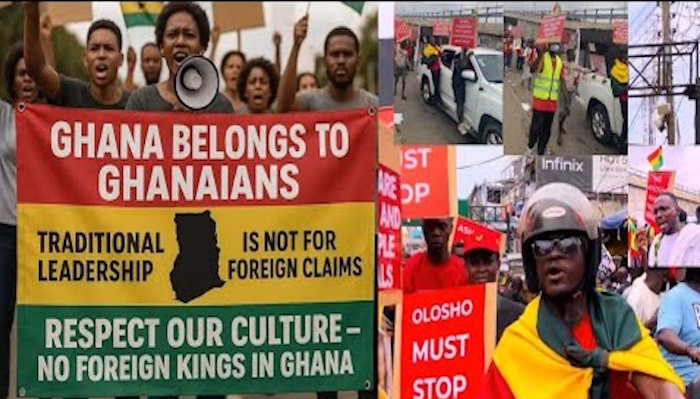
The recent demonstrations in Ghana, where some protesters openly demanded that Nigerians leave their country, should trouble every thoughtful Nigerian for reasons that extend beyond the immediate insult, since the spectacle of fellow Africans questioning the place of Nigerians within their countries represents not merely a diplomatic embarrassment but a painful reminder of how profoundly our national circumstances have changed. The actions and opinions of some Ghanaians should never be mistaken for the sentiments of an entire people, just as the alleged criminal conduct of a handful of Nigerians should never be used to condemn millions of honest citizens whose only offence is carrying the same passport, although none of these distinctions should distract us from the larger question that now confronts us with increasing urgency, namely why Nigerians have become so widely dispersed across Africa that every political controversy, and every allegations of criminality, in another country seems capable of placing them at its centre.
Isn’t it time we tell ourselves a few home truths about ourselves?
There was a time when Nigeria embodied the promise of African possibility. Universities across the country attracted students from every corner of the continent, an expanding economy drew workers beyond our borders in search of opportunity, diplomatic influence carried weight in African affairs, and unwavering support for the liberation of Southern Africa sprang from the conviction that the freedom of one African people was inseparable from the freedom of another; a conviction that earned Nigeria a standing far greater than its material wealth alone could have secured. Our country invested enormous political capital, financial resources and diplomatic influence in struggles whose victories would benefit countries far beyond our borders, not because we expected gratitude preserved for eternity, but because we understood that leadership carried obligations extending beyond narrow national interest. History, however, does not preserve influence on sentiment alone, since every generation inherits the responsibility of renewing the foundations upon which earlier generations built their reputation.
The hostility recently directed at Nigerians in Ghana deserves condemnation, just as previous episodes of Afrophobic violence and intimidation directed at Nigerians in South Africa deserved condemnation, since civilised societies cannot surrender justice to the dangerous temptation of collective guilt. Every country produces individuals who violate its laws, although mature democracies distinguish between criminals and nationalities. The overwhelming majority of Nigerians living abroad rise each morning to earn an honest living as teachers, engineers, traders, doctors, academics, artisans, entrepreneurs, transport workers and professionals whose labour strengthens the economies of their host countries without attracting newspaper headlines. Their quiet contributions disappear beneath the noise created by a few whose misconduct unfairly becomes the measure by which millions are judged. But, there’s a significant number dragging our country’s name through the mud, with their criminality. We can’t deny this; and it’s time we address this! Emotional appeals to our glorious past cannot mask these slurs that have made Nigerians a hunted people in South Africa and Ghana.
Still, the uncomfortable truth which confronts us is that migration on a large scale rarely occurs where citizens possess confidence that their homeland offers security, opportunity and the possibility of a decent future.
Nigerians are not scattered across the continent because they have forgotten where they belong, nor are they a people wandering through history without roots or destinations. Nigerians are not a people lost in Babylon. They have a homeland and possess one of the most richly endowed countries in Africa, blessed with extraordinary human talent, abundant natural resources and immense economic possibilities, although decades of corruption, institutional decline, insecurity and economic mismanagement have steadily transformed departure into a rational decision for millions who would otherwise have preferred to remain at home. Every Nigerian compelled to leave under the pressure of collapsing institutions rather than personal ambition carries an invisible burden that extends beyond individual sacrifice, since each departure represents another measure of confidence withdrawn from the country itself. Families become permanently divided across continents, hospitals lose experienced specialists, universities watch distinguished scholars relocate abroad, industries struggle to retain skilled professionals and young graduates increasingly organise their lives around escape rather than contribution. The country continues to celebrate the resilience of its people while quietly ignoring the tragedy that resilience has become necessary for survival instead of national progress.
Political leaders regularly celebrate the billions of dollars remitted home by Nigerians living abroad as though those impressive figures constitute evidence of economic success, although every remittance also reflects the productive capacity that Nigeria failed to retain within its own economy. Those transfers sustain families, support communities and strengthen foreign exchange reserves, although they cannot replace functioning schools, reliable electricity, productive industries, quality healthcare, public safety and competent governance. A country cannot continue congratulating itself for exporting its brightest citizens while neglecting the conditions that compelled their departure in the first place.
The events unfolding in Ghana should therefore serve as a mirror rather than merely a provocation. Ghana has every sovereign right to enforce its laws against those who violate them, just as Nigeria possesses the same right within its own territory, although fairness requires that criminal responsibility remain individual rather than national. Nigerians should reject every attempt to stigmatise an entire people because of the conduct of a few, although they should also reject the comforting illusion that wounded patriotism alone can restore national dignity. Respect among nations cannot be demanded through emotional appeals or historical recollections. It emerges most naturally from countries whose institutions function, whose economies create opportunities and whose citizens travel principally through choice rather than necessity.
Refixing Nigeria therefore demands far more than periodic elections followed by familiar promises of reform. It requires rebuilding public institutions until merit once again carries greater weight than patronage, establishing an economy capable of rewarding enterprise rather than political connections, securing lives and property with seriousness instead of official rhetoric, restoring confidence in education and healthcare and recovering a public service animated by integrity rather than personal enrichment. Young Nigerians should complete their education believing that meaningful opportunities await them within their own country instead of assuming that fulfilment exists only beyond our borders.
Government carries the greatest responsibility for this national reconstruction because it possesses the constitutional authority to shape public policy, although citizens also bear obligations that cannot be transferred to elected officials alone. Nigerians must refuse to normalise the corruption that has gradually entered everyday life under the false appearance of necessity. The embarrassment many Nigerians now experience whenever fellow Africans publicly question their presence within another African country should awaken us to a truth that can no longer be postponed. Nigeria cannot continue relying upon memories of past continental leadership while neglecting the difficult work required to deserve renewed respect. Our response to the protests in Ghana should not be bitterness towards Ghanaians, nor should it be self-congratulation founded upon historical achievements whose value diminishes with every passing decade of national decline. Our response should be a determined commitment to rebuilding the republic until every Nigerian possesses genuine freedom to remain at home without sacrificing ambition, dignity or hope. Nigerians are not a people without a country. They have a homeland, and the time has come to refix it before the humiliation of watching our fellow Africans ask us to leave their countries becomes an accepted feature of our national story.
For publication of your news content, articles, videos or any other news worthy materials, please send to newsleverage1@gmail.com. For more enquiry, please call +234-901-067-1763 or whatsapp +234-901-067-1763. To place an advert, please call 09010671763



Osunbor: Tinubu’s Re-Election Could Doom Nigeria, Says EFCC Cases Define His Inner Circle

Iwa Ji Festival: Ikuku’s Cultural Connection With Ibeku People Signals Strong Constituency Bond – Group

Otti Charges 1,086 Young Abians to Embrace Excellence, Innovation, Selfless Service

‘The Owners Are Billing Darkness’: Ben Murray-Bruce Urges Tinubu to Reset Nigeria’s Power Sector

Ibeku Traditional Rulers Endorse Chinedum Orji for Ikwuano/Umuahia Federal Constituency

Adeleke Watch it: Who Really Won the Osun Election? – Balogun
Now That Tinubu and Atiku Agree on Cheap Petrol – Kperogi
2027: Tinubu Is a Lion With Horns, Opposition Must Unite to Defeat Him – Donald Duke

Again, Ikwuano/Umuahia Women Endorse Ikuku, Promise Massive Support

Bourdex, OUK and the Real Test of Political Influence: Let the Evidence Speak

35 Years After Kirikiri Release, Abdul Mahmud Remembers Bamidele Aturu, Says ‘The Struggle Remains Unfinished’

Tinubu’s Intervention on the Osun Accounts: A Welcome Commitment to Electoral Fairness Within Constitutional Limits – Afikuyomi, Esq.

Otunba Babatunde Olushola (BOS) at 69: Celebrating a Life of Mentorship, Leadership, Compassion and Service

#OsunDecides2026: Akpabio Stops Collation – Davido

Former IGP Mike Okiro Hoists CityBoy Movement Flag in Abia, Applauds Seyi Tinubu for Creating Movement
Ibeku Traditional Rulers Endorse Chinedum Orji for Ikwuano/Umuahia Federal Constituency

Abia Govt Explains Teacher Recruitment Process, Discloses Number of Candidates Who Scored Over Benchmark

Why Supporters Say Chinedum Orji Is the Right Choice for Ikwuano/Umuahia Federal Constituency in 2027 – Onukwuo

Otunba Senbanjo Celebrates Babangida at 85, Hails Former Head of State as Icon of Leadership and National Service

24A, 24B Aba/Owerri Road: Counsel Defends Ribiza Deal, Challenges Authority of Disputed 2014 Resolution

The final 6 ‘Game of Thrones’ episodes might feel like a full season
New Season 8 Walking Dead trailer flashes forward in time
Mod turns ‘Counter-Strike’ into a ‘Tekken’ clone with fighting chickens
Meet Superman’s grandfather in new trailer for Krypton
Disney’s live-action Aladdin finally finds its stars
Who are the early favorites to win the NFL rushing title?
The old and New Edition cast comes together to perform
Boxing continues to knock itself out with bewildering, incorrect decisions
Steph Curry finally got the contract he deserves from the Warriors
Phillies’ Aaron Altherr makes mind-boggling barehanded play
-
 Articles2 days ago
35 Years After Kirikiri Release, Abdul Mahmud Remembers Bamidele Aturu, Says ‘The Struggle Remains Unfinished’
-
 Articles3 weeks ago
Tinubu’s Intervention on the Osun Accounts: A Welcome Commitment to Electoral Fairness Within Constitutional Limits – Afikuyomi, Esq.
-
 METRO3 weeks ago
Otunba Babatunde Olushola (BOS) at 69: Celebrating a Life of Mentorship, Leadership, Compassion and Service
-
 POLITICS2 weeks ago
#OsunDecides2026: Akpabio Stops Collation – Davido
-
 NATIONAL NEWS3 weeks ago
Former IGP Mike Okiro Hoists CityBoy Movement Flag in Abia, Applauds Seyi Tinubu for Creating Movement