
Articles
‘Iyaloja of Edo State’: In Defence of Tradition – Abdul Mahmud


– By Abdul Mahmud
Tradition is a compass. It points to where the people have come from. It guides them through the fog of time. It tells them what they are. And often, what they must not become. Just a few days ago, the Oba of Benin, revered across our country and beyond, defended that compass.
Mrs. Folashade Tinubu-Ojo, the President’s daughter and self-styled Iyaloja of Nigeria, came into the presence of the revered Oba of Benin. The King, in his majesty, reminded her of something eternal: that the traditions of his people cannot be bent to suit political whims. Folashade had gone to Benin seeking to install an Iyaloja of Edo State. But the Oba was unequivocal. Among the Benin, the title does not exist. What exists is the Iyeki, the market leader, chosen by each market through its own democratic process, and consecrated only by the authority of the palace. No outsider, however highly placed, may impose such leadership.
That is the tradition. That is order. That is how the Benin have done it for centuries.
But the Oba’s admonition fell on deaf ears. Days later, within the precincts of the Government House in Benin, Folashade went ahead to install her own Iyaloja. It was a brazen spectacle that scorned history, insulted tradition, and mocked the authority of the palace. It was more than mere defiance; it was a calculated affront to a people whose identity is inseparable from their sacred customs. To stage such an act not in a market, nor in a community square, but in the seat of political power, was to proclaim that state authority could usurp ancestral authority. It was the state attempting to rewrite centuries of cultural practice with the stroke of political arrogance. It was a reminder of how our country’s ruling elite often mistake the temporariness of their office for permanence, and their political reach for boundless power. But power, unlike tradition, is fleeting. Governors come and go.
Presidents pass into memory. But palaces endure, moats endure, sacral practices and shrines endure. The Benin monarchy predates our country itself; it will outlast many republics yet to come. To insult that continuity is to reveal not strength but ignorance of history, ignorance of culture, and ignorance of what truly binds a people together.
The anthropologist Edward Shils once wrote that tradition is “the handing down of beliefs, practices, and institutions from generation to generation”.
Without tradition, Shils warned, society risks “amnesia of the collective”. What happened in Benin was an attempt to overwrite memory with power. To replace sacral practice with politics. To treat tradition as decoration, not foundation. This is not the first time. Across our country, we see political actors attempt to bend traditions to suit temporary advantage. We see palaces sidelined. We see rituals dismissed as relics. But tradition is not a relic. It is living. It is what binds people together when power shifts and governments fall. The palace of the Oba of Benin has stood for centuries. Its moats and walls, once described as among the “largest earthworks in the world” by British explorer Fred Pearse, are not just monuments of mud. They are monuments of memory. They remind us of a civilisation that ordered life, commerce, and leadership long before Nigeria existed. To trample on such memory is to trample on the foundations of identity itself.
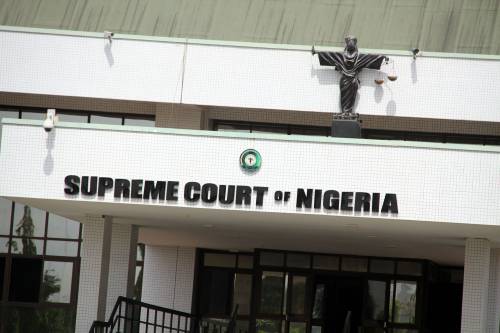
Only a few days later, in another setting, another defence of tradition took place. This time, not in a palace but in the solemn hall of the Supreme Court.
At the inauguration of the new legal year, the President of the Nigerian Bar Association, Afam Osigwe, SAN, stood before the justices of the apex court and spoke truth to power. He reminded them of their tradition. The tradition of the bench. The tradition of independence. The tradition of justice. He reminded them that their predecessors had carved a legacy of integrity, of courage, of fidelity to the rule of law. He told them that it was their duty to defend that legacy. The NBA President did not use fine words to flatter. He spoke plainly. He poured custard, as it were, on the faces of the justices. He reminded them that their robes are not costumes but symbols. That the Supreme Court is not just another government office. It is the guardian of justice, the keeper of the Constitution, the final refuge of the weak against the strong.
In 1821, Justice Joseph Story of the United States Supreme Court wrote that “tradition is not to be scorned; it is the accumulated wisdom of past generations”. Justice Story understood that courts do not only decide cases.
They defend traditions that make justice possible: fairness, independence, the courage to speak when others are silent. The Nigerian Supreme Court, like the palace of the Oba, carries that burden. It must defend traditions that have taken decades to build. When justices waver, when they bow to pressure, when they forget the legacies of the greats before them, they do not only weaken judgments. They weaken tradition. The Oba defended tradition in the palace. Afam Osigwe defended tradition in the courtroom. Both moments may seem far apart, yet they are joined by a single thread. Both speak to the importance of memory, continuity, and fidelity. Both remind us that tradition is not about stubbornness. It is about safeguarding the values that give meaning to community and law.
The philosopher, Alasdair MacIntyre put it well: “Tradition is an argument extended through time”. It is not static. It is debated. It is reinterpreted. But it is not discarded at will. Those who wield power cannot simply substitute it with their own convenience. To do so is to court chaos. Consider the Benin markets. For centuries, markets have been not just centres of trade but also of culture. The Iyeki is more than the leader of traders. She is the custodian of moral authority within the marketplace. Her legitimacy comes not from appointment but from election by her peers, blessed by the palace. Remove the palace from that equation, and the authority of the Iyeki collapses. What you get is not leadership but imposition. Consider the judiciary. The Supreme Court is more than seventeen men and women in robes. It is an institution that embodies the struggles of the past. It recalls the bold judgments of the 1960s and 1970s, when the Court stood firm against military rulers. It recalls the words of Justice Kayode Eso, who once declared that “justice must be rooted in confidence”. Remove independence from the judiciary, and justice collapses. What you get is not law but decrees in disguise.
Tradition serves as resistance. It resists the arrogance of power. It tells leaders that they are not above history. That their offices are temporary, but traditions endure. In this sense, the Oba’s words to Folashade were more than a reminder. They were a rebuke to hubris. A reminder that not even the President’s daughter can overrule centuries of practice. The renowned sociologist, Eric Hobsbawm, once warned of the danger of “invented traditions”. These are practices manufactured by elites to legitimize their control, often presented as ancient when they are not. What happened in Benin was an attempt at invention. To create a false “Iyaloja of Edo State” outside the sacred context of the palace. The danger of such inventions is that they dilute real traditions and sow confusion in the collective memory of a people.
Our country is at a crossroads. We live in a time when history is neglected, when landmarks are left to decay, when traditions are dismissed as obstacles to modernisation. But modernisation without memory is rootless. A country that forgets its traditions risks becoming a people without an anchor. Look at the Benin moats. Look at the great chambers of the Supreme Court. They are not just physical spaces. They are landmarks of meaning. They remind us of continuity. They tell us that those who came before us made choices, built institutions, and left legacies. Our task is not to erase them but to sustain them. To defend tradition is to defend identity. It is to defend continuity. It is to defend the idea that there are values larger than politics, larger than office, larger than individuals.
The Oba of Benin did it. Afam Osigwe did it. Will others?
Our leaders, both in politics and in law, must remember that their legitimacy does not rest only on elections or appointments. It rests on the extent to which they safeguard the traditions that give meaning to our collective life. To trample on tradition is to trample on the people themselves. And in the end, tradition always outlives power. Always does.

For publication of your news content, articles, videos or any other news worthy materials, please send to newsleverage1@gmail.com. For more enquiry, please call +234-901-067-1763 or whatsapp +234-901-067-1763. To place an advert, please call 09010671763





‘We Will, We Will, We Will’: Atiku Slams Tinubu Over Promises, Questions Achievements After Three Years

Independence Day: Ogah Hails Nigerians, Calls for Unity, Patriotism and National Progress

66 Years of Independence: Otunba Babatunde Olushola Senbanjo Calls for Rejection of APC in 2027, Says Nigeria Must Reclaim Its Promise

Nigeria at 66: Hon. Chidi Nnamdi Calls for Responsible Representation, Stronger Institutions

Tinubu: Nigeria Has Passed Through Its Own Red Sea, Prosperity Is Next

2027: Ohafia Youths Reject Orji Kalu’s 3rd-Term Bid, Disown ‘IPOB Enclave’ Label

Accountability Is Leadership: Why Ikwuano/Umuahia Is Looking to Chinedum Orji – Mandate 27

2027: I’ll Resign if Tinubu Loses FCT – Wike Vows

Umahi Challenges Obi: ‘Mention One Ebonyi Person You Appointed As Anambra Governor’

Dangote Pledges 40-Month Completion of $16bn East African Refinery in Kenya

Tinubu: ‘Senator, We Are Not With You’ – Community Tells Senator Ohuabunwa

NDC Notified Benue Police Ahead of Peter Obi’s Visit, Document Shows

Ikeji Aro 2026 on Avor Osu Day: Nkita Oku, Inum, Ekpe Erim, Other Ekpo Masquerades Pay Homage to Eze Eberechukwu Oji

Tension in Benue as Peter Obi’s Blocked Convoy Leads to Protest

97-Year-Old Dr Mrs. Shields Reconstructs, Reopens Mary Slessor Library in Arochukwu

Ikeji-Aro 2026: ‘We Are Repackaging Aro Traditional Healing Practices for the Younger Generation’ – Mazi Ernie Onwumere

2027: Hon. Ike Bishop Okoronkwo Mobilises Abia North Grassroots, Tasks ADC Coordinators on Polling Units

Ikeji-Aro 2026: CPC Chairman Elekwa Explains ‘Aro Renaissance’ Theme, Reveals Plans to Preserve Cultural Heritage

APC Sanctuary: How the Ruling Party Became Nigeria’s Governance Virus – Otunba Babatunde Olushola Senbanjo

Obioma-Ngwa 2027: Chidi Nnamdi Pushes Case for Responsive Representation – Comrade Abuchi Isaac

The final 6 ‘Game of Thrones’ episodes might feel like a full season
New Season 8 Walking Dead trailer flashes forward in time
Mod turns ‘Counter-Strike’ into a ‘Tekken’ clone with fighting chickens
Meet Superman’s grandfather in new trailer for Krypton
Disney’s live-action Aladdin finally finds its stars
Who are the early favorites to win the NFL rushing title?
The old and New Edition cast comes together to perform
Boxing continues to knock itself out with bewildering, incorrect decisions
Steph Curry finally got the contract he deserves from the Warriors
Phillies’ Aaron Altherr makes mind-boggling barehanded play
-
 POLITICS3 weeks ago
Tinubu: ‘Senator, We Are Not With You’ – Community Tells Senator Ohuabunwa
-
 NATIONAL NEWS3 weeks ago
NDC Notified Benue Police Ahead of Peter Obi’s Visit, Document Shows
-
 Abia State News1 week ago
Ikeji Aro 2026 on Avor Osu Day: Nkita Oku, Inum, Ekpe Erim, Other Ekpo Masquerades Pay Homage to Eze Eberechukwu Oji
-
 NATIONAL NEWS3 weeks ago
Tension in Benue as Peter Obi’s Blocked Convoy Leads to Protest
-
 Abia State News4 days ago
97-Year-Old Dr Mrs. Shields Reconstructs, Reopens Mary Slessor Library in Arochukwu
buy tapentadol 100mg online
October 7, 2025 at 10:37 pm
buy tapentadol 100mg online