
Articles
The Bureau de Change Sector in Limbo: A Constructive Case for a More Pragmatic Recapitalisation Framework – Balogun

By E. Balogun, Ph.D

June 16, 2026
Commending Reform While Advocating Refinement.
The Central Bank of Nigeria (CBN), under its present leadership, deserves sincere commendation for the courage and determination it has demonstrated in pursuing comprehensive reforms aimed at repositioning Nigeria’s financial system for greater stability, transparency, and long-term sustainability. At a period when the nation was confronted with persistent exchange rate distortions, declining investor confidence, inflationary pressures, and structural weaknesses within the foreign exchange market, the apex bank chose the difficult but necessary path of reform rather than preserving an unsustainable status quo.
It is therefore in the spirit of partnership rather than opposition that I respectfully examine the current reforms affecting Nigeria’s Bureau De Change (BDC) industry. The observations presented herein are not intended to undermine the reform agenda but to contribute constructively to its success. Sound policymaking requires not only the courage to initiate reforms but also the wisdom to recalibrate them where practical realities suggest that adjustments may better serve the national interest.
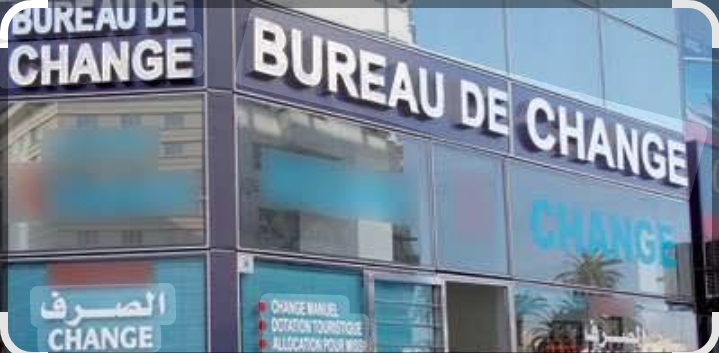
The Bureau De Change sector today finds itself at one of the most critical crossroads in its history. While the objectives behind the ongoing recapitalisation exercise are commendable, the implementation has created significant challenges that threaten the continued existence of an industry that has, for decades, served millions of Nigerians and complemented the country’s formal financial system.
The Historical Evolution of Nigeria’s Bureau De Change Industry
The Bureau De Change industry was formally introduced into Nigeria’s financial landscape during the Structural Adjustment Programme of the 1980s as part of broader efforts to liberalize the foreign exchange market. Before then, access to foreign currency was almost exclusively controlled by commercial banks and the Central Bank itself, leaving ordinary citizens with limited options for legitimate retail foreign exchange transactions.
The licensing of BDC operators provided a practical solution by creating regulated institutions capable of meeting the foreign exchange needs of travellers, students, medical patients, pilgrims, and other retail customers. Over time, the industry expanded rapidly and became an important component of Nigeria’s financial ecosystem, providing accessibility, competition, and convenience while reducing pressure on the formal banking sector.
For decades, BDCs have contributed significantly to exchange rate discovery, financial inclusion, employment generation, and the decentralisation of foreign exchange services across the country.
Learning from History: The Earlier Tiered Structure
The present two-tier licensing framework is not entirely unprecedented. At various periods in the past, attempts were made to categorize BDC operators into different classes with varying operational privileges. However, those arrangements failed to achieve lasting success as market realities ultimately favoured a more unified approach.
The previous experience demonstrated that artificial segmentation often creates administrative complexity without necessarily improving regulatory outcomes. The overlap in functions, customer expectations, and operational realities eventually rendered such classifications ineffective.
History therefore offers a valuable lesson: regulation should reflect economic practicality that will prove sustainability.
The Current Recapitalisation Framework
The Central Bank’s recent reform introduced two categories of Bureau De Change licences. Under the new structure, Tier-1 operators are required to maintain a minimum share capital of ₦2 billion, while Tier-2 operators must provide ₦500 million.
The policy was introduced with admirable objectives. The CBN seeks to strengthen corporate governance, improve transparency, combat money laundering, enhance operational resilience, and ensure that only financially sound institutions participate in Nigeria’s sensitive foreign exchange market.
From a regulatory perspective, these goals are entirely understandable and consistent with international best practices aimed at safeguarding financial stability.
An Industry in Limbo
Despite the noble intentions behind the reforms, implementation has exposed significant practical challenges.
Following the announcement of the recapitalisation requirements, numerous operators struggled to raise the required capital within the stipulated timelines. Although the CBN extended the deadline to provide additional opportunities for compliance, reports continue to indicate that only a very small proportion of licensed operators have successfully met the new thresholds.
This situation has effectively placed the industry in a state of uncertainty.
An industry that once consisted of thousands of licensed operators spread across Nigeria’s thirty-six states and the Federal Capital Territory now faces the possibility that fewer than one hundred and fifty institutions may remain operational if current conditions persist.
For a nation with a population exceeding 200 million people and enormous retail foreign exchange demands, such a dramatic contraction could have far-reaching economic consequences.
The Risks of Excessive Market Concentration
If only a handful of operators survive, the resulting concentration may undermine several of the objectives that the reforms seek to achieve.
Reduced competition could lead to wider exchange margins and diminished service quality. Large sections of rural and semi-urban Nigeria may lose convenient access to legitimate foreign exchange providers. Thousands of jobs directly and indirectly dependent on BDC operations could disappear, while years of entrepreneurial investment may be wiped out.
Perhaps more importantly, when legitimate channels become insufficient to satisfy public demand, informal markets often expand. Ironically, a policy intended to reduce parallel market activity could inadvertently strengthen it by limiting access to authorized alternatives.
Is Capital Alone the Best Measure of Strength?
There is no doubt that adequate capital contributes to institutional resilience. However, financial strength cannot be measured solely by the size of paid-up share capital.
Corporate governance, compliance culture, technology infrastructure, anti-money laundering controls, risk management systems, transparency, and management competence are equally important indicators of institutional soundness.
Many well-managed BDCs with impeccable compliance records may simply lack the capacity to raise ₦500 million or ₦2 billion within a short period despite operating responsibly for decades.
An overly rigid capital requirement therefore risks excluding competent operators while favouring wealth over performance.
The Case for a Unified Licensing Framework
The time may have come for the Central Bank to reconsider whether maintaining two separate licensing categories remains necessary.
A single national licensing framework would simplify regulation, eliminate unnecessary market segmentation, encourage fair competition, and reduce administrative complexity for both operators and supervisors.
Uniform licensing accompanied by risk-based supervision could achieve stronger regulatory outcomes than multiple categories that create operational disparities without corresponding public benefit.
A Strong Case for Reviewing the Capital Thresholds
The objective of recapitalisation should be to strengthen the industry, not to eliminate it.
Given prevailing economic realities, inflationary pressures, limited access to long-term investment capital, and the important role played by indigenous entrepreneurs, there is a compelling case for reviewing the current minimum share capital requirements.
A more moderate capital threshold would still promote prudential stability while preserving competition, protecting existing investments, encouraging wider compliance, and ensuring that legitimate foreign exchange services remain accessible throughout Nigeria.
Recapitalisation should serve as a bridge to stronger institutions rather than a barrier that excludes the overwhelming majority of participants.
Alternative Regulatory Approaches
The Central Bank can achieve many of its objectives through complementary regulatory measures beyond capital requirements alone.
Enhanced digital reporting systems, real-time transaction monitoring, stronger anti-money laundering compliance, periodic audits, fit-and-proper assessments for directors, mandatory staff certification, improved corporate governance standards, and technology-driven supervision may collectively provide greater protection than capital increases in isolation.
Such measures focus directly on operational integrity rather than financial size.
Recommendations
To ensure that the reform achieves its intended objectives without unintended economic consequences, the following recommendations deserve careful consideration please.
1. Review and abolish the current two-tier licensing structure in favour of a single national BDC licence.
2. Reassess the minimum share capital requirements to align with prevailing economic realities and industry capacity.
3. Allow phased recapitalisation over an extended transition period.
4. Encourage voluntary mergers and strategic partnerships.
5. Prioritize compliance, governance, technology, and transparency alongside financial capital.
6. Establish continuous dialogue between the Central Bank and industry stakeholders to ensure that future reforms remain sustainable.
Conclusion
The Bureau De Change industry has served Nigeria faithfully for decades by providing accessible retail foreign exchange services, supporting financial inclusion, creating employment, and complementing the broader banking sector.
The Central Bank deserves genuine praise for the bold reforms it has undertaken across Nigeria’s financial landscape. Many of these initiatives are already producing positive outcomes and deserve the support of all stakeholders.
Nevertheless, good policy is strengthened by sustainability. The experience of the ongoing recapitalisation exercise suggests that certain aspects of the framework may benefit from thoughtful review.
A situation in which fewer than one hundred and fifty BDCs are expected to serve a nation of over 200 million people would be difficult to reconcile with the objectives of competition, accessibility, and financial inclusion. The recapitalisation policy should therefore be refined in a manner that preserves the gains of reform while protecting the viability of an industry that remains indispensable to Nigeria’s economic ecosystem.
Revisiting the two-tier structure and moderating the current capital requirements would not represent a retreat from reform. Rather, it would demonstrate adaptive leadership, leadership that listens, evaluates, and adjusts in pursuit of the ultimate goal: a stronger, more inclusive, and more resilient Nigerian financial system.
For publication of your news content, articles, videos or any other news worthy materials, please send to newsleverage1@gmail.com. For more enquiry, please call +234-901-067-1763 or whatsapp +234-901-067-1763. To place an advert, please call 09010671763


2027: Chinedum Orji, A Transformational Leader Is Our Choice, Say Ikwuano/Umuahia Stakeholders

2027: Don’t Vote for Politicians Who Violate Peace Accord – Obi

Otunba Senbanjo Celebrates Babangida at 85, Hails Former Head of State as Icon of Leadership and National Service

Opinion: Nigeria’s CODESA Moment – Abdul Mahmud

Nwogu, Ikonne Court Asa Liberation Movement, Group Laments Alleged ‘Betrayal’ by Abaribe

Sowore Condemns NDLEA’s Destruction of Cannabis Farms, Calls for Legalisation

APC: We Won’t Be Under Pressure to Reach Out to Adeleke – Oke

2027: Nkem Ukandu Withdraws from Bende Federal Constituency Race

Ex-Abia APC Legal Adviser Dumps Party, Alleges 2023 Poll Irregularities, Backs Otti, Bourdex

Aregbesola Congratulates Adeleke, Salutes ADC Members After Osun Election

Okpo-Achara Ihechiowa Road: I’ve Taken Note of It – Otti

Eze Aro Unveils Film Village Plan in Honour of Alex Ekubo, Announces Global Renaissance Initiatives

Eze Aro Unveils Bold Vision for Arochukwu’s Renaissance, Declares Kingdom Open for Investment at Second Coronation Anniversary

Chairman of the Central Planning Committee of the Second Coronation Anniversary Hails Successful Celebration, Predicts Brighter Future for Arochukwu

Campaigns: Abia Govt places N200m, N150m charges on Presidential, Governorship candidates

Eze Aro IX Thanks God for Defeating False Prophecies, Marks Second Anniversary with Thanksgiving Service

Arochukwu Kingdom Celebrates Second Coronation Anniversary of His Eminence Eze Dr Eberechukwu Oji in Glamour and Style

Otti Backs $13.1m CNG Mother Station Project to Drive Abia’s Industrial Growth

“If You Were Igbo, I Would Have Detained You” – Police Officer Says

60th Aguiyi-Ironsi Memorial: Tinubu, Otti, Obasanjo, Other Leaders Renew Call for Unity, Honour Nigeria’s First Military Head of State

The final 6 ‘Game of Thrones’ episodes might feel like a full season
New Season 8 Walking Dead trailer flashes forward in time
Mod turns ‘Counter-Strike’ into a ‘Tekken’ clone with fighting chickens
Meet Superman’s grandfather in new trailer for Krypton
Disney’s live-action Aladdin finally finds its stars
Who are the early favorites to win the NFL rushing title?
The old and New Edition cast comes together to perform
Boxing continues to knock itself out with bewildering, incorrect decisions
Steph Curry finally got the contract he deserves from the Warriors
Phillies’ Aaron Altherr makes mind-boggling barehanded play
-
 Abia State News4 weeks ago
Okpo-Achara Ihechiowa Road: I’ve Taken Note of It – Otti
-
 Abia State News4 weeks ago
Eze Aro Unveils Film Village Plan in Honour of Alex Ekubo, Announces Global Renaissance Initiatives
-
 Abia State News3 weeks ago
Eze Aro Unveils Bold Vision for Arochukwu’s Renaissance, Declares Kingdom Open for Investment at Second Coronation Anniversary
-
 Abia State News3 weeks ago
Chairman of the Central Planning Committee of the Second Coronation Anniversary Hails Successful Celebration, Predicts Brighter Future for Arochukwu
-
 Abia State News3 weeks ago
Campaigns: Abia Govt places N200m, N150m charges on Presidential, Governorship candidates