
Articles
Nigeria Between Monetary Stabilisation, Public Hardship, and the Search for Credible Opposition – Balogun

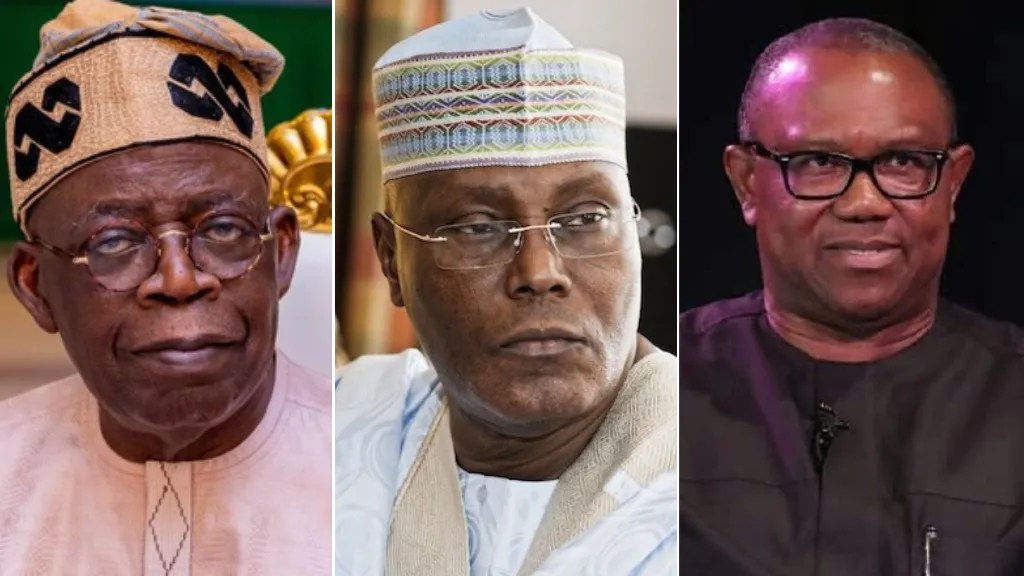
By Dr Emmanuel Balogun
May 27, 2026
“The Unfinished Challenge: When economic reform meet governance realities”
Nigeria today stands at one of the most defining crossroads in its democratic and economic history. The nation is caught between visible macroeconomic reforms on one hand and deepening social hardship on the other. While some sectors of governance appear to show signs of institutional recalibration, the daily realities confronting ordinary citizens continue to raise serious questions about the broader competence, priorities, and responsiveness of government.
As one who has spent close to four decades observing and participating within the financial and economic environment of this country, I understand that managing a fragile economy, particularly one exposed to global oil volatility, exchange rate instability, debt pressures, inflationary shocks, and weak production capacity, is never an easy assignment. Monetary management is often a painful balancing act. However, while acknowledging this reality, truth also demands honesty: economic reforms that fail to translate into visible relief for the people eventually lose moral legitimacy.
In fairness, the current leadership of the Central Bank of Nigeria under Olayemi Cardoso appears to have taken deliberate steps toward correcting long-standing distortions within Nigeria’s foreign exchange architecture. Several analysts and financial observers have acknowledged efforts aimed at reducing the multiple exchange-rate regime, increasing transparency in forex management, rebuilding investor confidence, and stabilising the naira. Reports indicate that the gap between the official and parallel market exchange rates has narrowed significantly compared to previous years, while foreign capital inflows have improved under recent monetary reforms.
Indeed, supporters of the reforms argue that the country had for years operated an unsustainable economic structure built around subsidy dependence, artificial currency controls, weak fiscal discipline, and opaque monetary practices. According to this school of thought, painful reforms became inevitable if Nigeria was to avoid total financial collapse. The removal of fuel subsidies, tighter monetary controls, and exchange-rate liberalisation were therefore presented as unavoidable “shock therapy” necessary to rescue the economy from deeper structural decay.
However, economic theory alone does not govern nations; people do. And the harsh truth remains that millions of Nigerians today measure governance not by technical economic indicators but by the conditions of their everyday survival.
Food prices have risen astronomically. Transportation costs remain unbearable for average households. Small businesses continue to struggle under high operational expenses, unreliable electricity supply, and declining purchasing power. Youth unemployment and underemployment remain disturbingly high. Public confidence in governance institutions continues to weaken. Even where economic indicators appear to improve statistically, the average citizen often sees little corresponding improvement in living conditions.
This is the great contradiction confronting the current administration.
The government frequently points to stabilising macroeconomic indicators, improved reserves, and investor confidence as signs of progress. Nevertheless the ordinary market woman, artisan, civil servant, student, and retiree ask a different question: if reforms are working, why is suffering increasing?
That question cannot simply be dismissed as political sentiment.
Historically, nations that pursued aggressive economic reforms without adequate social cushioning often faced public resistance. From Latin America in the 1980s to parts of Africa during structural adjustment eras, governments learned that reforms may be economically correct while still being politically and socially destabilising if the burden falls disproportionately on the poor.
Nigeria itself experienced this tension during the Structural Adjustment Programme under the military administration of General Ibrahim Babangida in the 1980s. Currency devaluation, subsidy reductions, and liberalisation policies were introduced with promises of long-term stability, but many citizens associated the period with rising hardship and declining living standards. That historical memory still shapes public suspicion toward reform-oriented economic policies today.
The challenge therefore is not merely whether reforms are technically sound. The deeper issue is whether government possesses the institutional capacity, transparency, empathy, and discipline to ensure that the sacrifices demanded from citizens eventually produce visible national gains.
This is where serious questions about governance emerge.
A government cannot ask citizens to endure painful reforms while political office holders continue to display extravagance, waste, elite privileges, and insensitive spending patterns. The moral burden of reform requires visible sacrifice from leadership itself. Citizens are more willing to endure temporary hardship when they trust that leaders are equally committed to national discipline.
Unfortunately, public trust in Nigeria remains dangerously fragile.
Corruption allegations continue to surface regularly across different levels of government. Insecurity persists across several regions. Infrastructure deficits remain enormous. Educational institutions struggle. Healthcare systems remain weak. The electricity sector continues to underperform despite repeated promises over several administrations. These realities fuel growing public frustration and reinforce the perception that governance has not sufficiently matched the scale of economic sacrifice being demanded from the population.
Even international observers who acknowledge the boldness of recent reforms also warn that stabilising macroeconomic numbers alone does not automatically translate into inclusive prosperity. Questions remain about debt servicing pressures, poverty reduction, industrial growth, and whether the economy is truly diversifying beyond dependence on crude oil revenues.
Let’s be clear, the truth is, governance must be measured not only by economic policies but by outcomes. Citizens ultimately judge governments by security, affordability of life, opportunities, infrastructure, justice, and hope for the future.
This brings us to the political opposition.
In every healthy democracy, opposition parties serve as alternative voices capable of challenging government excesses, presenting superior ideas, and offering citizens credible alternatives. However, the Nigerian opposition today appears weakened largely by fragmentation, personal ambitions, ideological inconsistency, and the absence of sustained strategic unity.
The political reality is simple: no ruling party as structurally entrenched as the current governing machine can easily be defeated by scattered opposition forces working independently.
History itself supports this observation.
In 2015, what eventually defeated the then ruling government was not merely public dissatisfaction alone but the strategic coalition of opposition interests into a formidable political bloc. Diverse political actors with varying ideological backgrounds united around one overriding objective. That coalition altered Nigeria’s political trajectory permanently.
Today, many analysts believe a similar political calculation confronts the opposition again.
If opposition parties remain divided across multiple candidates, ethnic interests, regional calculations, and personal ambitions, the ruling establishment may continue to benefit from fragmented electoral outcomes. Political mathematics in Nigeria often rewards structure, coordination, grassroots networks, incumbency advantage, and elite bargaining power. Still unity alone is not enough.
The Nigerian people are increasingly weary of coalitions built merely around power acquisition without ideological clarity or governance credibility. Citizens want more than anti-government rhetoric. They want evidence of competence, sacrifice, vision, patriotism, and institutional seriousness.
Many Nigerians are beginning to ask difficult but legitimate questions:
Will a new coalition truly behave differently?
Can opposition figures who once held power themselves convincingly present a fresh national direction?
Will governance improve structurally or merely change faces at the top?
These are valid concerns.
Nigeria’s deeper crisis is not simply a crisis of political parties but often a crisis of leadership culture itself. Across several administrations, citizens have repeatedly witnessed grand promises before elections followed by institutional disappointments afterward.
Nevertheless, democracies survive through accountability, competition, and continuous civic engagement. No government should become politically untouchable. At the same time, no opposition deserves automatic trust without credible programs and disciplined leadership.
The current moment therefore demands maturity from both government and opposition.
Government must recognise that economic statistics alone cannot replace human welfare. Reform policies must increasingly produce visible social outcomes. Investments in agriculture, manufacturing, electricity, transportation, education, and healthcare must move beyond policy announcements into measurable transformation. Anti-corruption efforts must become visibly impartial. Public communication must become more transparent and empathetic.
On the other hand, the opposition must rise beyond emotional populism and fragmented ambitions. If it truly seeks national change, it must build a united, disciplined, policy-driven alternative capable of inspiring confidence across ethnic, religious, and regional lines.
Nigeria’s future cannot be sustained on perpetual political hostility alone. Neither can it survive on economic theory disconnected from human realities.
The nation needs competent leadership and institutional integration, nationality, productive governance, responsible opposition, and above all, a renewed national ethic that places the survival and dignity of ordinary Nigerians above elite political competition.
History teaches that nations rise not merely because governments announce reforms, but because leadership earns the trust of the people through justice, sacrifice, competence, and measurable progress.
That remains Nigeria’s unfinished challenge.

For publication of your news content, articles, videos or any other news worthy materials, please send to newsleverage1@gmail.com. For more enquiry, please call +234-901-067-1763 or whatsapp +234-901-067-1763. To place an advert, please call 09010671763




Bourdex Tackles Orji Kalu Over Political U-Turn, Demands Answers on Sudden Praise for Otti

Ikpeazu Represents Nigeria at Spain’s National Day Celebration in Madrid

Bourdex Congratulates Victor Ikeji on Appointment to Tinubu’s Presidential Campaign Team

NAFDAC Raids Facility, Arrests Two Over Counterfeit ‘Bullet’ Drink Production

SDP’s Presidential Candidate Adebayo Demands Immediate Release of ‘Tinubu Must Go’ Protesters

Mayor Lucky Igbokwe Celebrates Seyi Tinubu, Reaffirms CityBoy Movement’s Commitment to Youth Development

$20 Billion Loan Controversy: Otunba Babatunde Olushola Senbanjo Challenges Tinubu Over Lagos-Calabar Highway Rerouting

Stop Complaining, Tinubu Will Win 2027 Without Rigging, Orji Kalu Says

From Classrooms to Communities: Chinedum Orji’s Legacy of Educational Development

Wike: I Helped Defeat Ighodalo to Stop Obaseki’s Return Through Him

Ikeji Aro 2026 on Avor Osu Day: Nkita Oku, Inum, Ekpe Erim, Other Ekpo Masquerades Pay Homage to Eze Eberechukwu Oji

97-Year-Old Dr Mrs. Shields Reconstructs, Reopens Mary Slessor Library in Arochukwu

Ikeji-Aro 2026: ‘We Are Repackaging Aro Traditional Healing Practices for the Younger Generation’ – Mazi Ernie Onwumere

2027: Hon. Ike Bishop Okoronkwo Mobilises Abia North Grassroots, Tasks ADC Coordinators on Polling Units

Eze Eberechukwu Oji Commissions Amuvi Community Self-Built Connectivity Hub

Nigeria Owes Tobi Amusan a Statue – Abdul Mahmud

Cardinal Onaiyekan: Governor Alia Was Suspended for Defying Catholic Church Rules on Politics

Obioma-Ngwa 2027: Chidi Nnamdi Pushes Case for Responsive Representation – Comrade Abuchi Isaac

‘We Will, We Will, We Will’: Atiku Slams Tinubu Over Promises, Questions Achievements After Three Years

Leave Chidi Nnamdi Alone, Earn the People’s Trust – New Direction Agenda

The final 6 ‘Game of Thrones’ episodes might feel like a full season
New Season 8 Walking Dead trailer flashes forward in time
Mod turns ‘Counter-Strike’ into a ‘Tekken’ clone with fighting chickens
Meet Superman’s grandfather in new trailer for Krypton
Disney’s live-action Aladdin finally finds its stars
Who are the early favorites to win the NFL rushing title?
The old and New Edition cast comes together to perform
Boxing continues to knock itself out with bewildering, incorrect decisions
Steph Curry finally got the contract he deserves from the Warriors
Phillies’ Aaron Altherr makes mind-boggling barehanded play
-
 Abia State News3 weeks ago
Ikeji Aro 2026 on Avor Osu Day: Nkita Oku, Inum, Ekpe Erim, Other Ekpo Masquerades Pay Homage to Eze Eberechukwu Oji
-
 Abia State News2 weeks ago
97-Year-Old Dr Mrs. Shields Reconstructs, Reopens Mary Slessor Library in Arochukwu
-
 Abia State News4 weeks ago
Ikeji-Aro 2026: ‘We Are Repackaging Aro Traditional Healing Practices for the Younger Generation’ – Mazi Ernie Onwumere
-
 POLITICS3 weeks ago
2027: Hon. Ike Bishop Okoronkwo Mobilises Abia North Grassroots, Tasks ADC Coordinators on Polling Units
-
 Abia State News2 weeks ago
Eze Eberechukwu Oji Commissions Amuvi Community Self-Built Connectivity Hub